
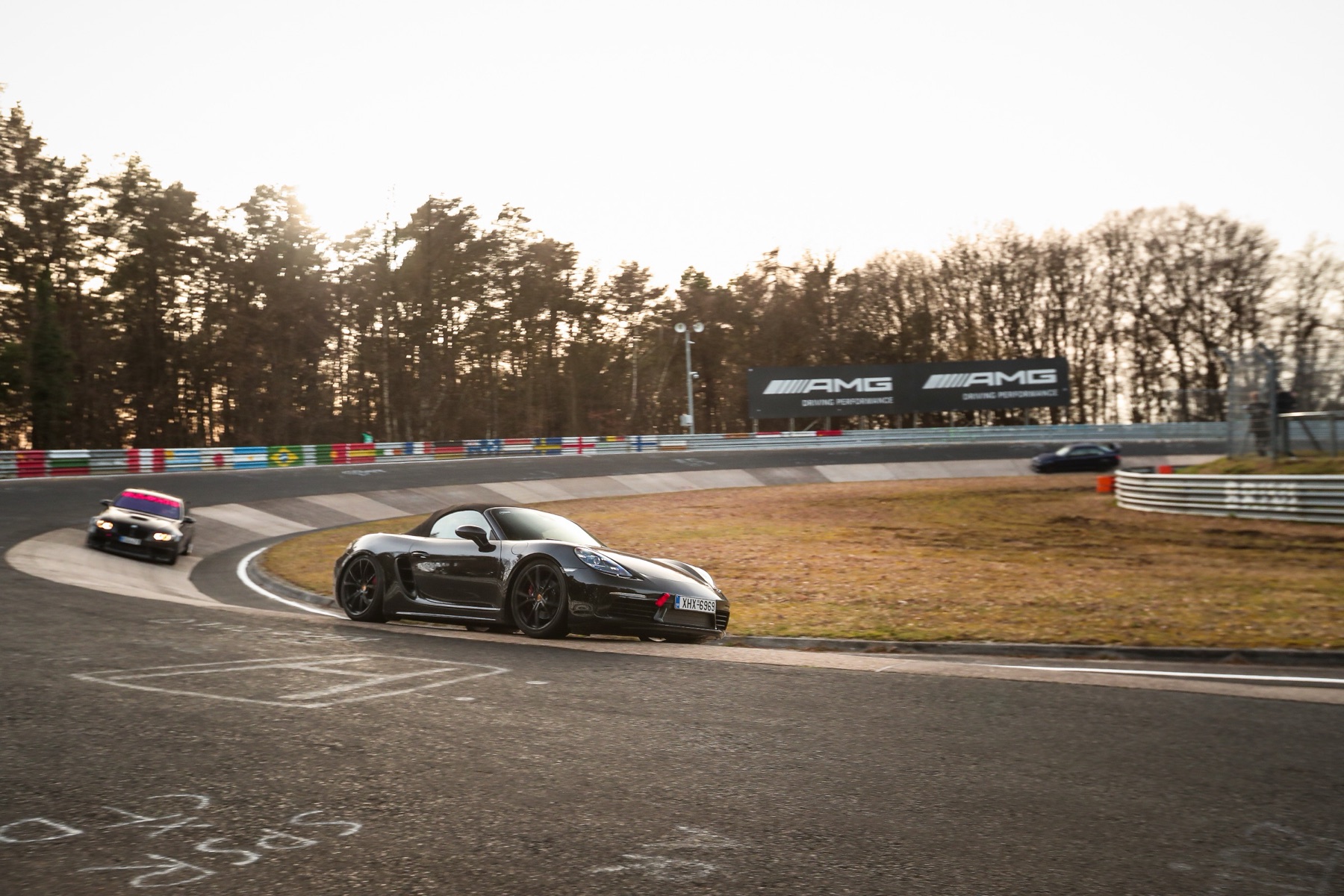
The Nürburgring is closer than you think - a road trip from Greece to the Green Hell
Costs, the route, practical tips - everything I wish I'd known before setting off, and the stories no onboard video can show you. The Nürburgring is closer than you think.
I say that with confidence, because until I found myself there I believed exactly what you might believe right now. That it's a trip for other people - people with unlimited budgets, race cars or endless free time. In the end, it's only one decision away. I'm not going to just tell you how we got there. I'll tell you what it costs, what I'd do differently, what I wish I'd known before setting off and, above all, everything you'll never see in an onboard video. Because the Nürburgring isn't just its 73 corners. It's the people, the routes, the friendships and the stories that are born around them.
Before you leave
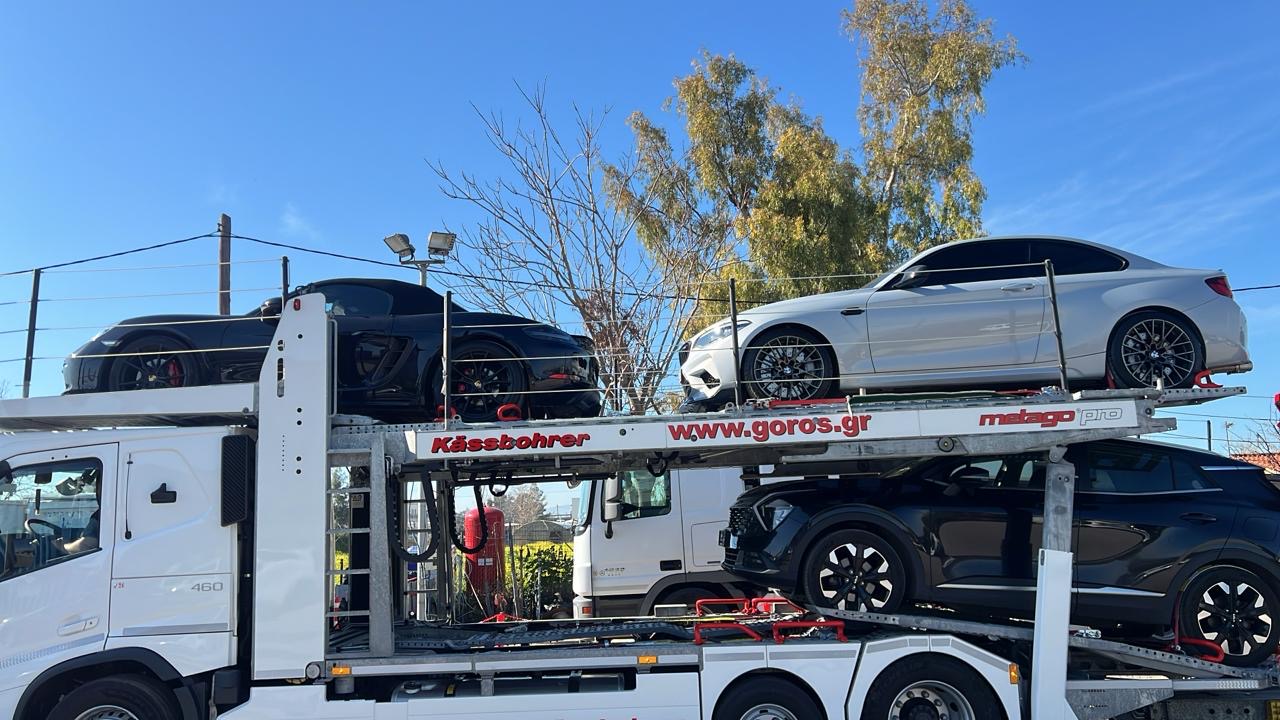
The first dilemma is simple: do you drive all the way to Germany, or send the car up on a transporter? If you drive, you get a bigger road trip, but you add around 2,000 kilometres before you even reach the track. If you ship it, you save time and wear - but you pay more. We chose the middle road: we sent the cars by transporter to Frankfurt and decided to drive back, turning the return leg into one long European road trip. And here's the first tip I wish someone had given me: the transporters heading up from Greece to Germany usually travel with empty spots, so shipping a car north is cheaper than the return. We paid about 900 euros per car, Athens to Frankfurt. The cars were waiting for us in a yard next to the airport. We booked a single night near Frankfurt and nothing else. The only fixed point in the plan was the ferry ticket from Ancona - everything else would be decided by the road. Maybe that's where the biggest secret of a good road trip hides.
First day in the Green Hell
None of us slept that night. How many hours have we all spent watching onboard videos from the Ring? How many crash compilations? How many times have we argued about GT3 RS, GT4 or M2 lap times? And suddenly, the place that until yesterday existed only inside a screen was a few hours away. If it's your first time, punch Devil's Diner into the GPS. Almost everything starts there: parking, tickets, coffee, pancakes, the famous roundabout and, above all, your first contact with the atmosphere of the Nürburgring. You don't need to have set foot on the track yet to understand you're somewhere different.
Touristenfahrten: everything you need to know
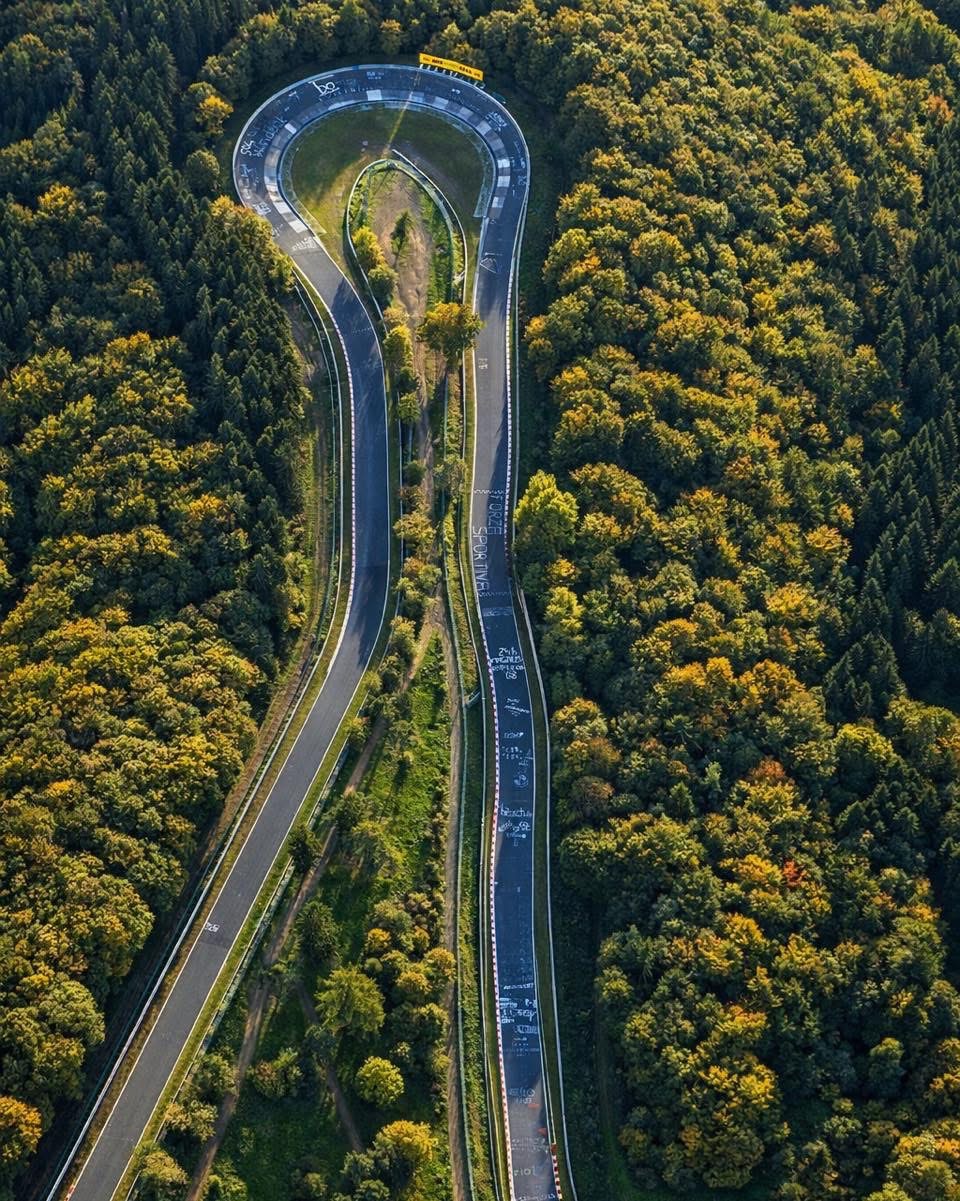
The Nürburgring may be the only track in the world that can become reality for almost anyone. On Touristenfahrten days you drive your own car onto the circuit with a prepaid card, which you top up with as many laps as you want. Each pass through the entry gate automatically deducts the corresponding amount - roughly 30 euros on weekdays, 35 at weekends. At the end of the lap you don't return to the start line; the track funnels you either towards the exit or into another lap, passing the entry gate again. If you've spent any time at all watching lap videos, you've probably heard the term BTG (Bridge to Gantry). This is where you finally understand what it means in practice. It's simple. And within a few minutes it feels like you've been doing it for years.
The car park that's worth as much as the track
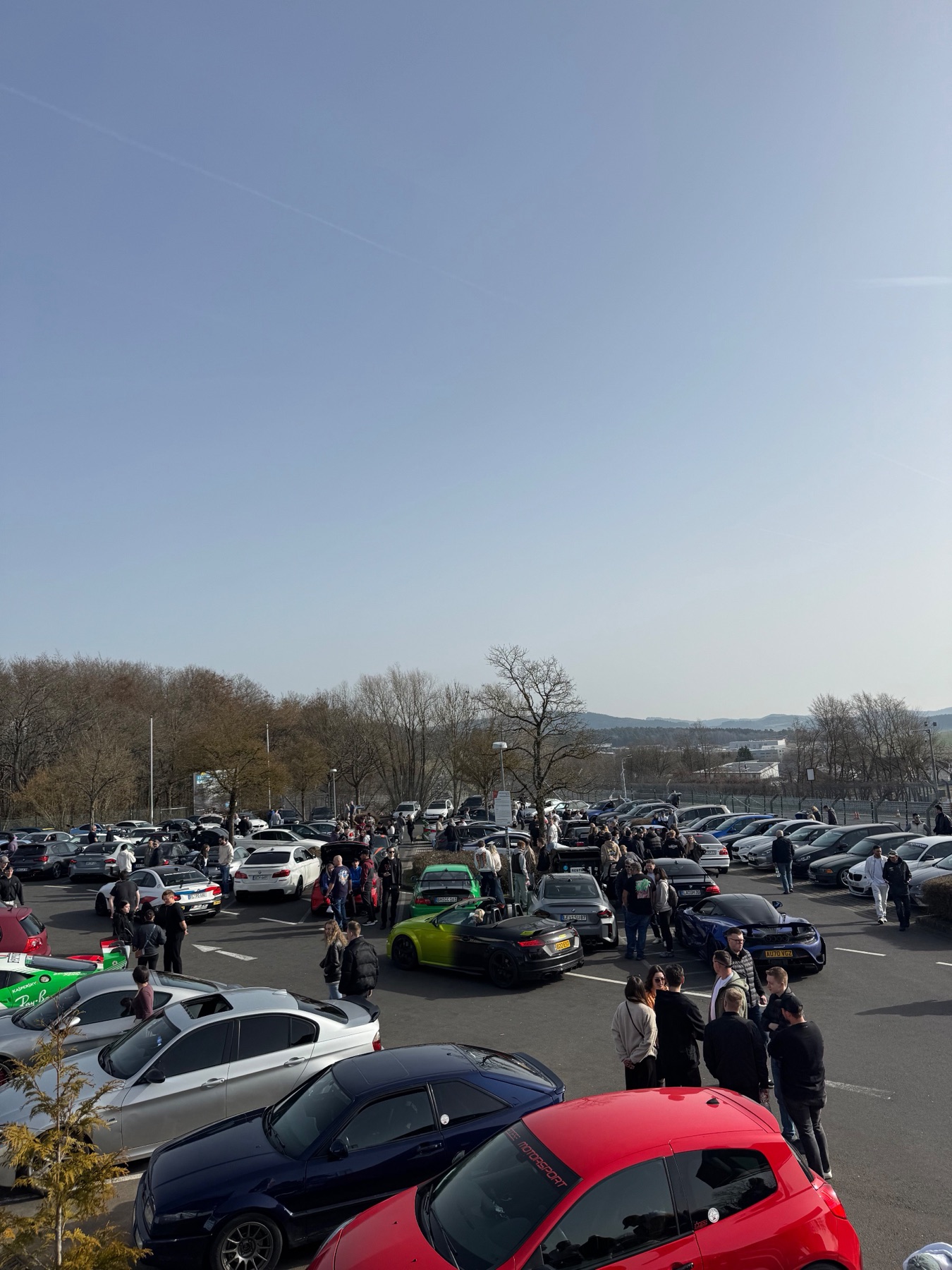
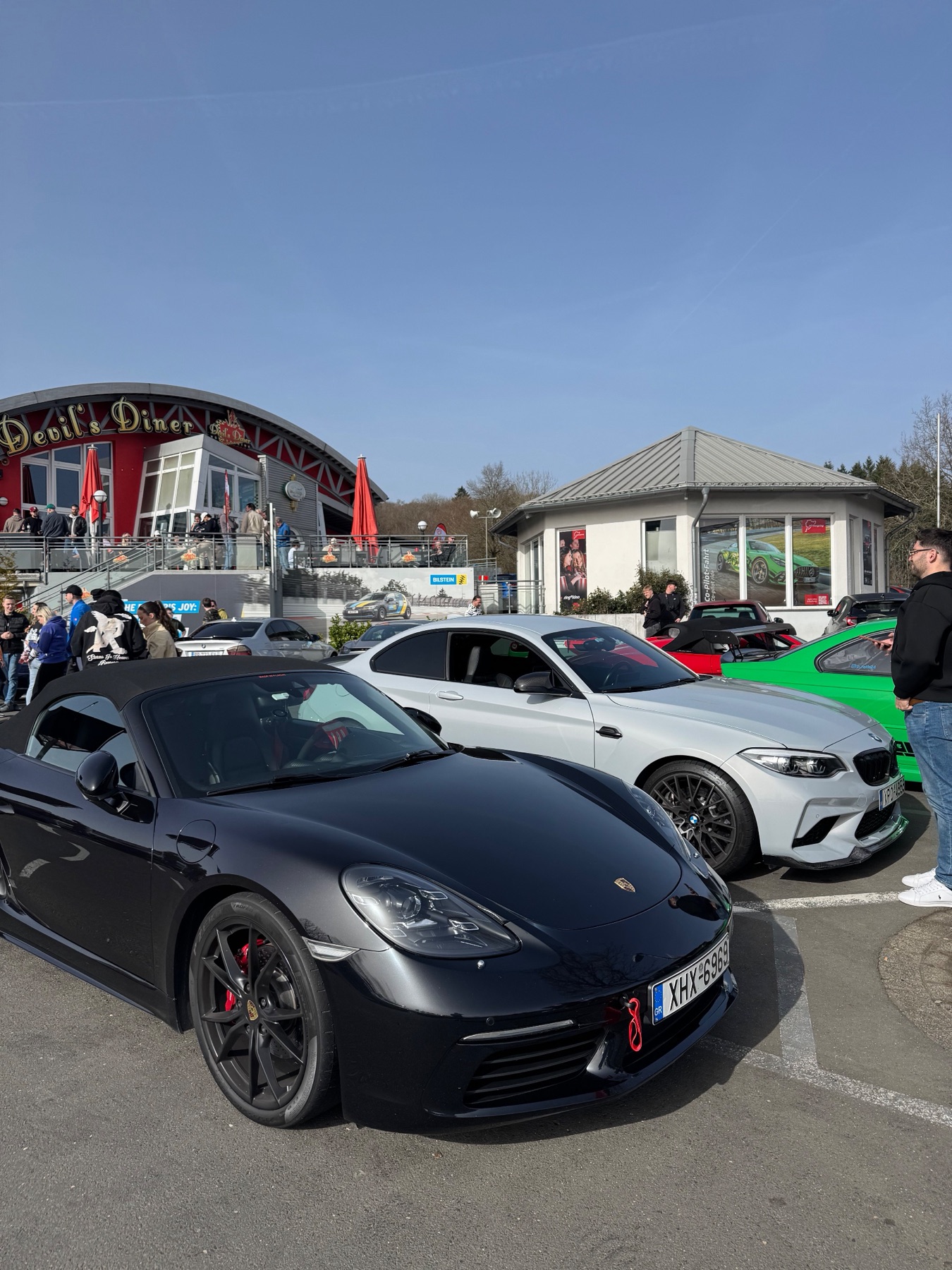
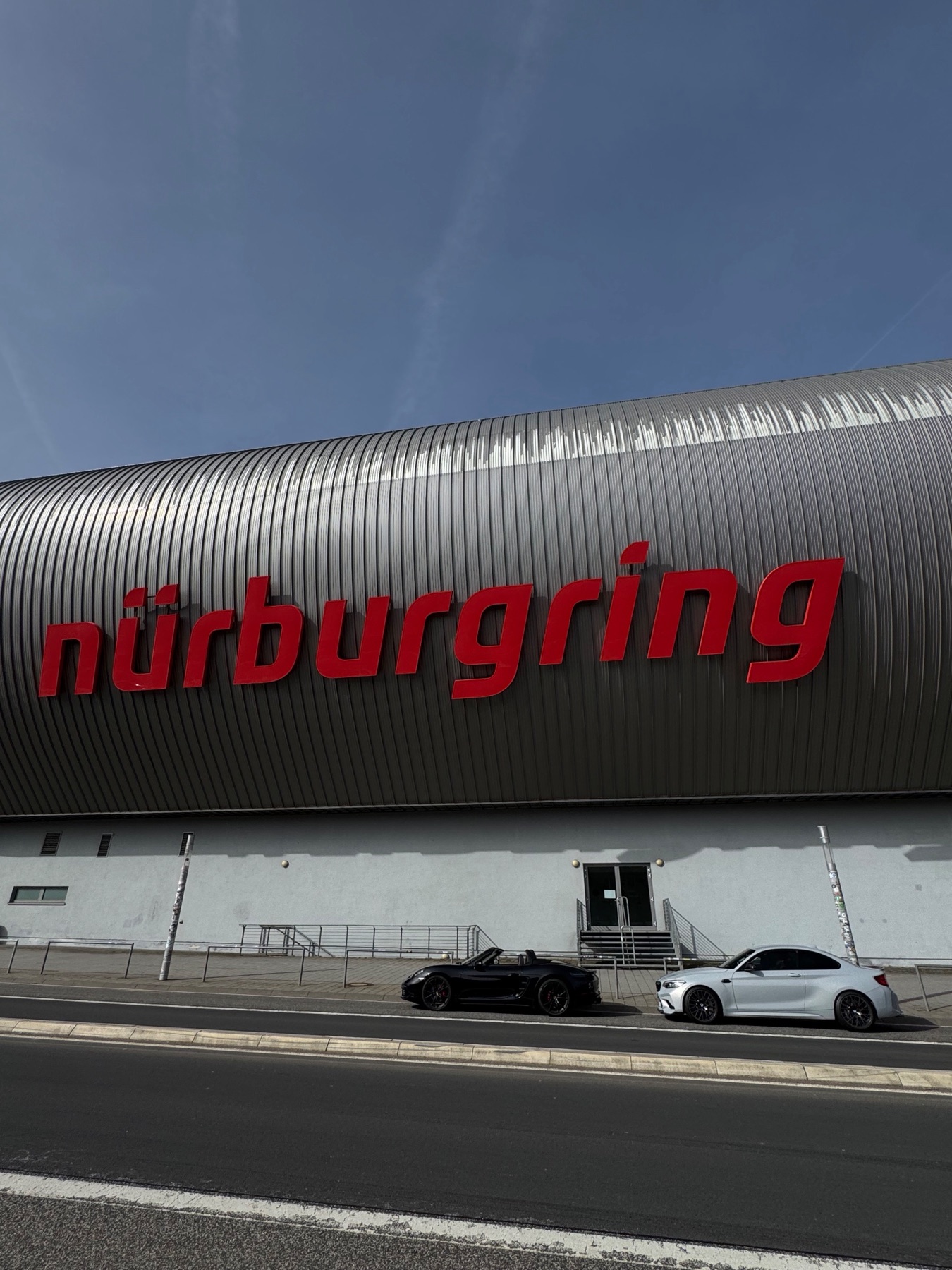
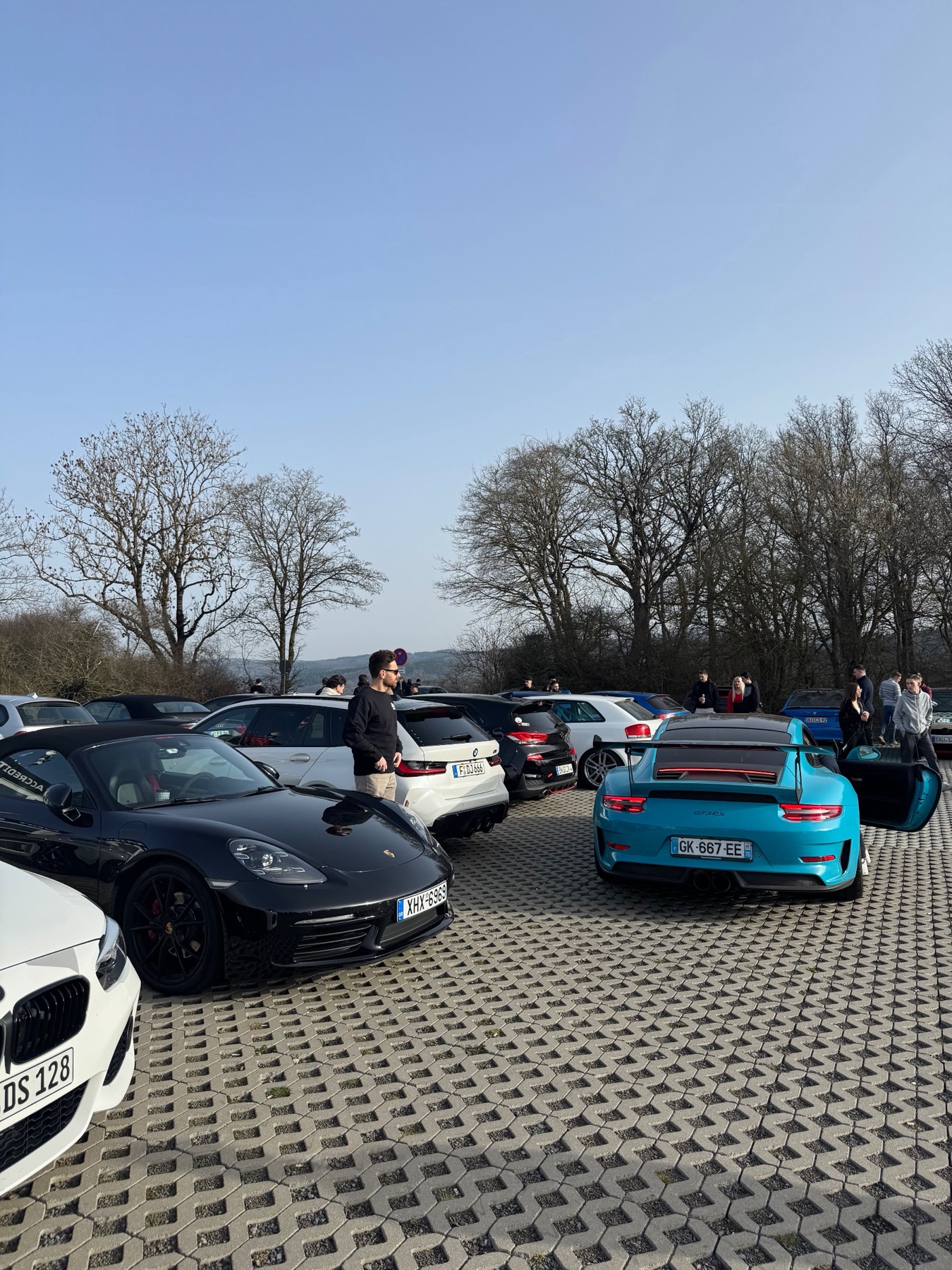
Before a single wheel turns on the Ring, there's something that's hard to put into words: the car park. There are no categories there. Between the cooling exhausts, the smell of hot brakes and the sound of flat-sixes, you realise the Nürburgring isn't just a track. It's a meeting point. It doesn't matter where you came from, what you drive or how fast you are - everyone is there for the same reason. We left the Boxster and the M2 side by side in the Devil's Diner car park and started wandering among the cars around us. GT4, GT3, M2, MX-5, i30 N, Escort, Caterham - even everyday hatchbacks that had covered hundreds of kilometres for a single lap of the Green Hell. And that's where I understood something no YouTube video can show you: at the Nürburgring, nobody is easily impressed by the most expensive car in the car park. Most people are impressed by the story behind it. The Greek plates on our cars drew looks straight away. People from different countries would stop, smile, and the first question was almost always the same: "From Greece?" And a few seconds later: "How did you get all the way here?" That's how every conversation began.
A GT4 and a small lesson
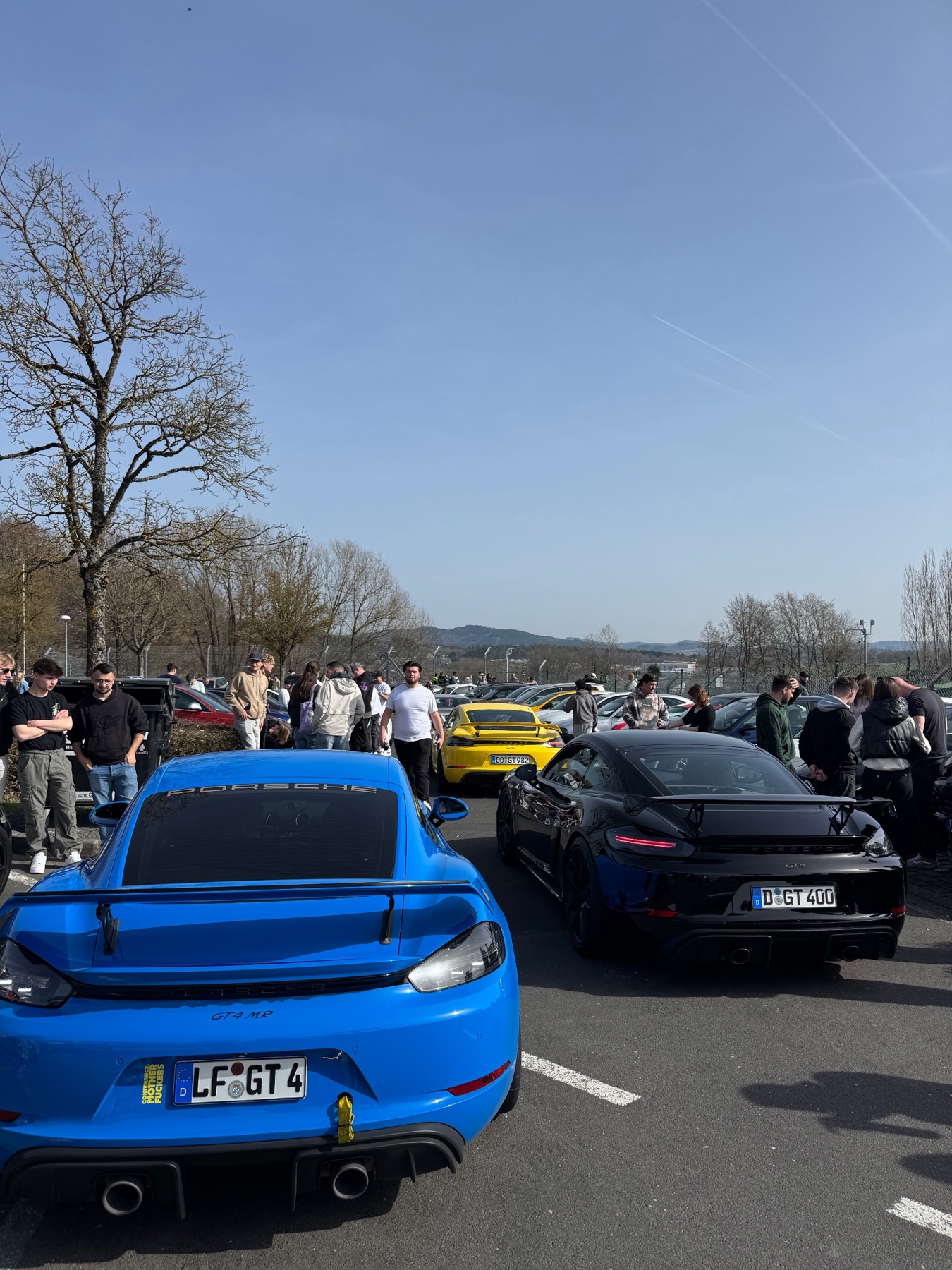
At some point a jet-black 718 GT4 parks next to my Boxster. I look at it and think that if I had to pick one car for that day, I'd struggle to find anything more fitting. A little later I see two friends checking out the Boxster, photographing it, commenting to each other. I assumed they'd come in some hatchback and simply liked the colour. One of them walks over. - Nice spec. - Thanks, I appreciate it. The conversation started as if we'd known each other for years. We talked about the trip, about Greece, about the Ring. At some point he says: - When you go out, tell me - let's do a lap together. - What are you driving? Without a word, he pointed at the black GT4 next to me. I laughed. - You have that weapon and you're looking at mine? - Every car has its own beauty. I don't know if that was the most beautiful exchange of the trip. But I know that's where I understood what being a petrolhead really means. It doesn't matter if you drive a GT4, an MX-5 or an old Golf. What matters is that you made the journey to be there.
Your first time isn't about lap times
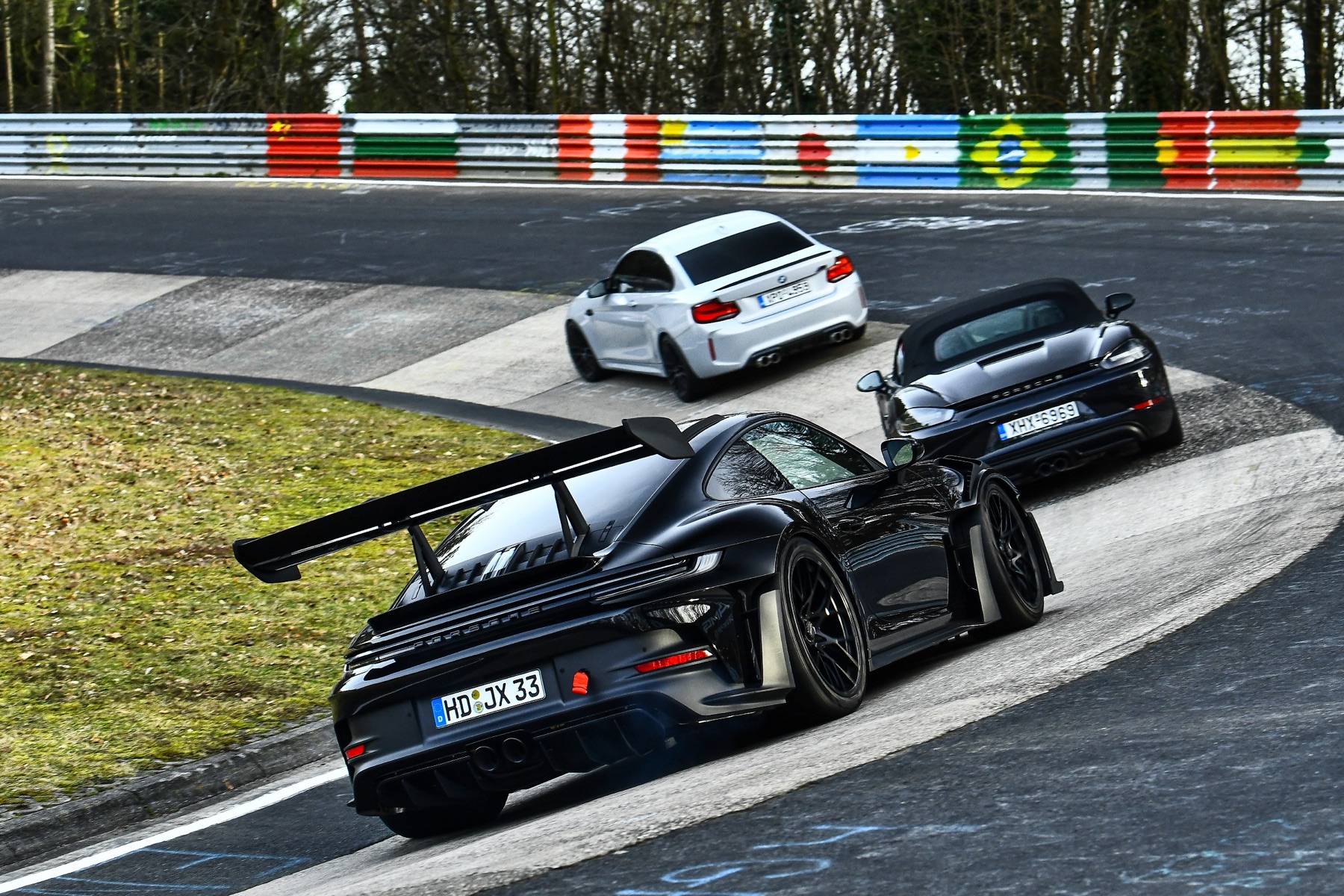
If there's a single piece of advice I'd give anyone going to the Nürburgring for the first time, it's this: don't chase a time. Leave the stopwatch, the ego and the point-proving outside the track. The Nürburgring doesn't forgive a bad decision made because you wanted to gain two seconds. We went in one behind the other, Boxster leading, M2 following. For the first half lap I drove with the hairs on my arms standing up. Not from fear. From awe. I couldn't believe I was driving my own car at the place that, a few hours earlier, existed only inside my screen. Around the track, hundreds of people had laid out folding chairs and picnics on the hillsides, applauding or simply watching. And on the same piece of tarmac, GT3 RSs, a Ferrari F8, an Opel Corsa, a Ford Transit and family station wagons all coexisted. That might be the most beautiful thing about the Ring: you don't need the fastest car. You just need your own.
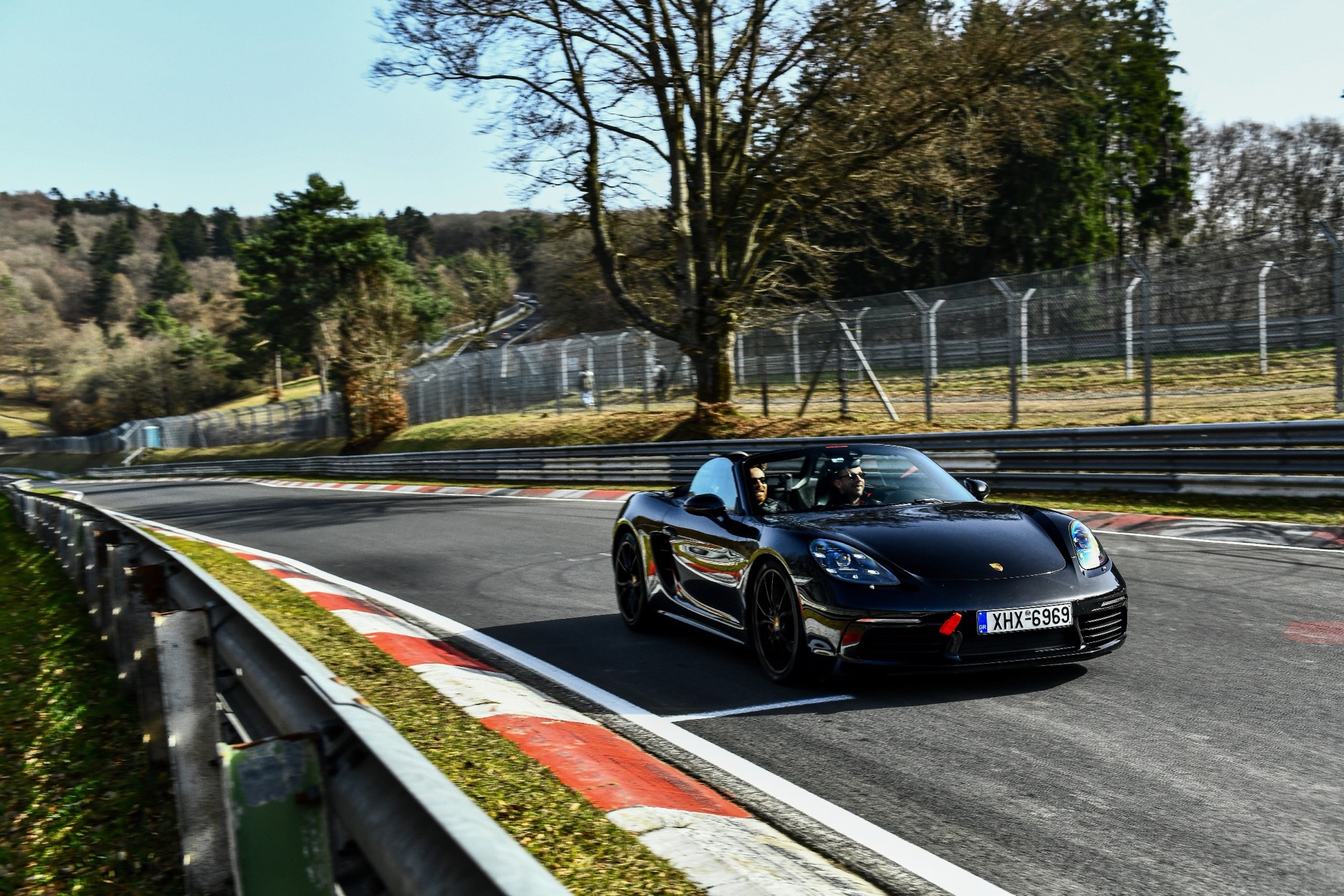
Nikos and I had agreed not to chase times; thousands of kilometres still lay ahead of us and we wanted the best memories, not the biggest story. Nikos knew the track almost by heart from the simulator; I barely knew it at all. And yet nothing truly prepares you - the blind crests, the elevation changes, the faster drivers in your mirrors. You don't drive the Nürburgring. You respect it. From the second lap the pace picked up naturally. The Boxster gave you the confidence to push a little harder. The M2, with nearly twice the power, felt more like a beast that demanded constant respect. Lap. Car park. Conversations. New people. And again from the top.
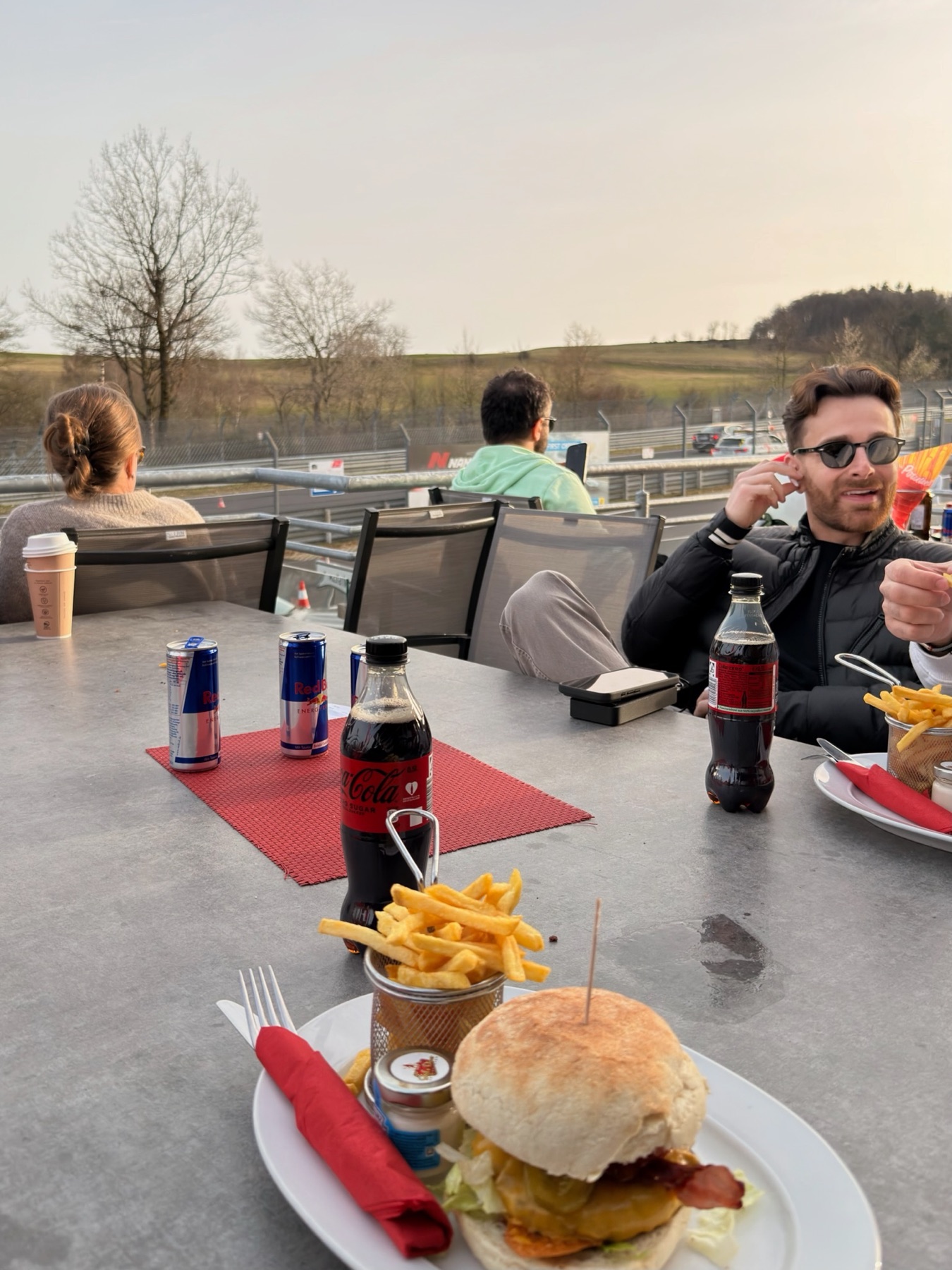
The people.
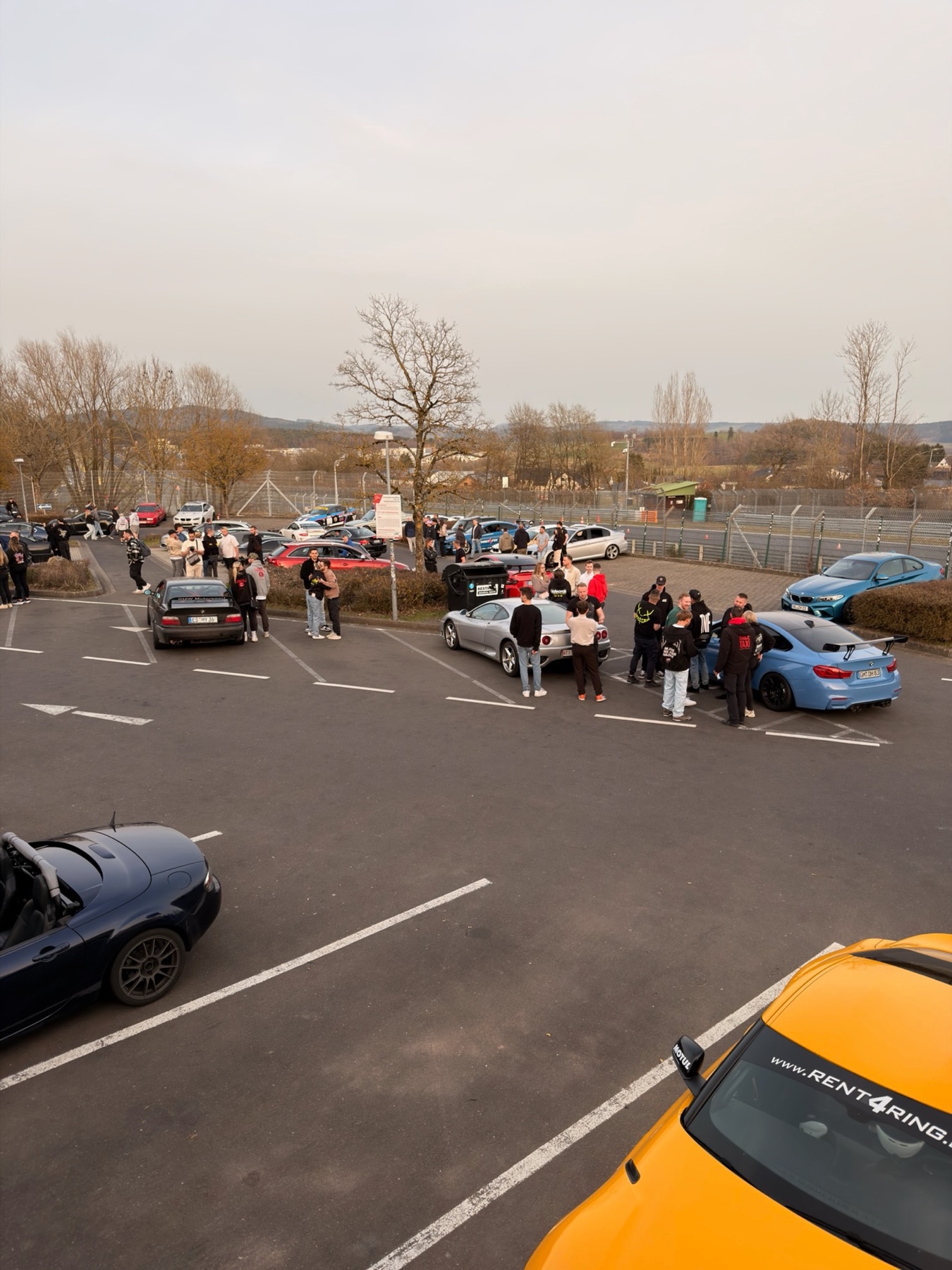
Somewhere in the middle of the day, a right-hand-drive BMW 335 E90 with English plates overtakes us. The window comes down. - "Geia sou re patrida!" - "Hey there, countryman!" That was it. Without realising, we did almost a full lap together. We pulled into the car park, introduced ourselves, and started swapping stories as if we'd known each other for years. Paris was a Greek living permanently in England. He kept his 335 in a garage a few kilometres from the Nürburgring and, roughly once a month, flew to Germany just to do the thing he loved most. He'd already logged more than 500 laps - a number that barely fits in the head of someone standing there for the first time. Instead of carrying on alone, he said: - Come on, get in with me. What followed were two laps from the passenger seat worth ten of our own. Not because we went faster, but because someone who knew every inch of the track was showing us what respecting it really looks like.
No car? There's a way
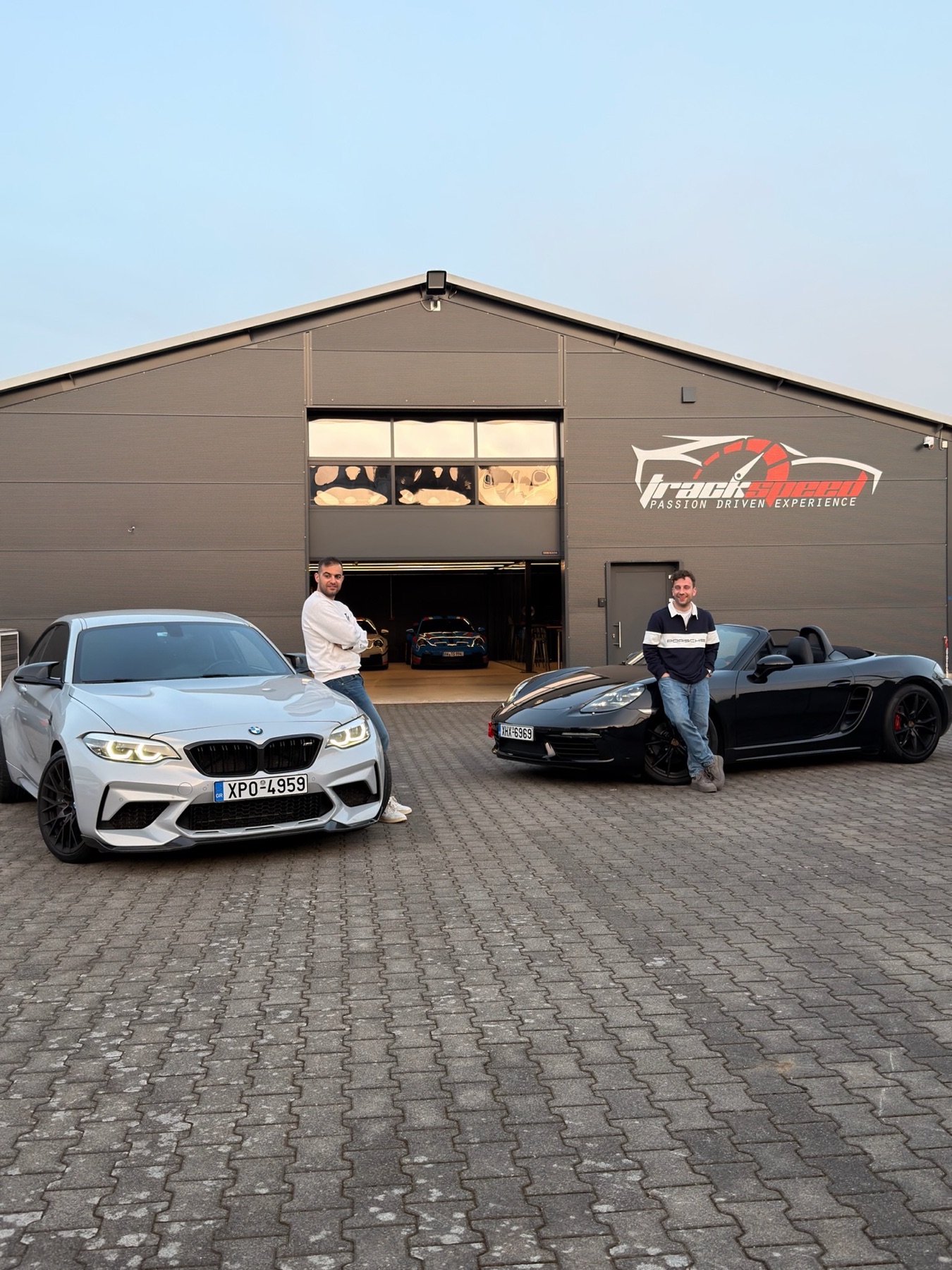
Before you leave the Nürburgring, one stop is genuinely worth it: TrackSpeed. Most Greek petrolheads already know the name, but I hadn't realised how big a part of the Greek presence at the Ring it has become. We spent a good while with Kostas, talking about stories, mistakes, cars and the people who pass through every day. If you fly in without your own car, this is the first door to knock on. Beyond rentals and on-track coaching, you'll find something even more useful: people who genuinely love what they do. And that shows from the first minute. The day was over before we knew it - eight laps had passed like two. Just before we left, Kostas told us something that sounded like an exaggeration at the time: "I'm sure I'll see you again." Today, I'm not at all sure he was wrong. I don't know anyone who went to the Nürburgring once and felt they'd completed the dream. Usually the opposite happens. The first trip is just the beginning.
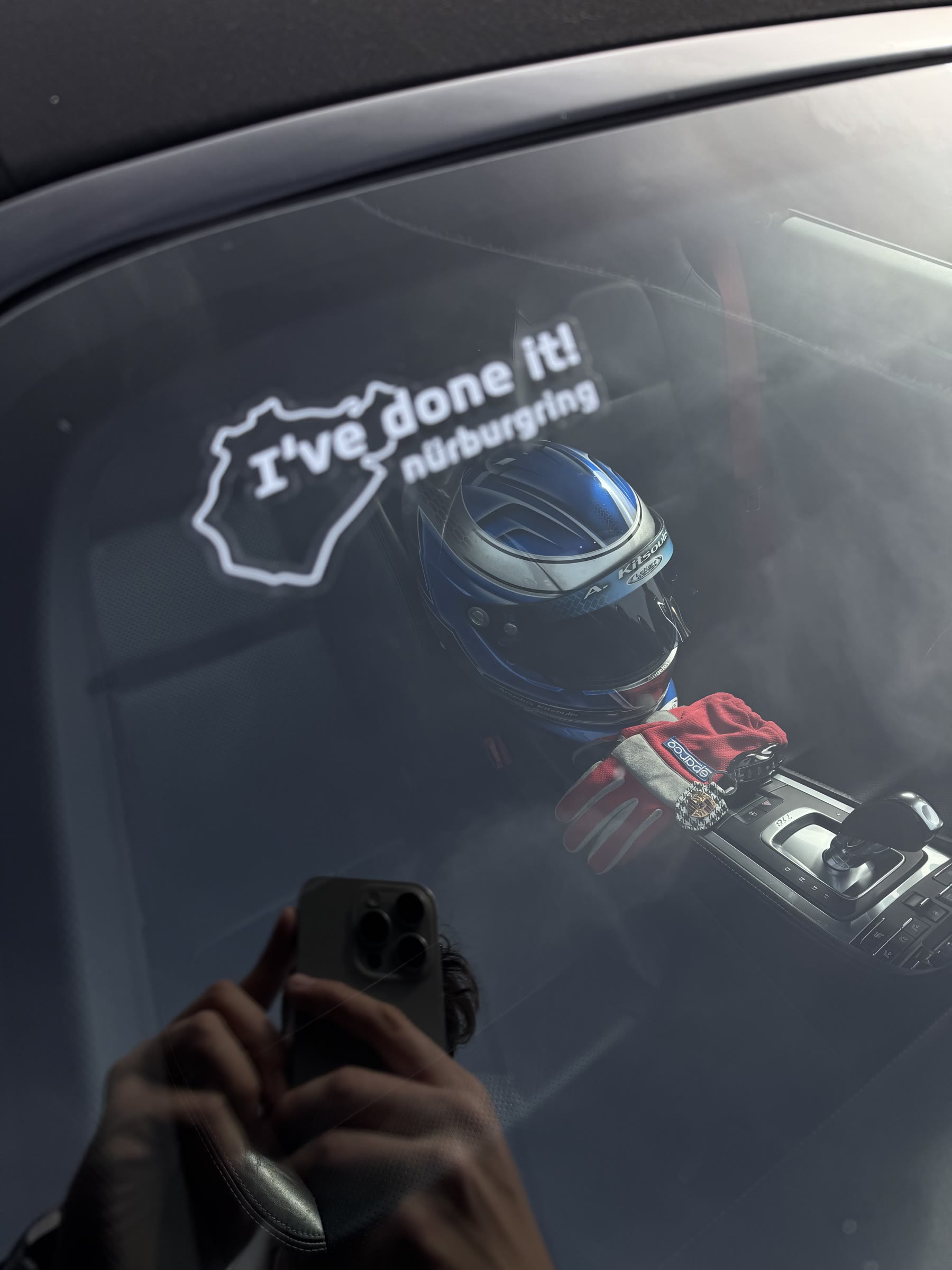
The Ring was behind us. The journey wasn't.
We said goodbye to the people we'd met, fired up the Boxster and the M2 again and pointed them south. Somewhere around there it hit me: the Nürburgring wasn't the end of the trip. It was the beginning. From the very start we'd decided not to plan the days that followed. Apart from the ferry ticket from Ancona, there was no programme. We just wanted to drive.
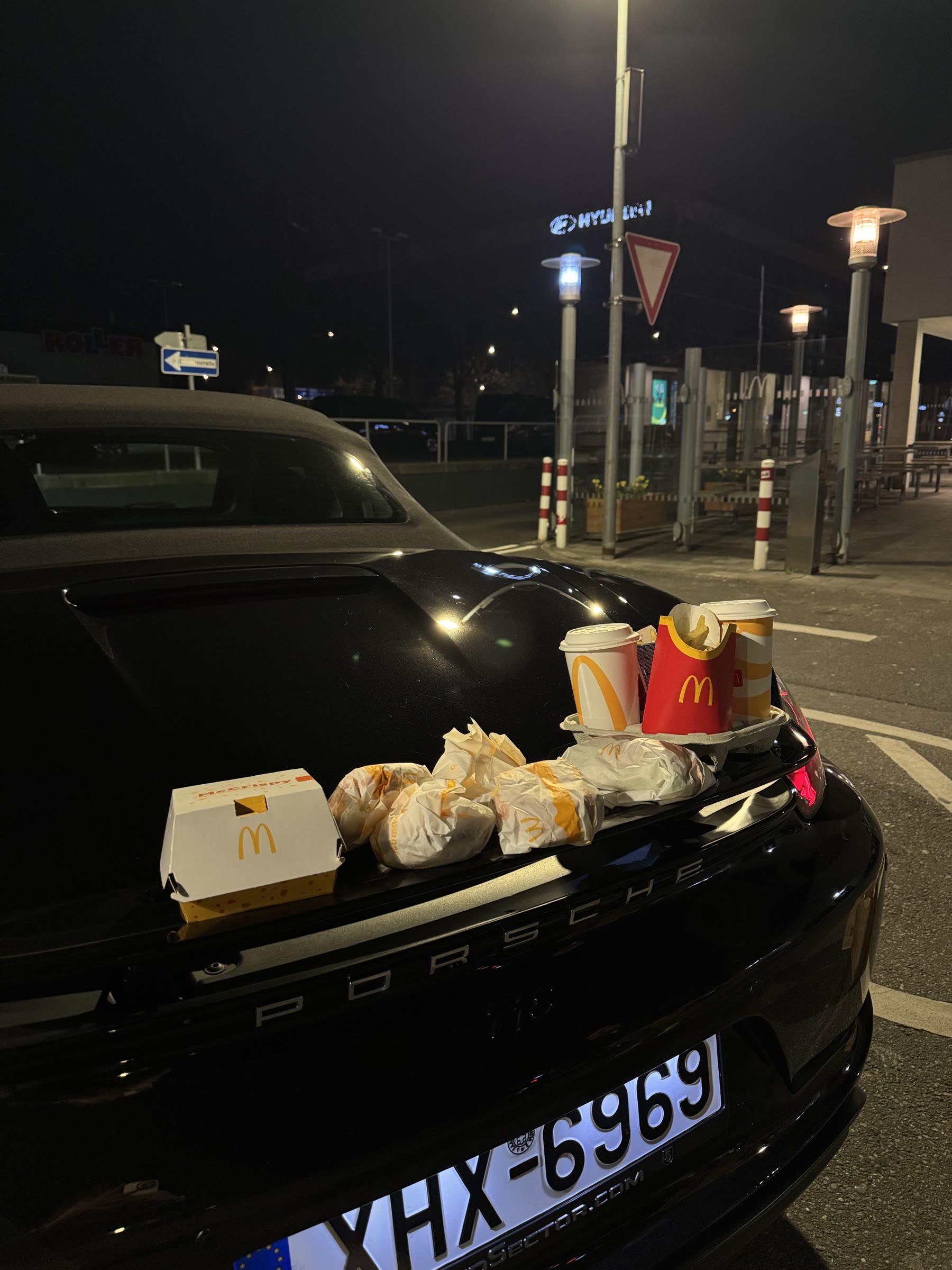
The first night found us in Strasbourg - hotel booked an hour before arriving, with a single requirement: secure parking. The funny thing is that, however beautiful the city was, most of that evening's conversations were still about the Ring. About Schwedenkreuz. About Fuchsröhre. About the guy with the GT4. About Paris. That's how I understood that the best memories of a road trip don't stay on the road. They follow you.
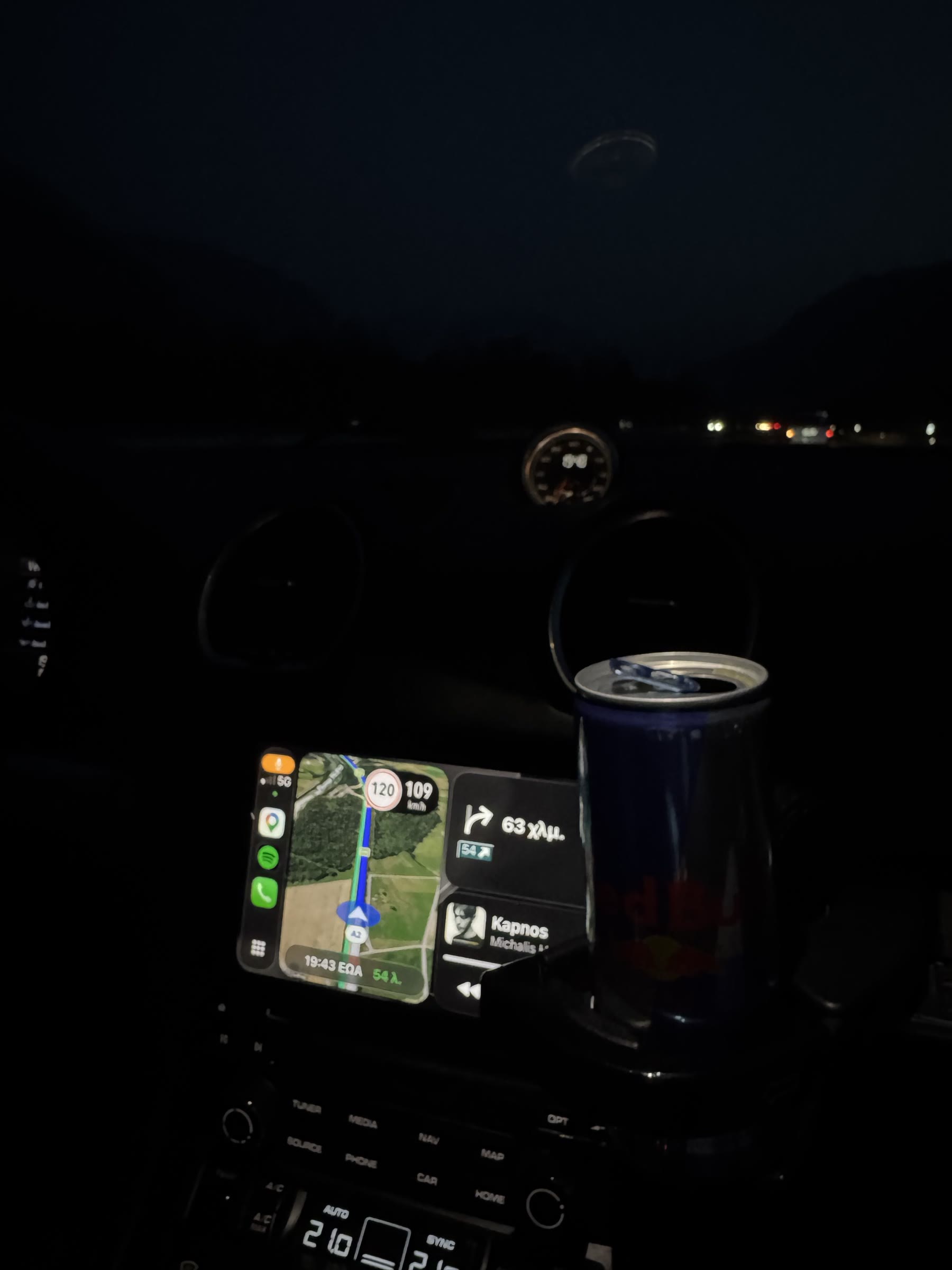
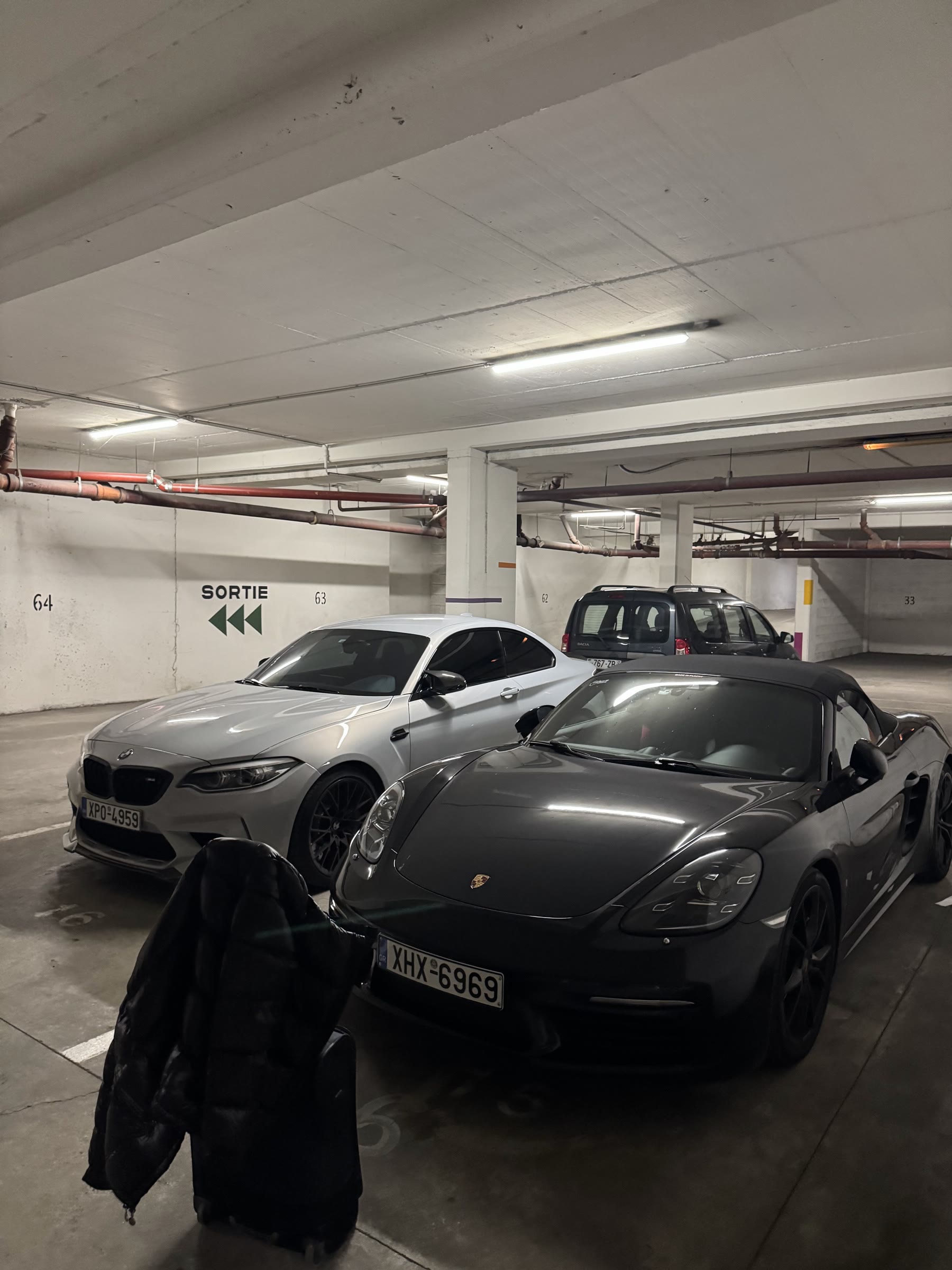
The next day we passed from Milan towards Florence with no hurry and no destination - empty provincial roads, coffee stops that lasted an hour, petrol stations that turned into photo spots.
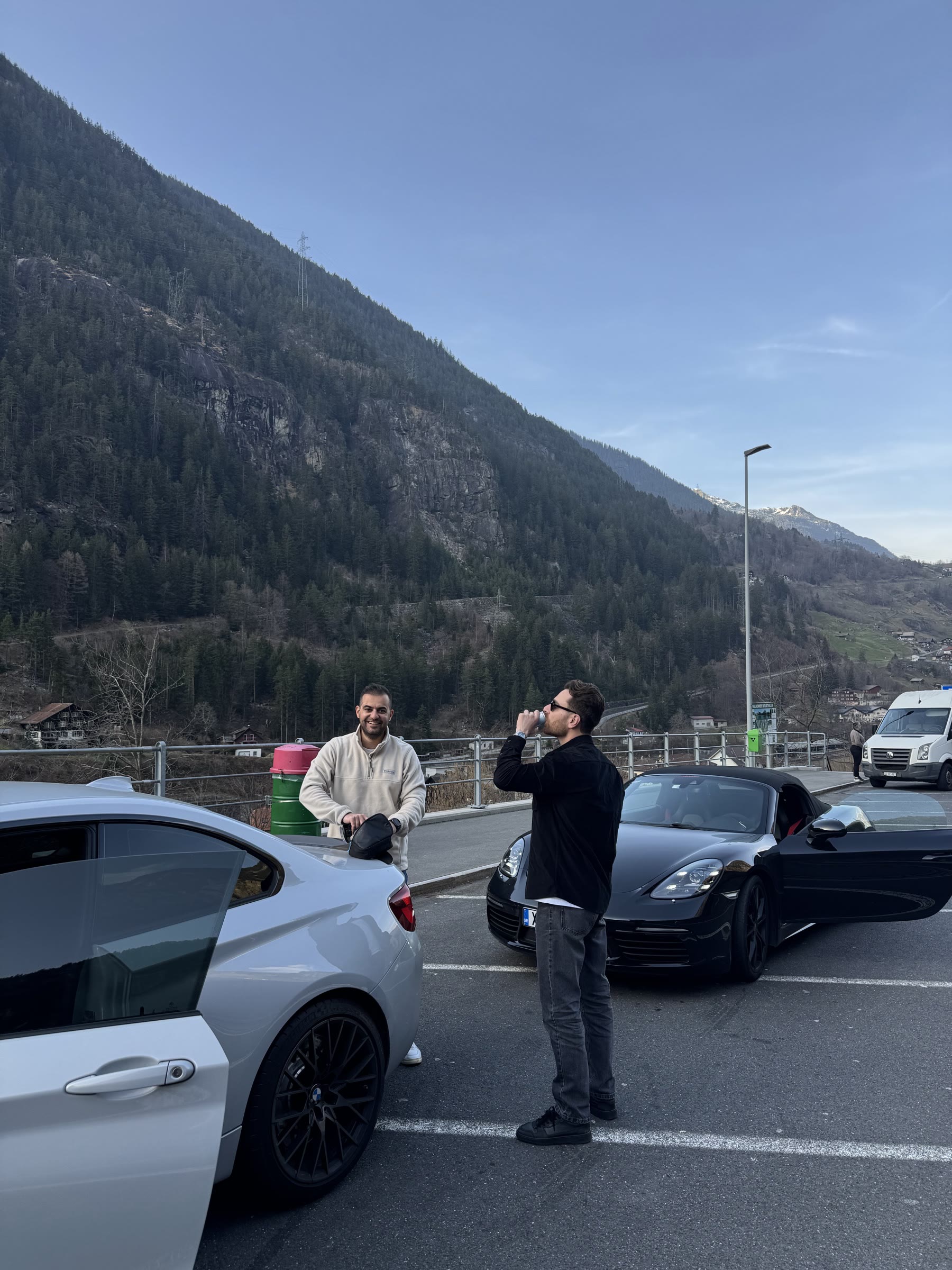
Until, somewhere outside Parma, came the most spontaneous decision of the whole trip. - Mate... I can't take driving at the speed limit any more. - Me neither. - Remember that track we saw near here yesterday? - Varano, you mean? - Shall we go see what's happening? We hadn't booked anything or called anyone. We didn't know if there was a track day on. We just turned the wheel. And it proved to be perhaps the best decision of the entire road trip.
Where the track is part of everyday life
The Autodromo di Varano doesn't have the Nürburgring's fame, or its 73 corners, or its millions of visitors. But it has something that impressed me more: the naturalness with which Italians live around cars. We arrived on a Monday at noon expecting an empty circuit. Instead, there was an open track day. A crew testing a Dallara built a few kilometres up the road. An eighteen-year-old in an i30 N. An MX-5. A couple in their seventies in a Mini Cooper R56. Two kids in Abarth 595s.
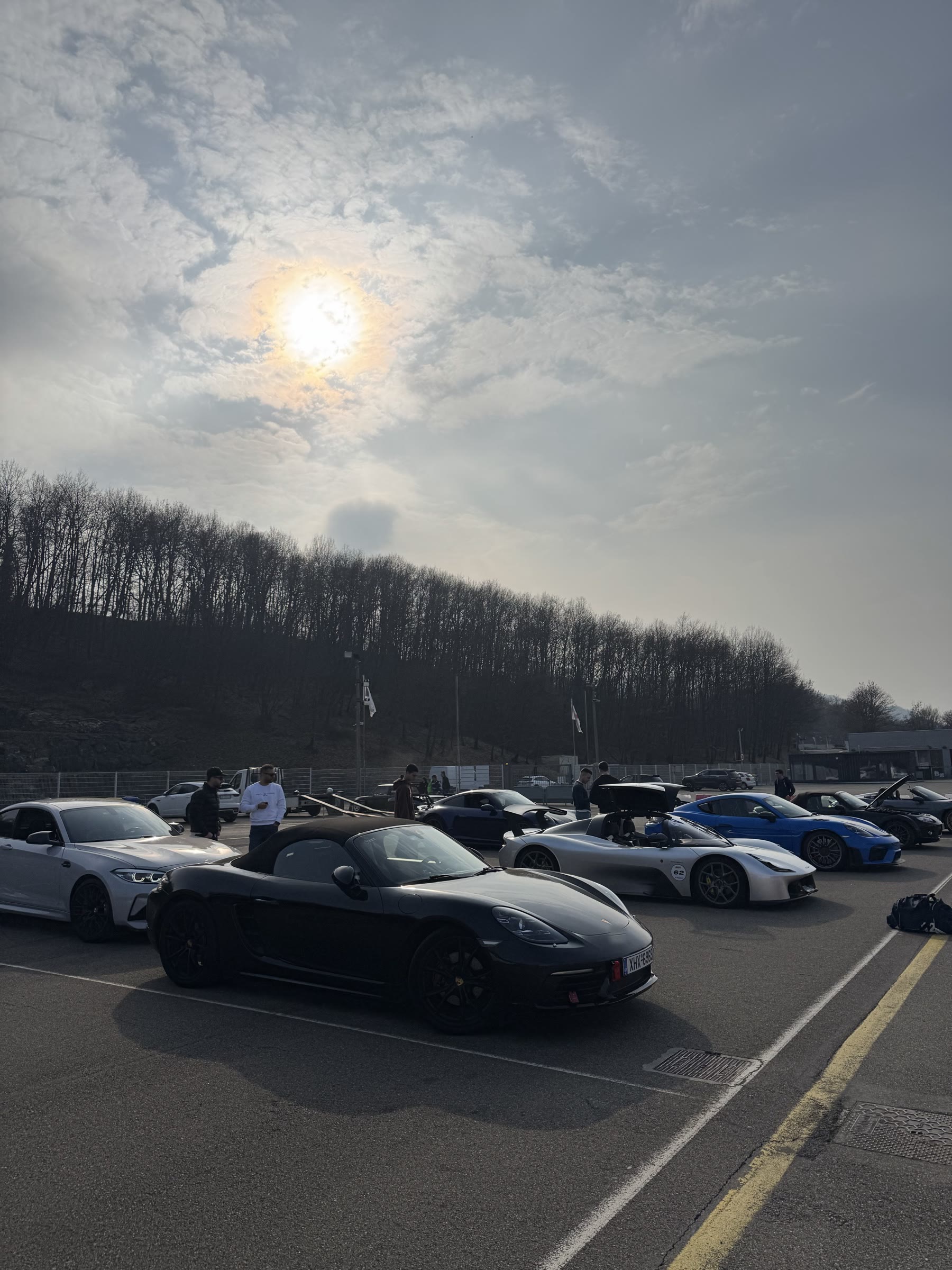
Nobody seemed to be there to prove anything. It was Monday, they'd finished work and come to do their hobby - the way we arrange a game of padel, they arrange a few laps of the track. I was jealous. Not of the cars - of the culture. Of the ease with which motorsport is part of their everyday life.
We did more than twenty laps that afternoon, met even more people, and left with the same thought: the tracks are just the excuse. The people are what make every journey worth it.
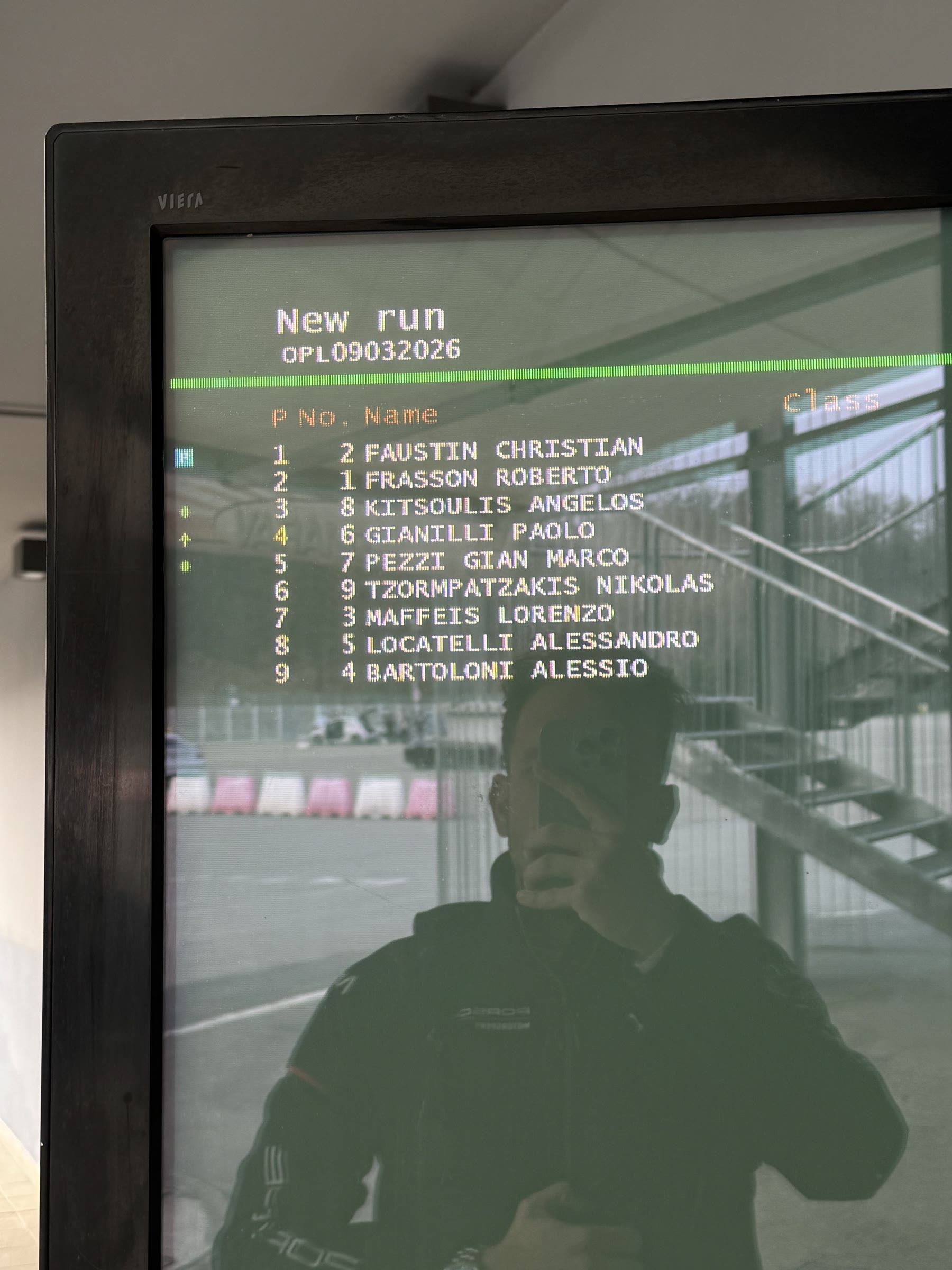
Florence was the perfect next chapter. After days full of petrol, exhaust noise and helmets, the city forced us to slow down - to let the cars rest, get lost in the alleys, drink a coffee in a square without checking the time. Maybe that's the most beautiful thing about a road trip: it isn't only the driving. It's the balance between intensity and calm.
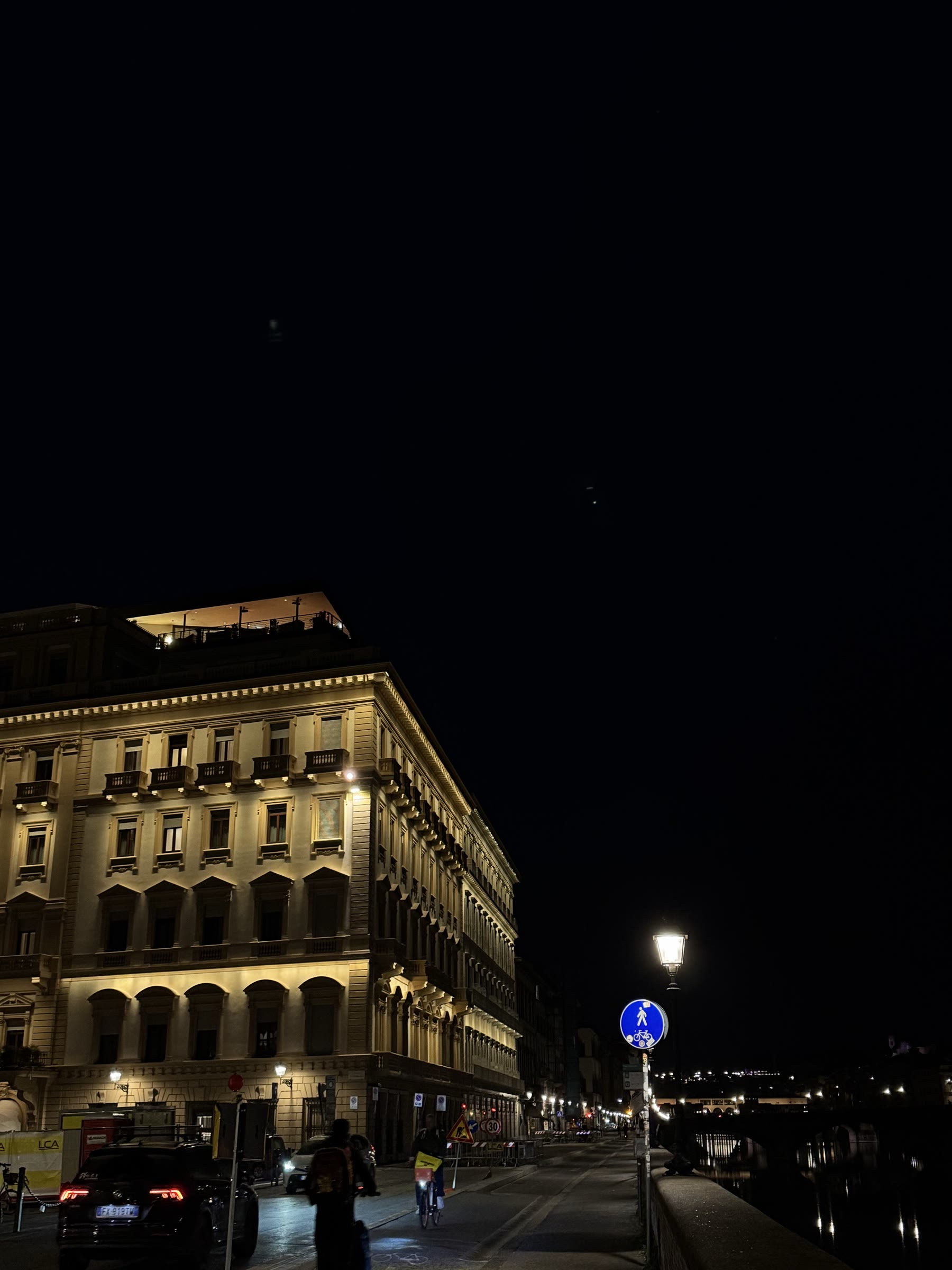
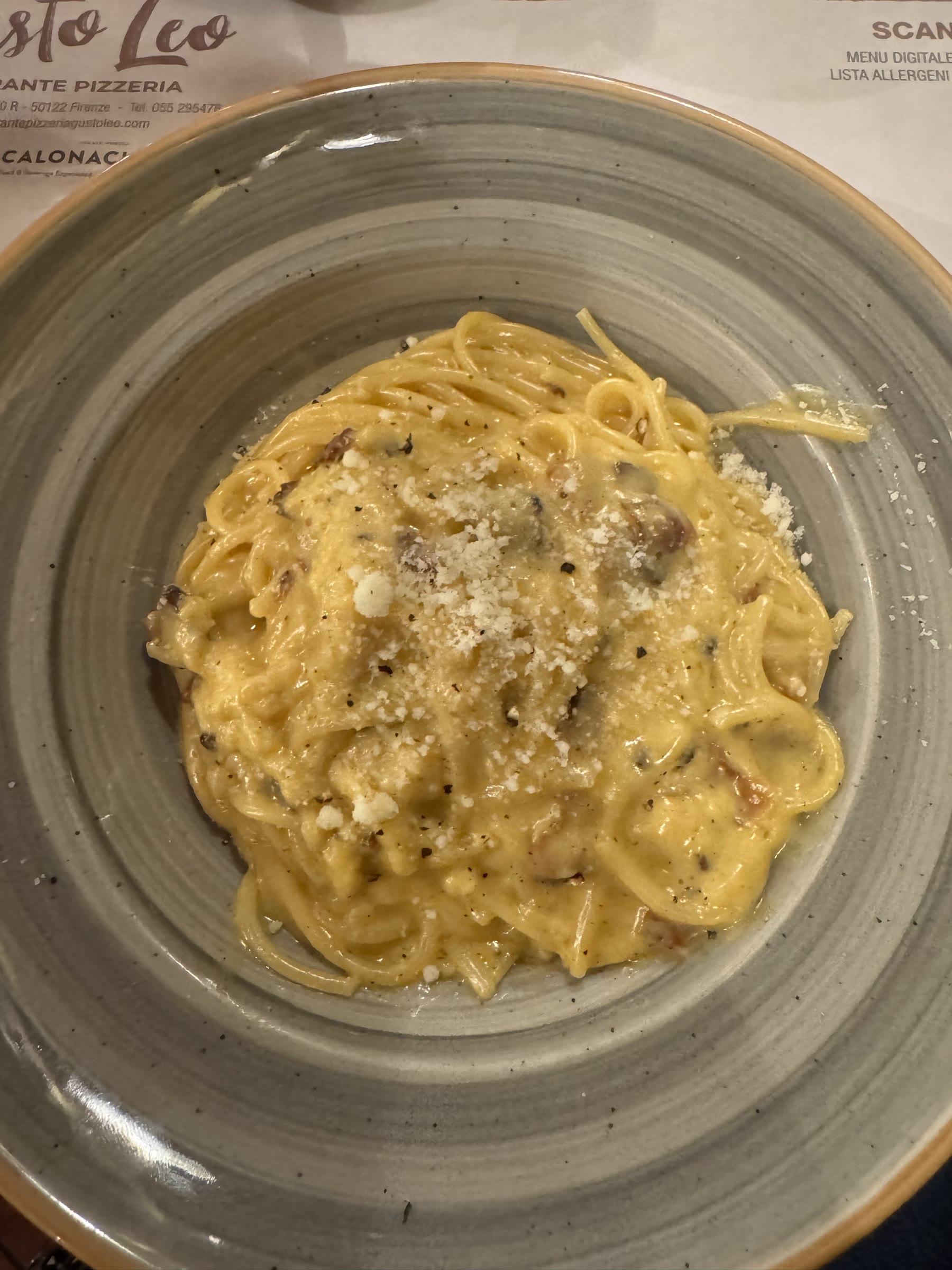
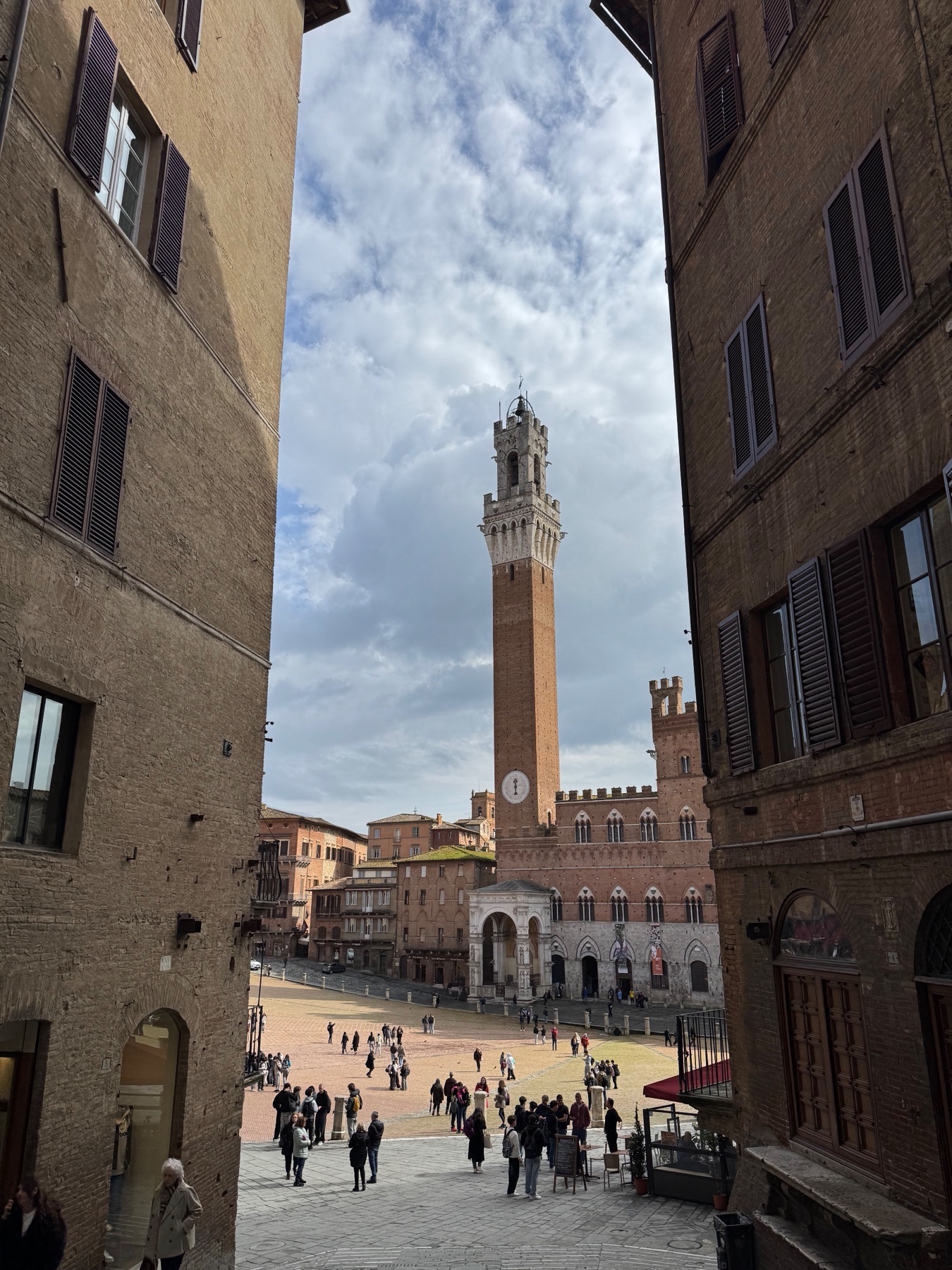
The next day we carried on towards Siena and the roads of Tuscany. They didn't have the Nürburgring's fame or a track's intensity. They had something different: they reminded you why you love driving. You don't always need the limit, lap timers or 500 horses. Sometimes a beautiful road, your favourite car, the right company and the feeling that nobody is expecting you anywhere is enough.
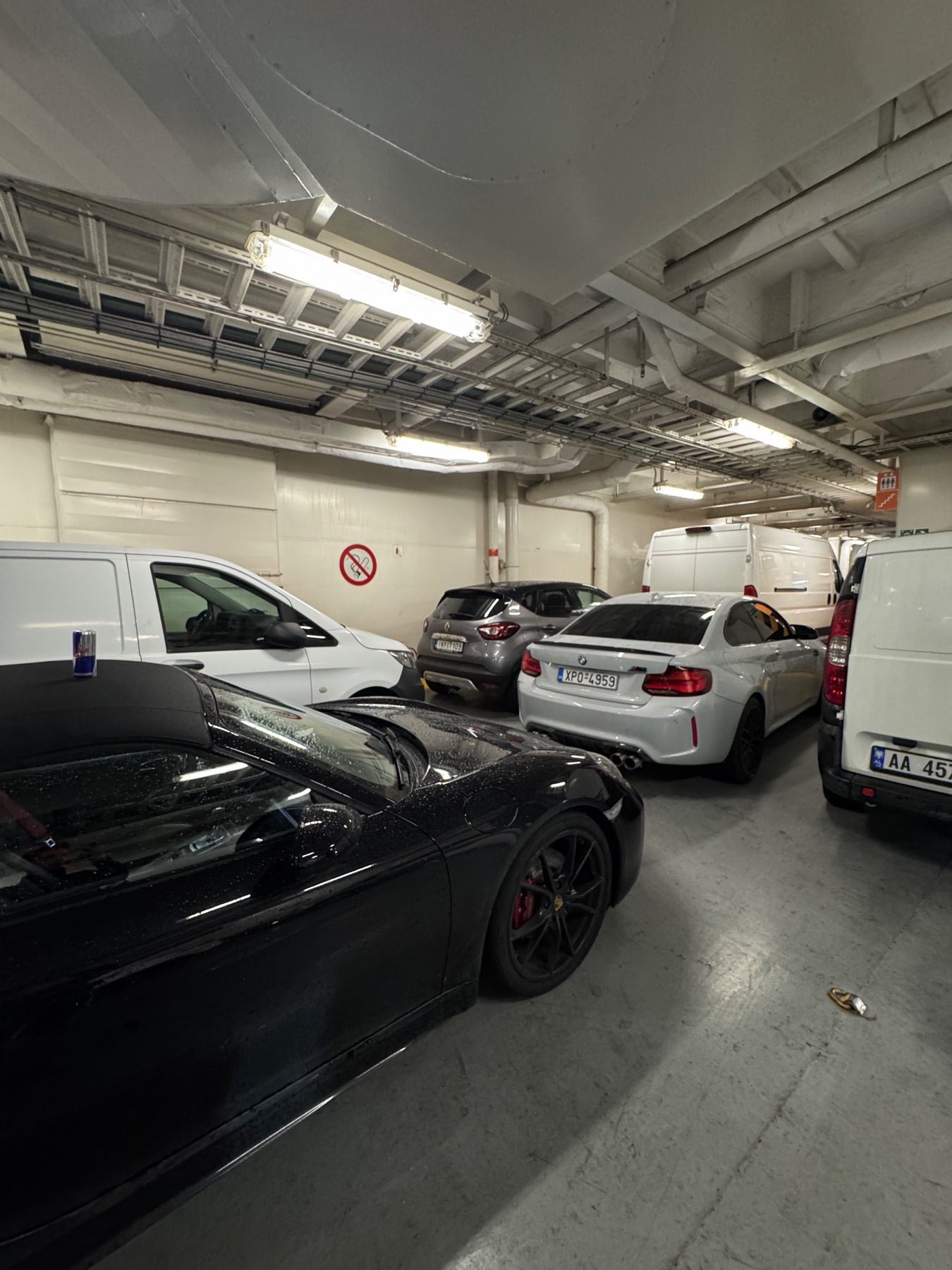
A few hours later Ancona appeared ahead of us. The ferry would take us back to Greece, but nobody felt the trip was over. Because the best road trips don't end when you switch off the engine. They end when you stop telling the stories. And as the hours passed on deck, we understood that this would take a very long time.
If you asked me what I'd do differently...
People often ask if there's anything I would change. The answer is yes. I'd stay one more day and spend more of it in the car park - that's where I met the most interesting people of the trip. I wouldn't rush to do many laps on day one; the Nürburgring isn't going anywhere. And I'd bring a second set of brake pads - one of those things you only wish you had the moment you need them. Above all, I'd put a second circuit, like Varano, in the plan from the start. Not to drive more, but to meet even more people. Because in the end, they were the greatest profit of the whole trip.
Frequently asked
›How much does a lap of the Nürburgring cost?
On Touristenfahrten days you buy a prepaid card and load it with as many laps as you want. Each pass through the entry gate deducts roughly 30 euros on weekdays and 35 at weekends.
›Can I drive the Nürburgring in my own car?
Yes. It is perhaps the only circuit in the world open to almost anyone. On Touristenfahrten days you enter in your own car, whatever it is - on the same day we shared the track with GT3 RSs, a Ferrari F8, an Opel Corsa, a Ford Transit and family estates. You don't need the fastest car. You just need your own.
›Should I drive to Germany or send the car on a transporter?
Driving gives you a bigger road trip but adds about 2,000 km before you even reach the track. We took the middle path: transporter to Frankfurt, then drove home. Trucks heading up from Greece usually run with empty slots, so the outbound leg is cheaper - we paid around 900 euros per car, Athens to Frankfurt.
›What is BTG (Bridge to Gantry)?
At the end of a lap you don't return to a start line; the track sends you either to the exit or round again, past the entry gate. BTG is the bridge-to-gantry section that lap videos time - and it's where you finally understand what that means in practice.
›Can I go to the Nürburgring without my own car?
Yes. If you fly in, the first door to knock on is TrackSpeed, which has a strong Greek presence: track car rentals and in-car coaching.
›What should I watch out for on a first visit?
Don't chase a time. The Ring does not forgive one bad decision made to gain two seconds - blind crests, elevation changes, faster drivers in your mirrors. Don't rush into lots of laps on day one, stay an extra day for the car park where you meet the most interesting people, and bring a spare set of brake pads.
There is no one right way
If there's one thing this road trip taught me, it's that there is no one right way to do the Nürburgring. Transporter, or drive there yourself. With friends, with your girlfriend, alone. As cheaply as possible, or as a week-long wander across Europe. Guesthouses or hotels. Two laps or twenty. All of it is right, because none of it is the point. The point is to do it. To give yourself the chance to live the thing you've only ever watched through a screen. To meet people who were strangers five minutes ago and feel like old friends shortly after. To understand a little better what driving really means. And to come home having filled not just the camera's memory card, but your head with stories you'll be telling for years. Because at the end of the day, you won't remember how fast you went through Schwedenkreuz. You'll remember the guy with the GT4 who stood there admiring your car. Paris, who opened up the passenger seat for you. Kostas, who told you to leave your ego at the hotel. The elderly couple lapping Varano on an ordinary Monday afternoon. And then you'll understand that the most beautiful memories of this trip were never written on a stopwatch. They were written in the people. I too once believed the Nürburgring was a faraway destination. A dream I'd fulfil "some day". In the end, all it took was making the decision. And when you come back, I'm certain you'll say exactly the same thing. The Nürburgring was always closer than I believed.
Comments
Sign in to comment
- No comments yet. Share your thoughts.
Related stories
LONDON TO TUSCANY IN A PORSCHE 911: THE ROAD TRIP YOU HAVE TO DO ONCE IN YOUR LIFE
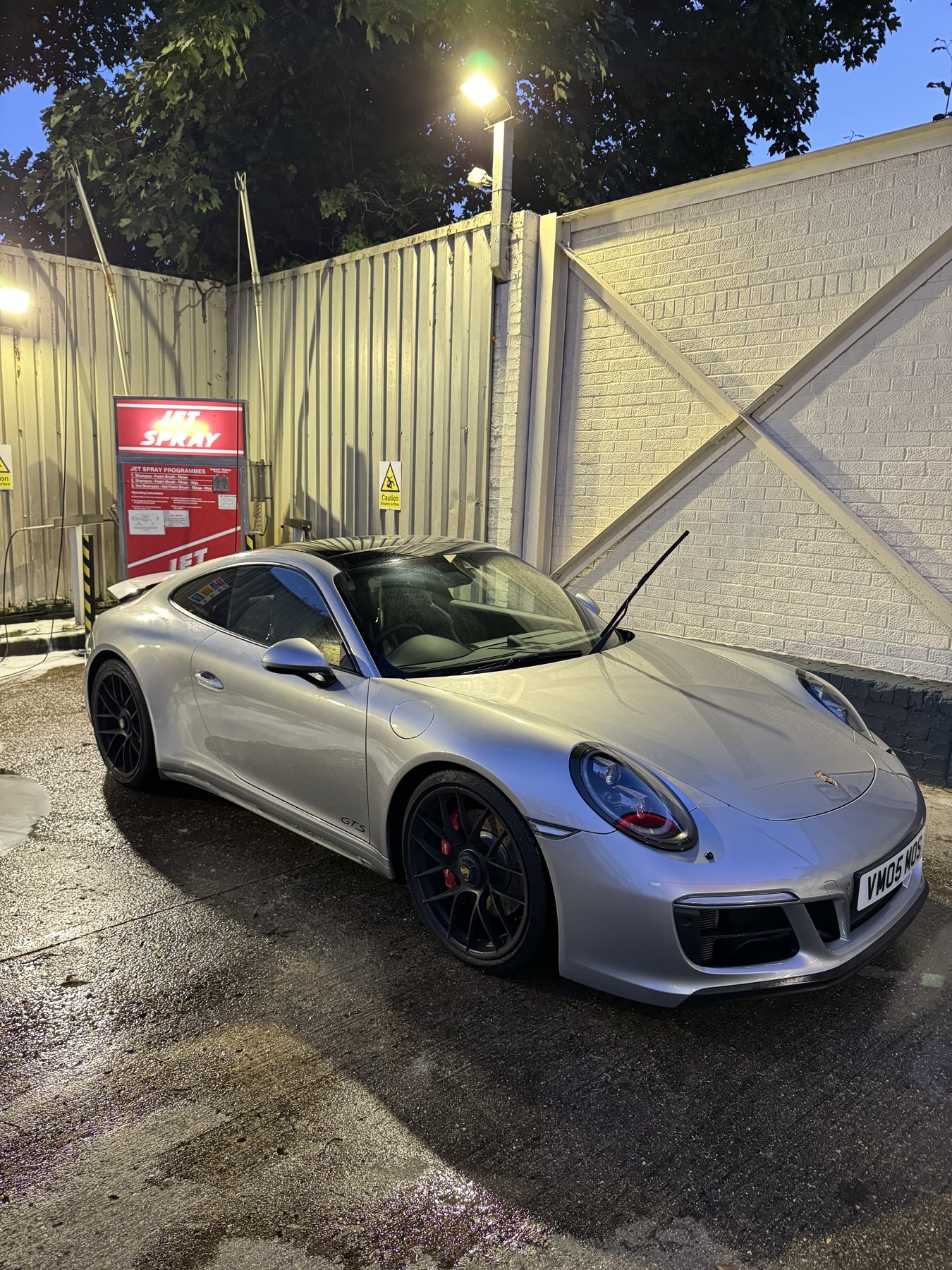
Fifteen days, 2,500 kilometres, a silver 911 Carrera GTS, and Alessandra in the passenger seat. From London, through the Eurotunnel, Paris and Burgundy, to the hairpins before Tuscany - with a stop at a French petrol station that nearly ended it all. Part one of two.Read the story
I WENT TO GERMANY MYSELF TO COLLECT THE PORSCHE. I WOULD NEVER PAY SOMEONE TO BRING IT TO ME.
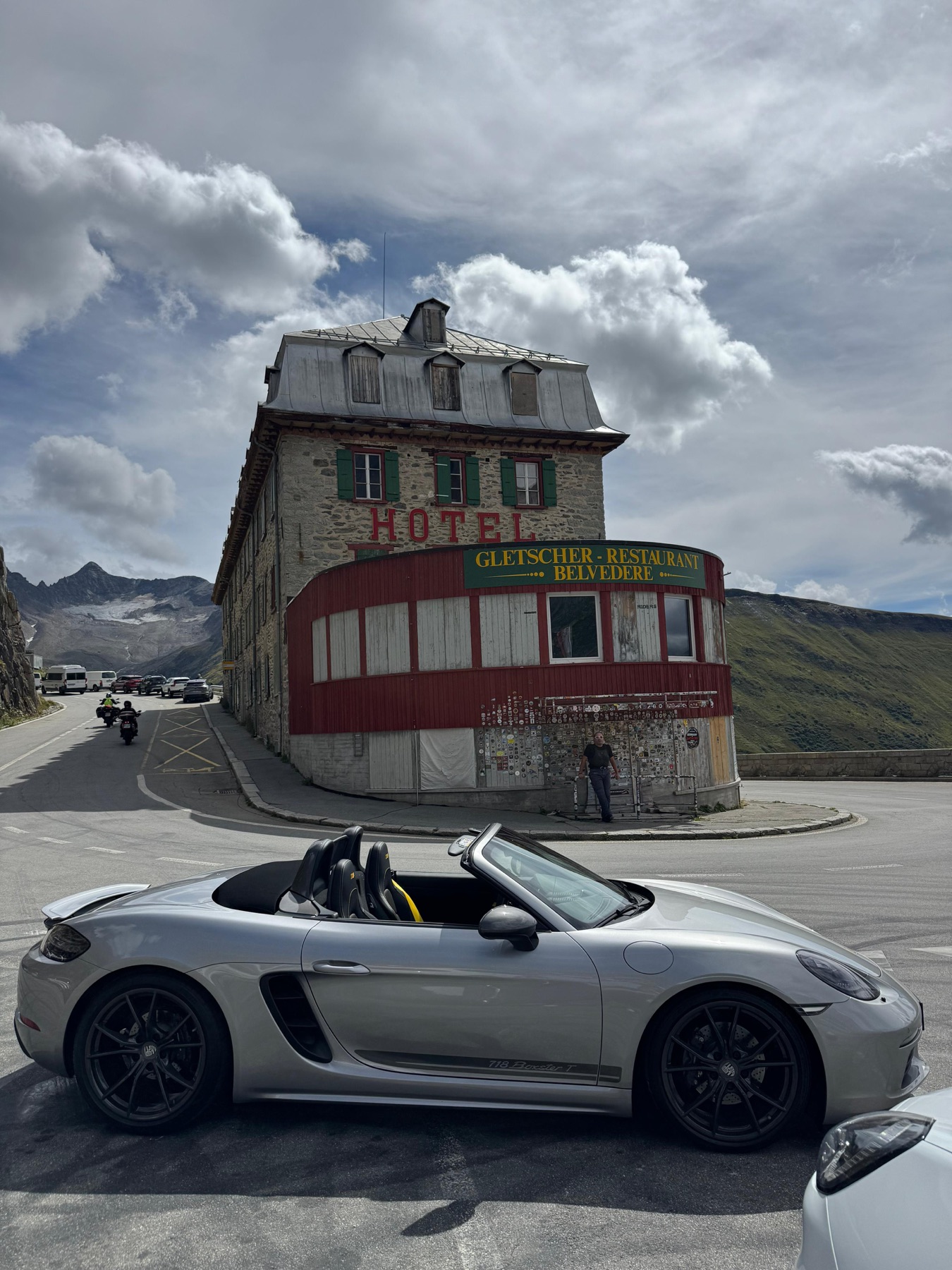
How hard is it really to import a car from Germany yourself? The story of my third personal import - Autobahn, Swiss passes and a ferry across the Adriatic - and everything you need to know before you bring your own.Read the story
WHAT DO YOU NEED FOR A TRACK DAY?
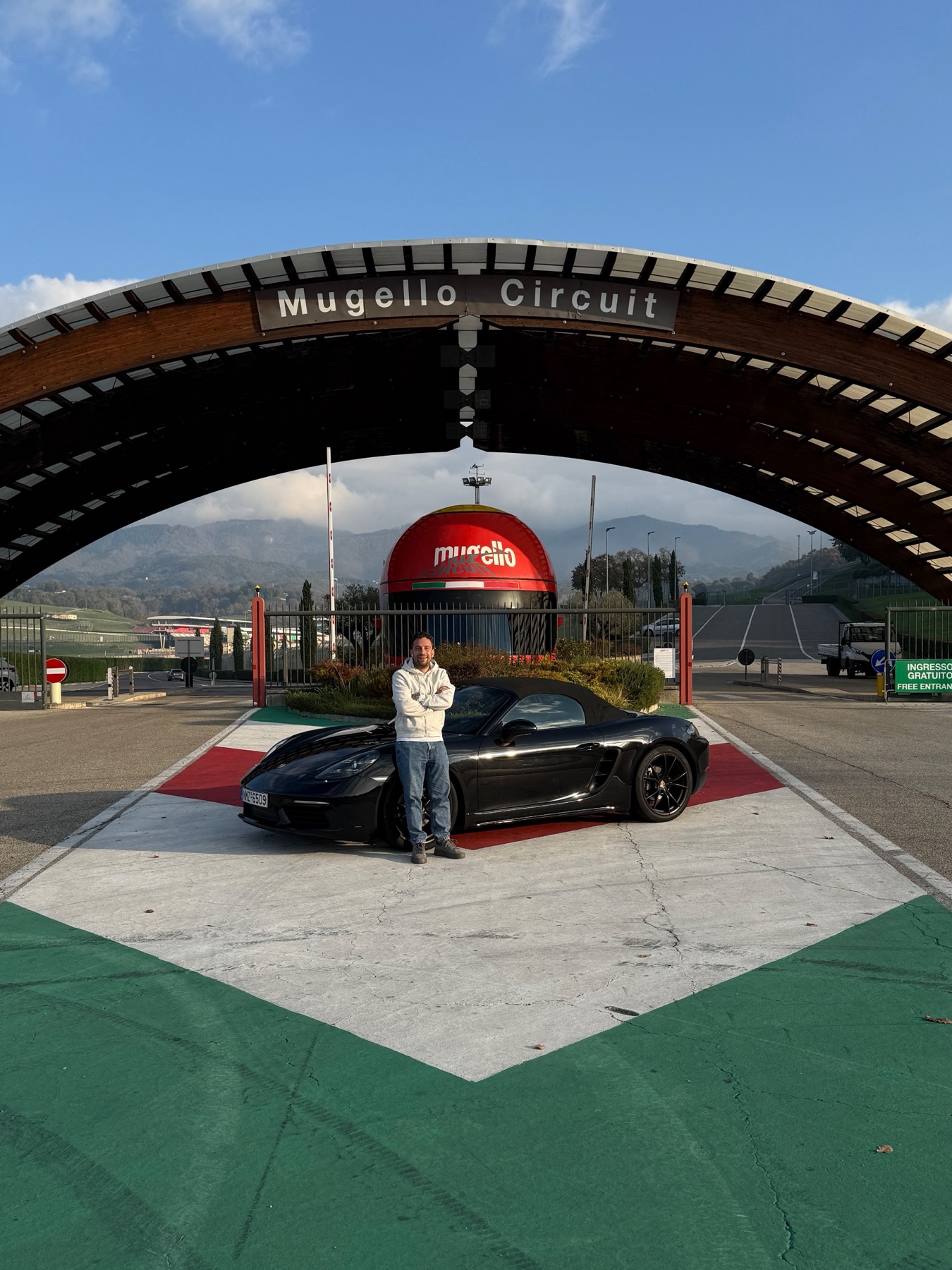
Mugello, a 718 on fresh Trofeo Rs, and a friend who said "let's go" after two seconds of silence. What does a track day in Italy actually take? A helmet? 300 horsepower? A roll cage? Semi-slick tyres? A fire-suppression system? None of that. Good company and an espresso.Read the story
If you'd like to write your own story - submit it here