
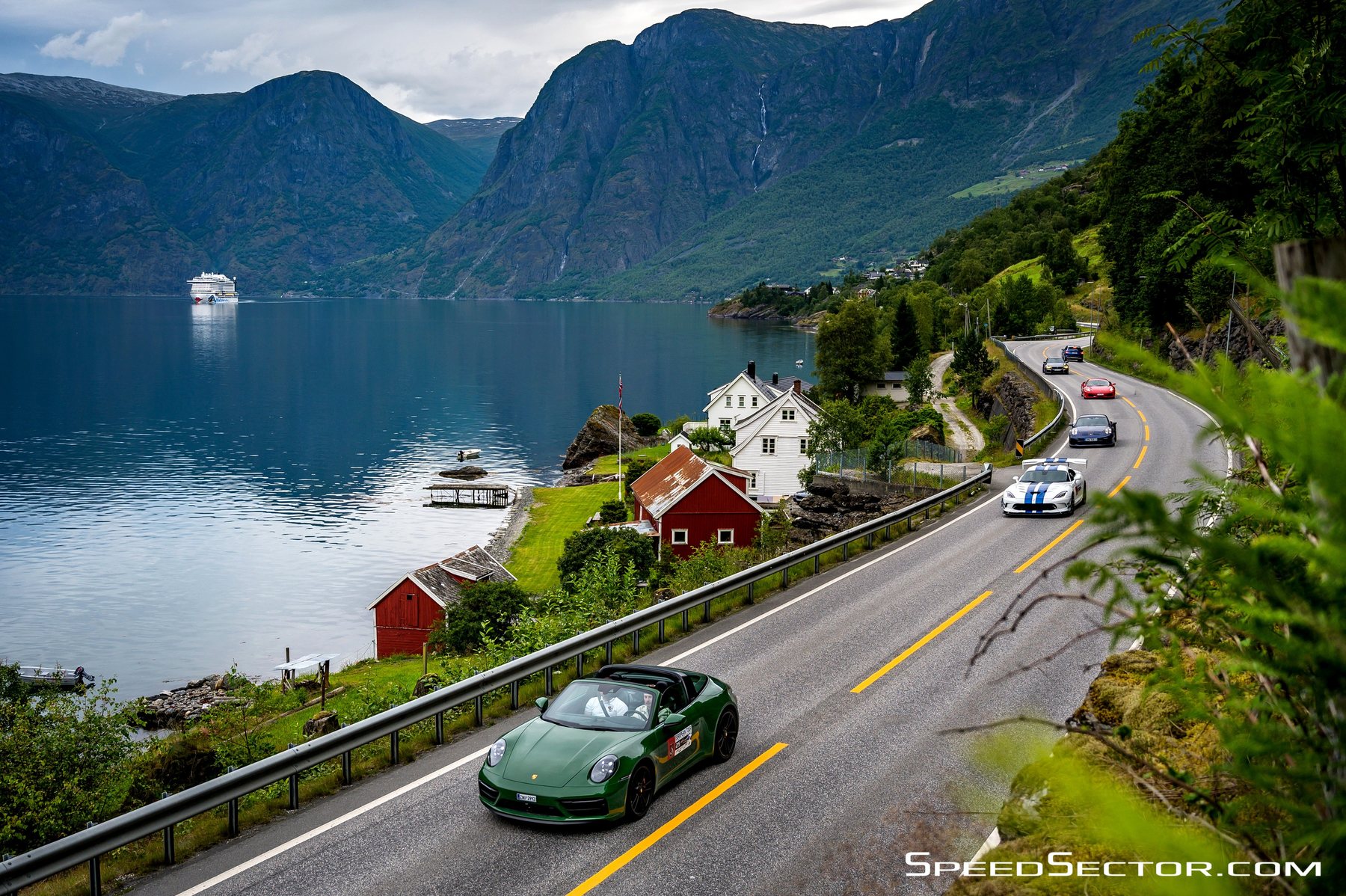
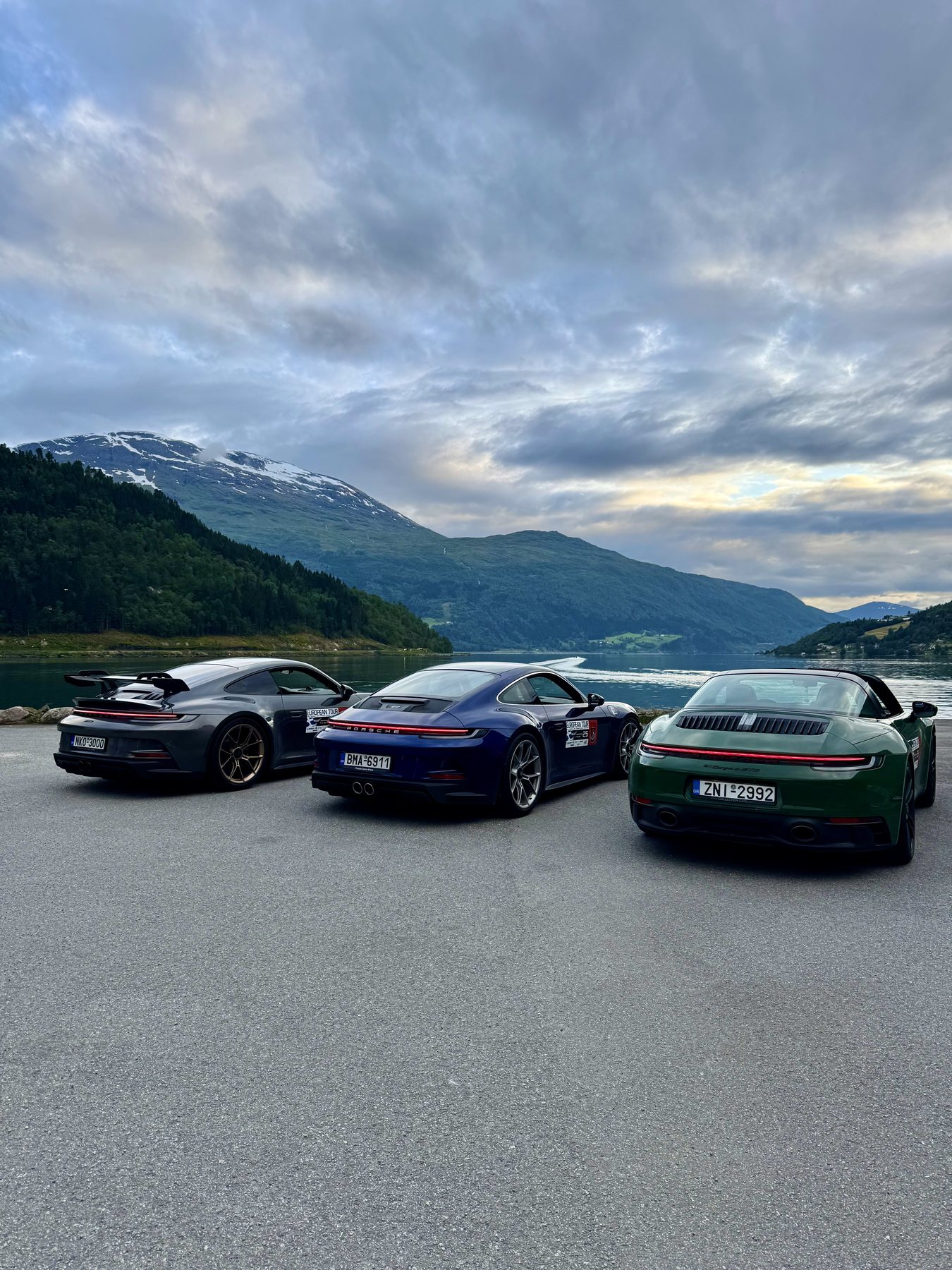
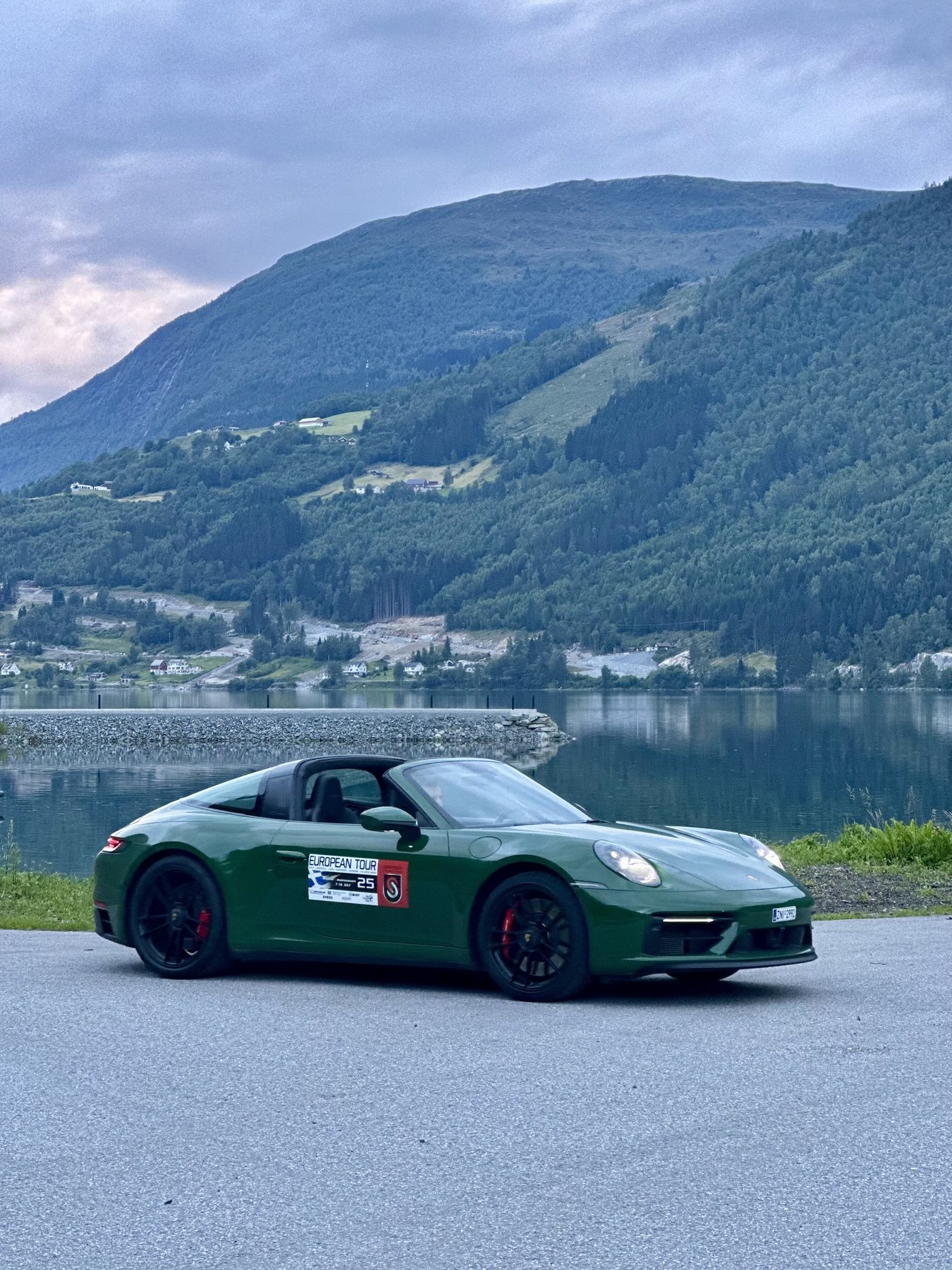
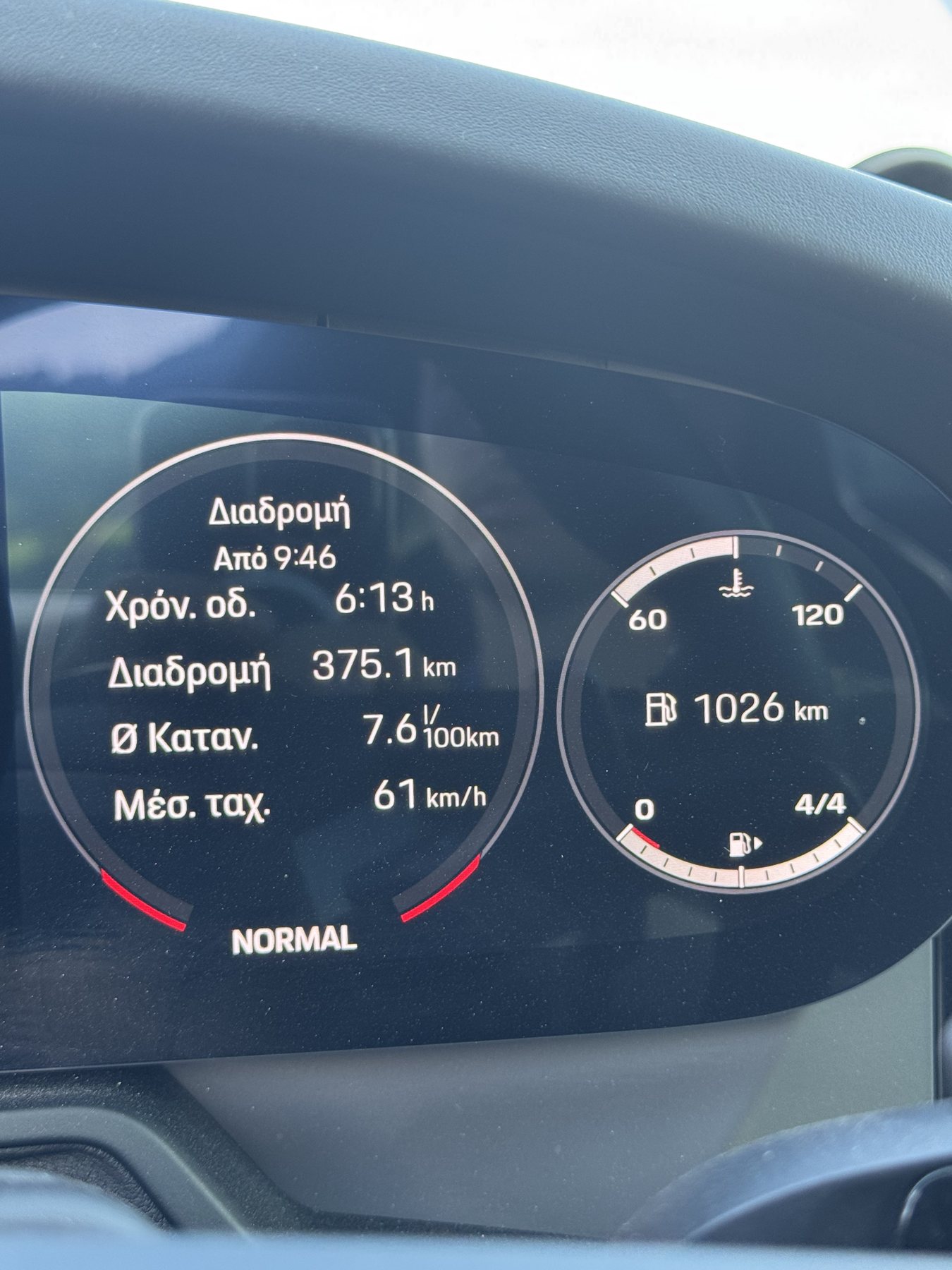
Nine days of driving, a 911 Targa 4 GTS, fjords that don't fit in any photograph, and a range readout that at one point said 1,026 kilometres, something I never thought I'd see. Norwegian discipline, a 20-degree summer, and a track day to finish, so we'd remember why we went all that way.
34 cars, 9 days and a few thousand horsepower
In the summer of 2025, our friends at SpeedSector (aka @mrspeedsector) organised their now traditional European Tour, with a destination quite different from what we'd got used to in previous summers. I'd had the chance to follow them on the Tuscany tour in 2023, Switzerland and Northern Italy in 2024 and later, in 2026, Portugal, and every trip had been its own experience. So the moment I heard that 34 cars were leaving Greece for Norway, to drive around it in 9 days, with a track day at Rudskogen as the cherry on top, it struck me as the perfect summer escape.
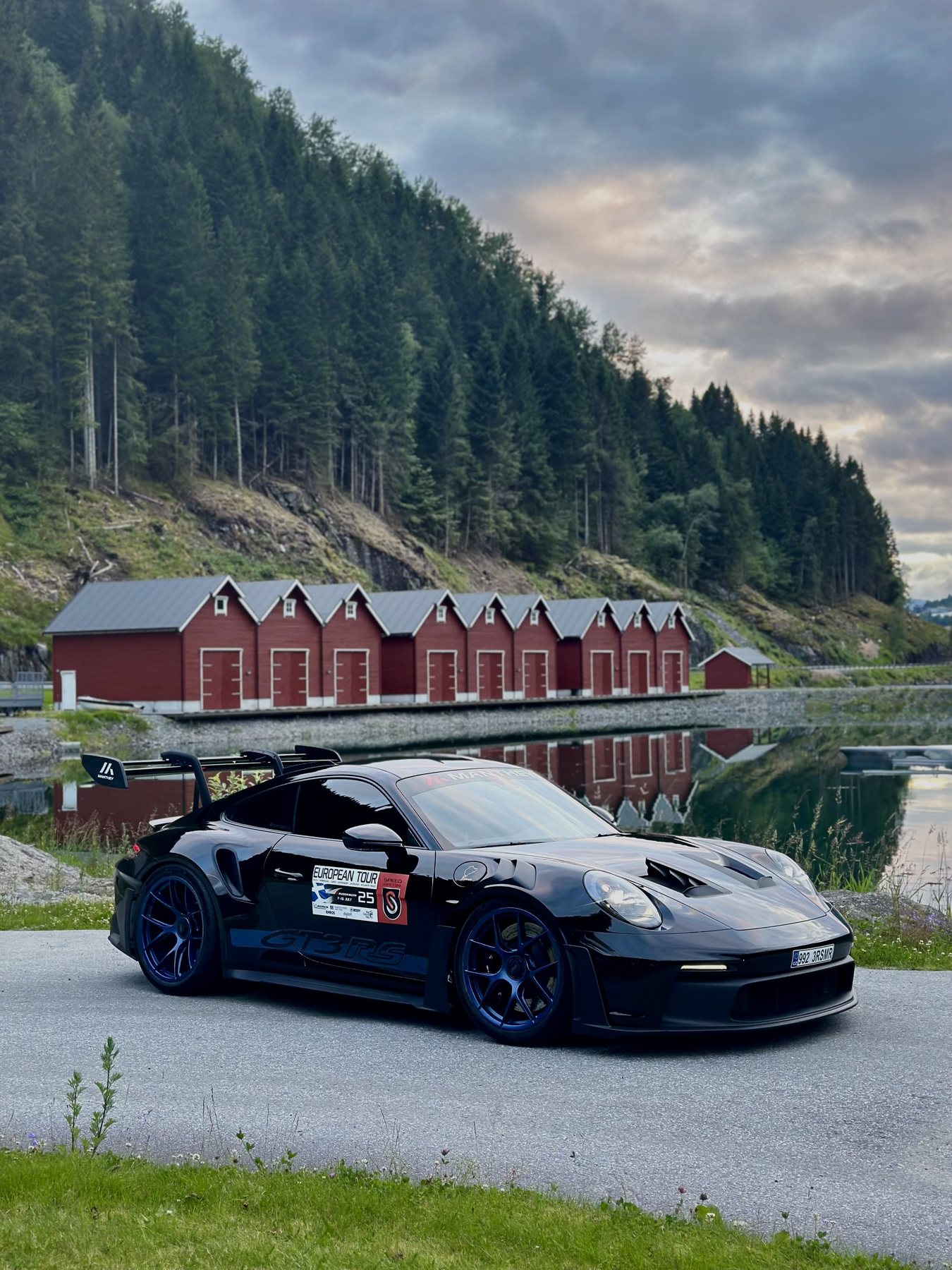
We load the cars, I fill the Targa with the bare essentials, there wasn't room for much more anyway, and a few days later we fly to Oslo. Our cars are already waiting there, having crossed the whole of Europe on transporters. Cars for every taste: Porsches from 996 to 992, Ferraris from 360 to 296, Lamborghini, BMW, Mercedes, and a list of several thousand horsepower ready to go.
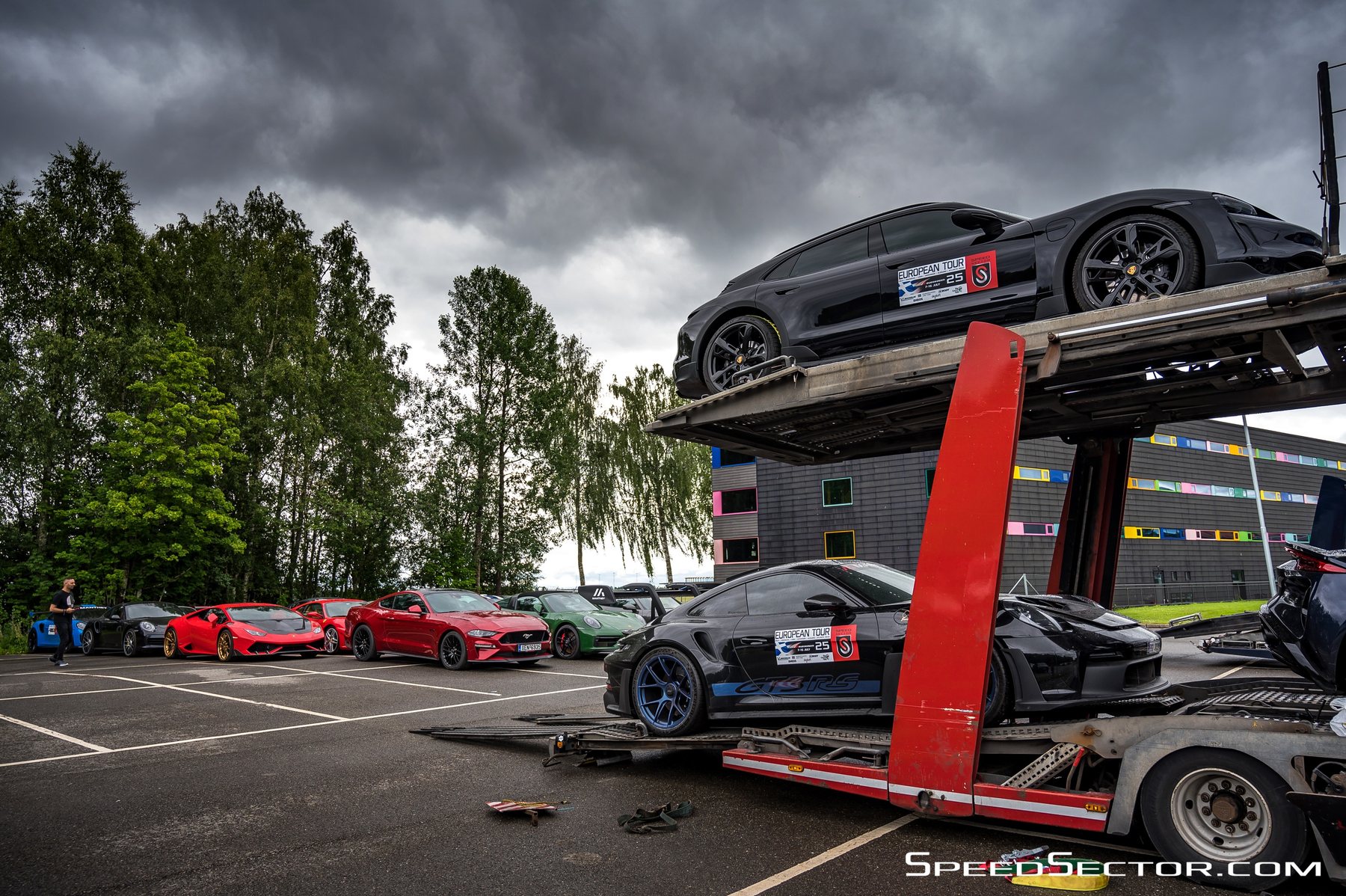
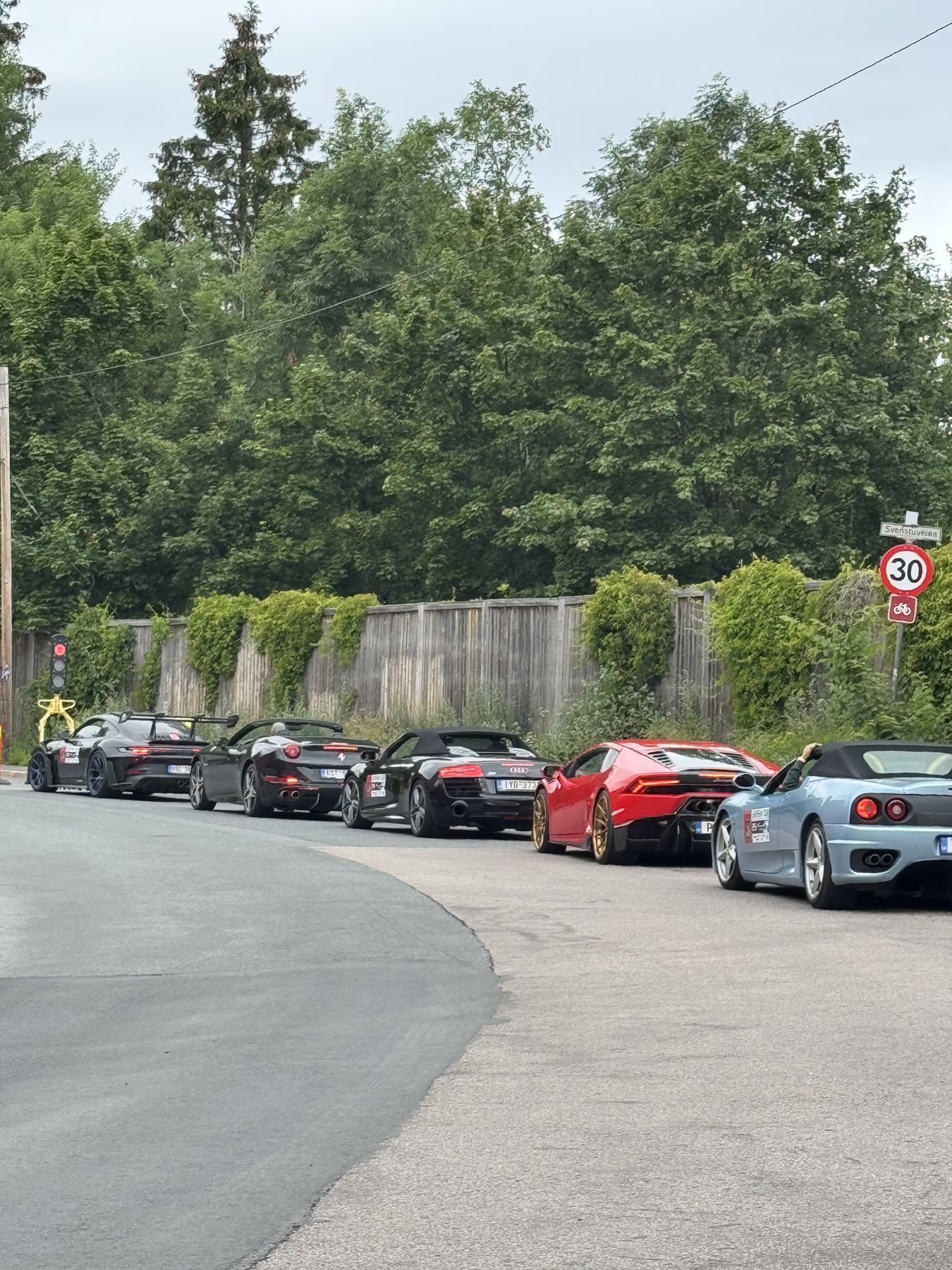
34 cars in safe mode
Heading north, it quickly becomes clear where we are. People seem to observe the limits religiously, with no thought of overtaking or any cleverness. From the atmosphere you soon gather that most Norwegians seem happier with a Tesla than with an orthodox flat six or an 8.4-litre Viper. At least that's what I gathered from their reactions, as if they weren't too pleased we were there. After all, of all new cars sold in Norway in 2025, an overwhelming 95.9% were electric. Speed limits ranged from 60 to 80 km/h, and if we were lucky we might find a 110 limit on a main road. The cars felt like they were in safe mode, since there was no room for a little more adrenaline.
The fjords and the longest tunnel in the world
So as we drive with barely a trace of adrenaline, we fill up on images that are hard to forget, and the scales of interest somehow balance out. The landscapes opening up in front of us get greener and more beautiful by the kilometre, and I feel I've made the best possible choice of car with the Targa. Neither shut inside my cabin nor fully exposed as I would be in a cabriolet. Best of both worlds.
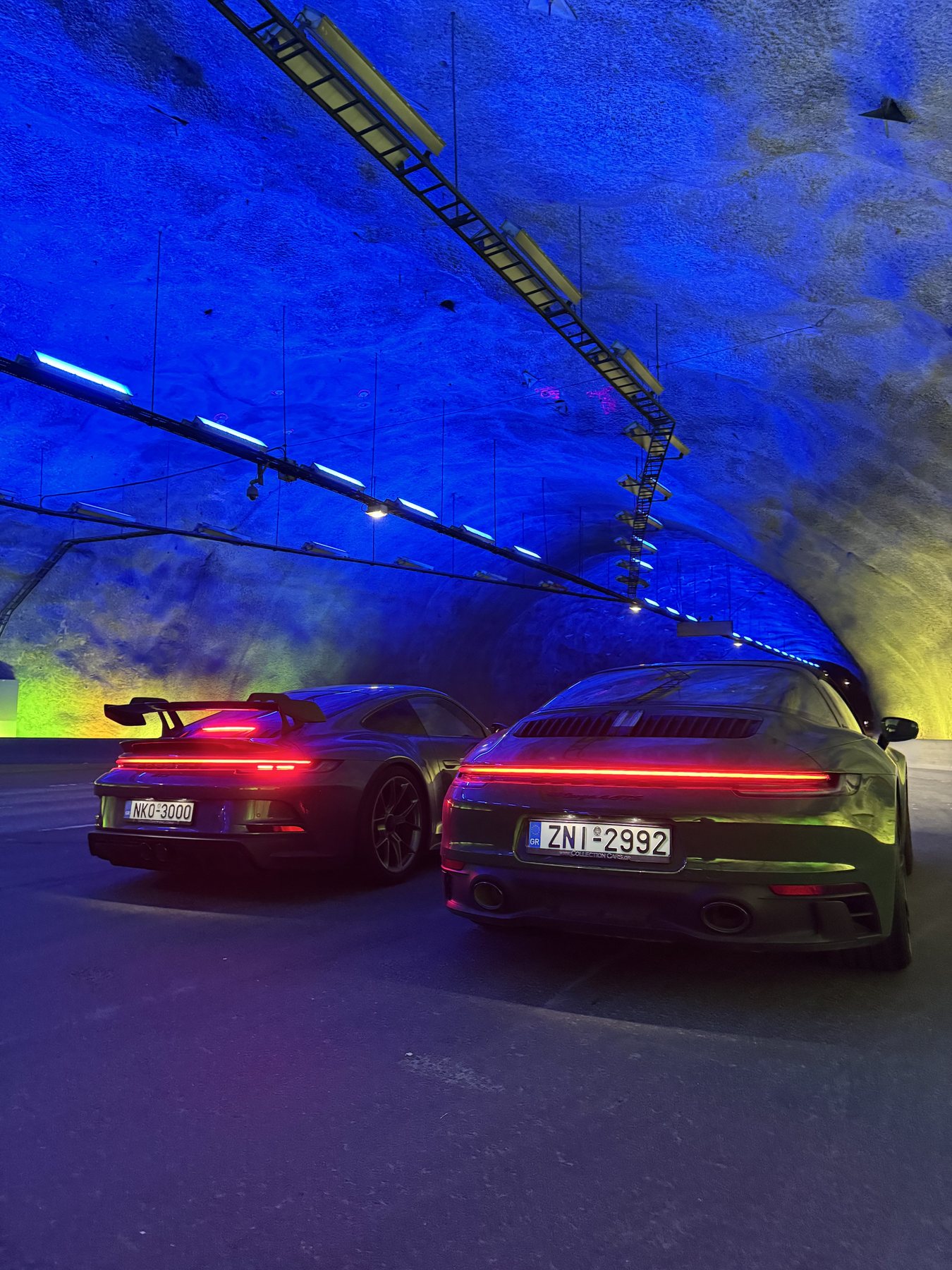
At some point the endless green suddenly stops and the Lærdal Tunnel unfolds in front of us, the longest road tunnel in the world. A 25-kilometre straight, lit like a museum, with blue lights in its sky, and a mix of feelings: awe with a touch of claustrophobia. For my good (or bad) luck, I spent the whole tunnel stuck behind two Lamborghini Huracáns, one of them twin turbo, roughly 2,500-plus horsepower between them. I didn't mind.
A pleasant surprise amid total calm
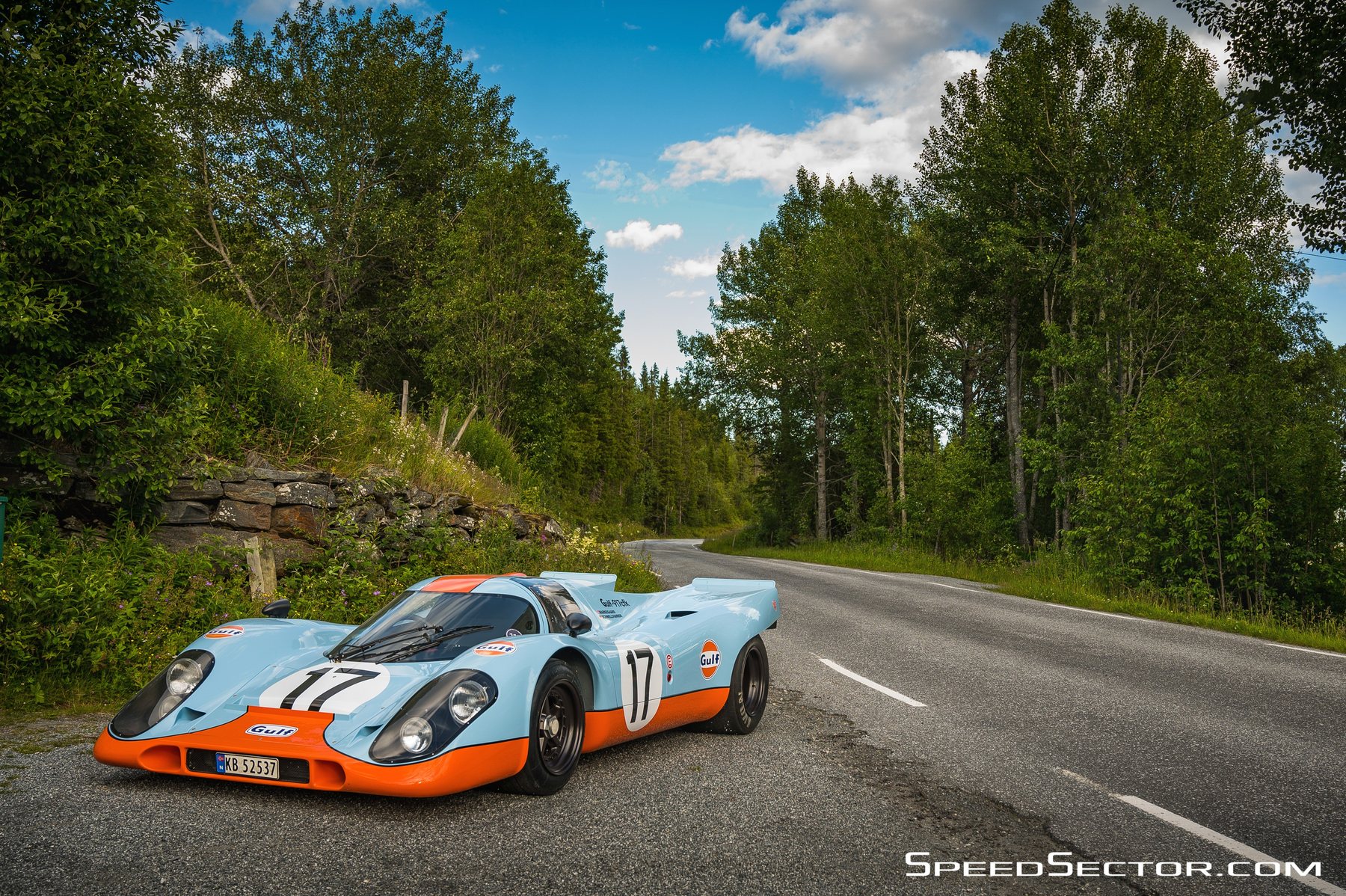
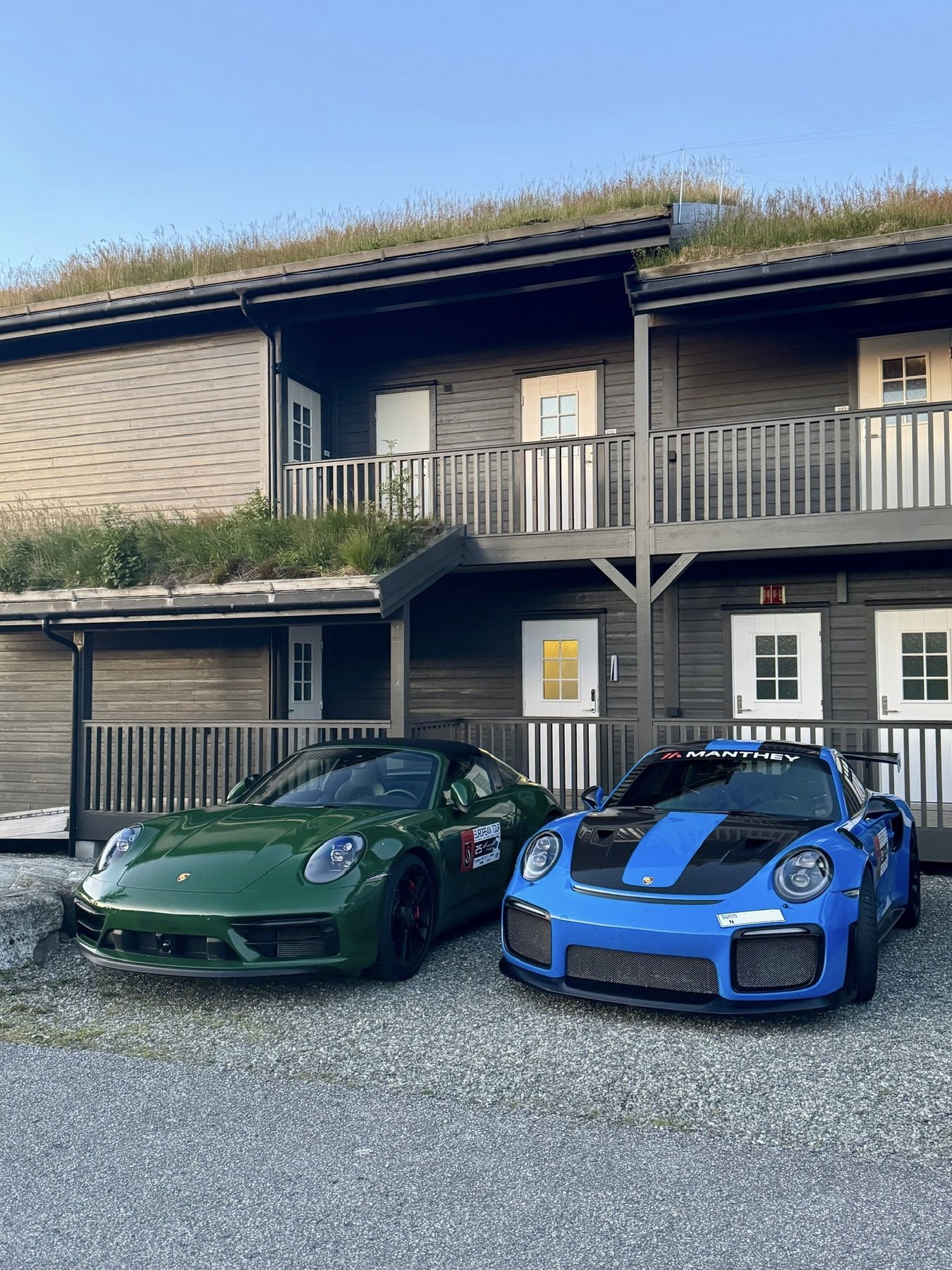
Somewhere after Hemsedal, as we drove along expecting nothing remarkable to happen, a 917 appeared in Gulf colours and our afternoon became more than interesting. Knut, a true Norwegian petrolhead, gave a few years of his life and around 10,000 hours of work to build a 917 replica. He started with a base from Bailey Cars, but along the way acquired moulds taken from an original 917 and made the final body in carbon fibre. He has explained himself that, although he uses a Porsche engine and the body shapes relate to real 917s, it has no original Porsche chassis number, so he doesn't want to present it as a real Porsche 917. For me, though, just seeing it go by, replica or not, made me smile like a little kid, and that says a lot.
From Flåm to Ålesund, via Dalsnibba and Trollstigen
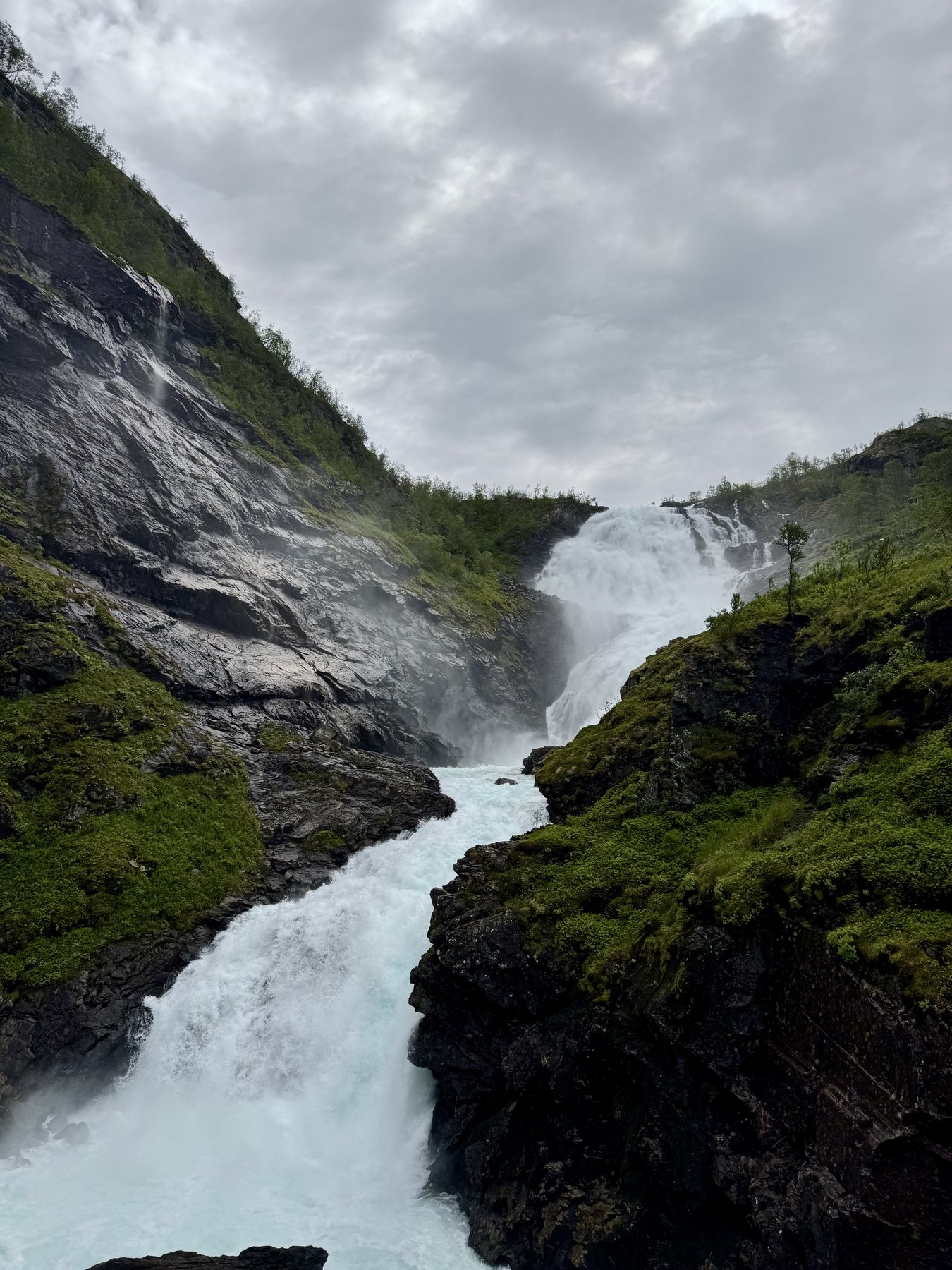
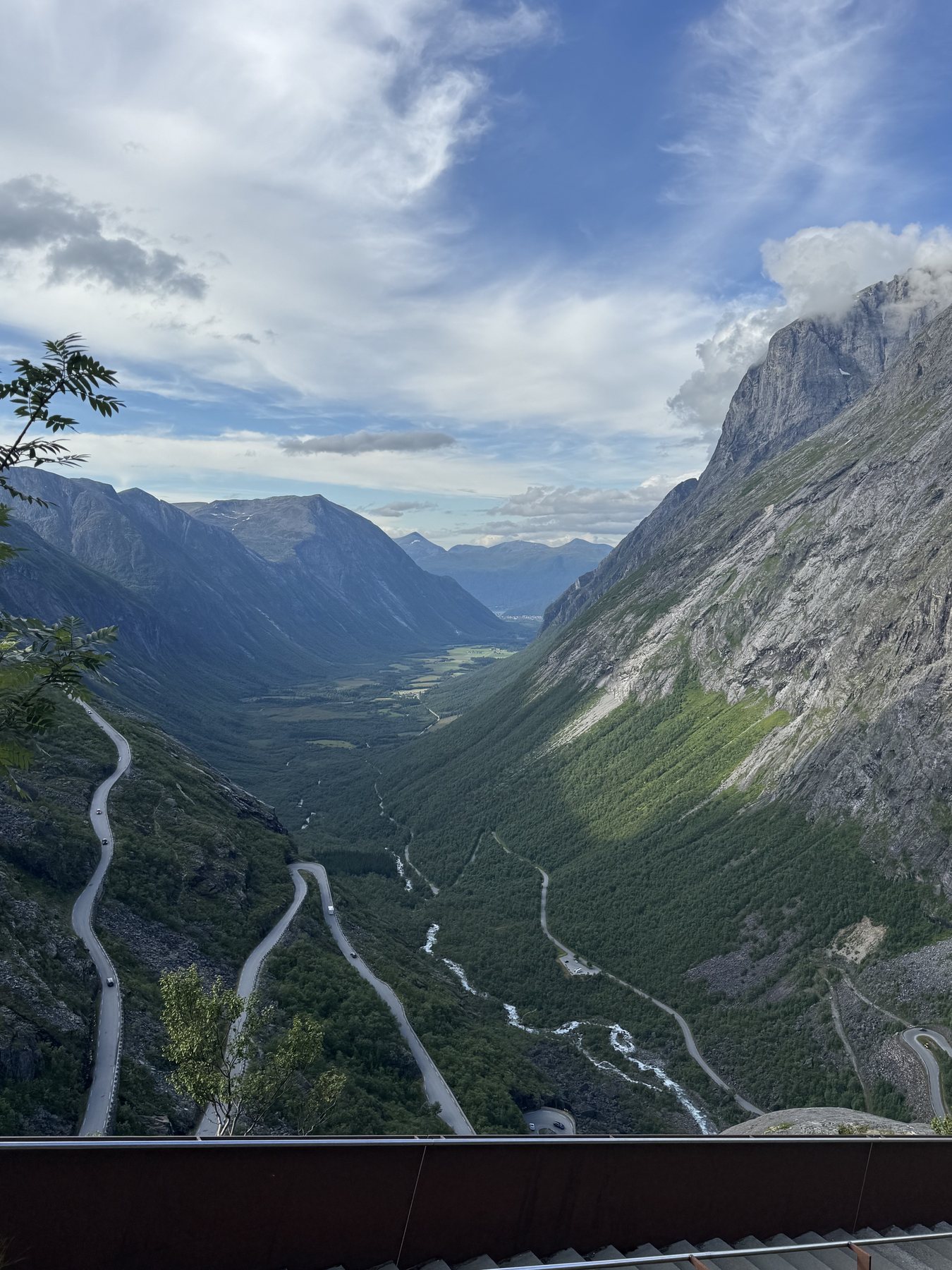
After Flåm and Loen on the first two days, we carried on to Dalsnibba, the highest point you can drive to and take in a panoramic view of the fjords. Then we crossed Trollstigen, the trolls' road, one of Norway's best-known passes, on our way up to Ålesund.
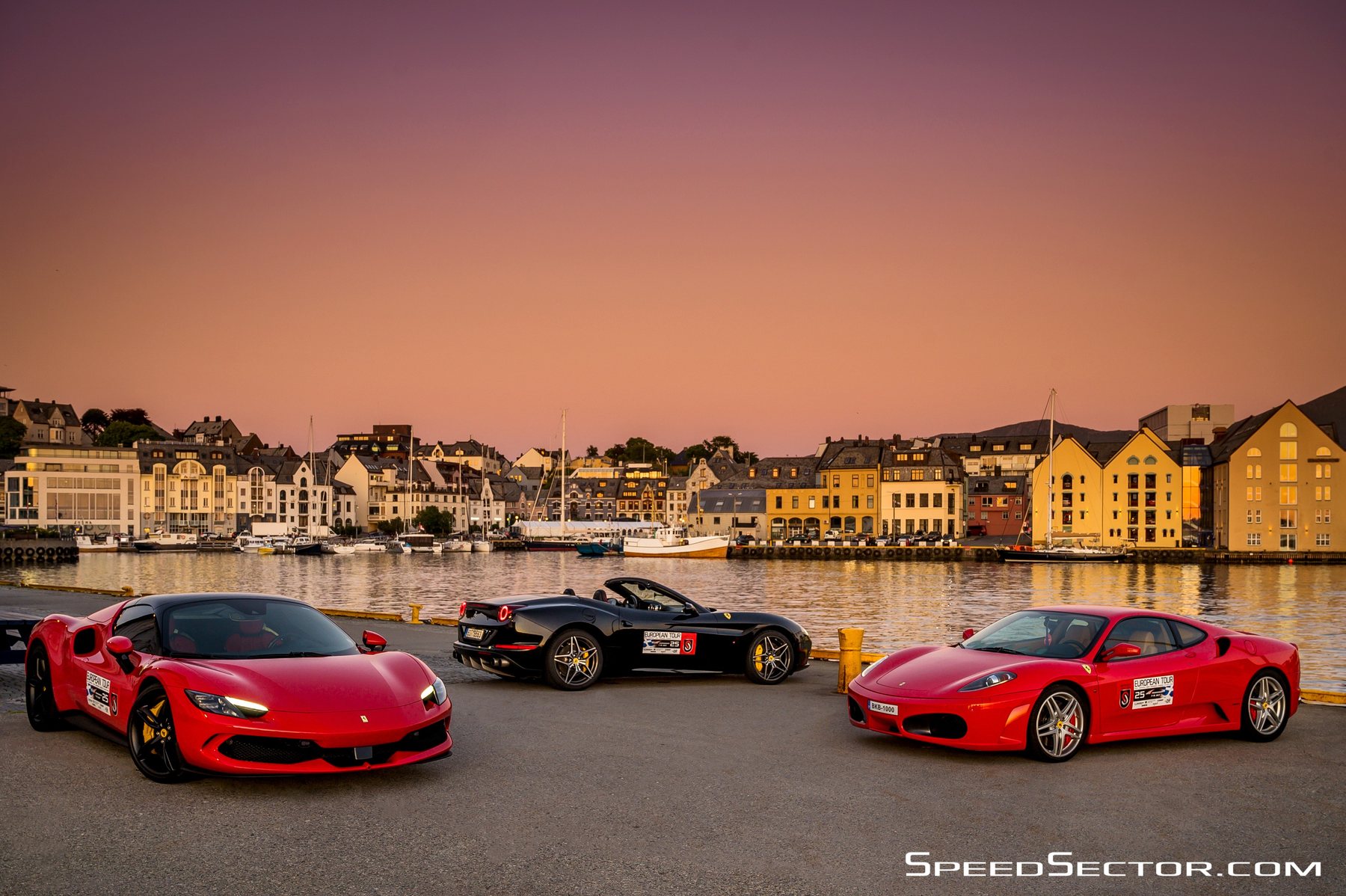
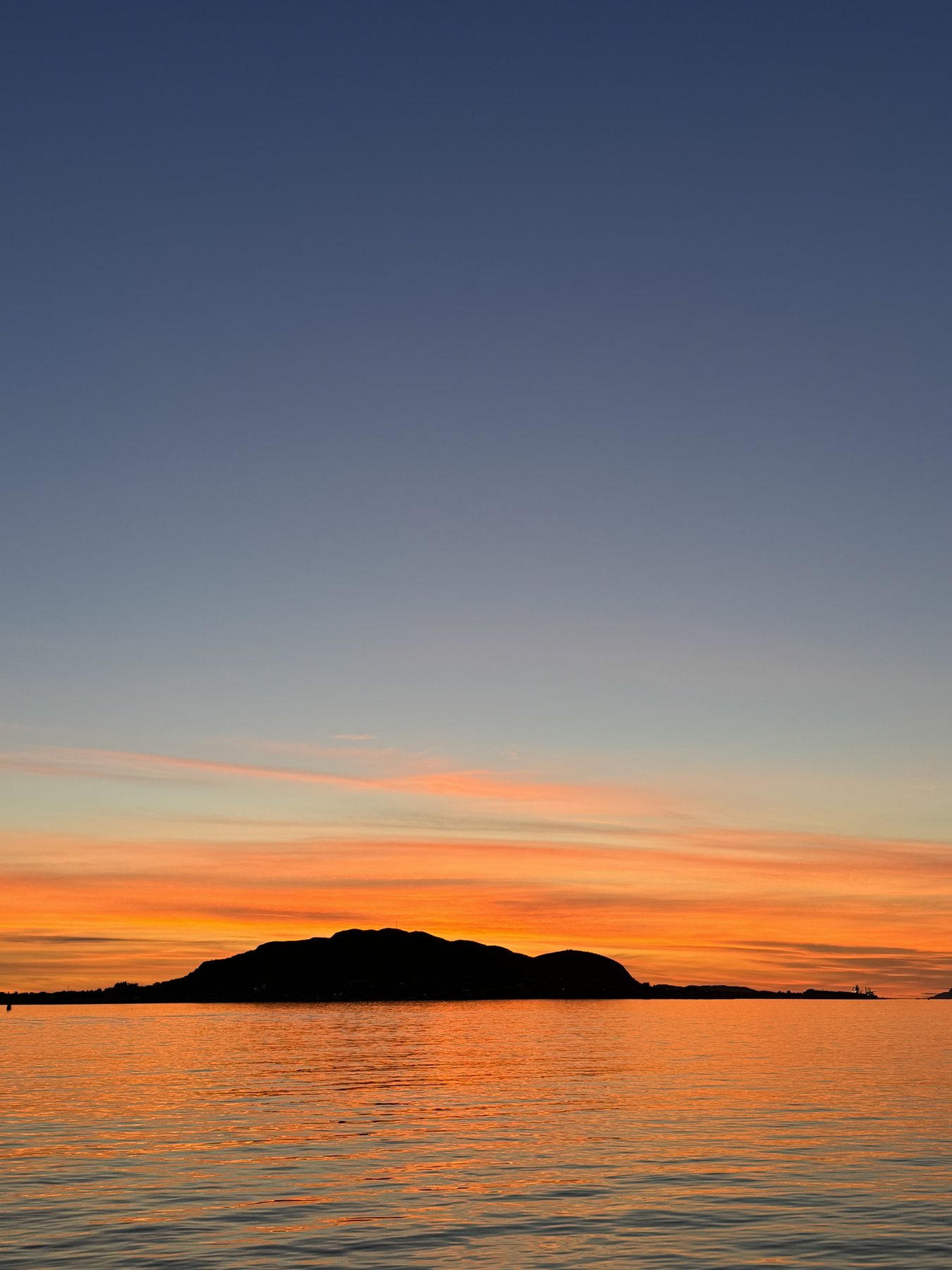
Ålesund had a completely different character from our previous stops. Built on small islands and known for its distinctive architecture, it looked almost cinematic as the light fell. There I got to see one of the most beautiful sunsets of the trip, against a backdrop of three Ferraris from three different generations: F430, California T and 296.
Shore to shore, bound for the Atlantic Road
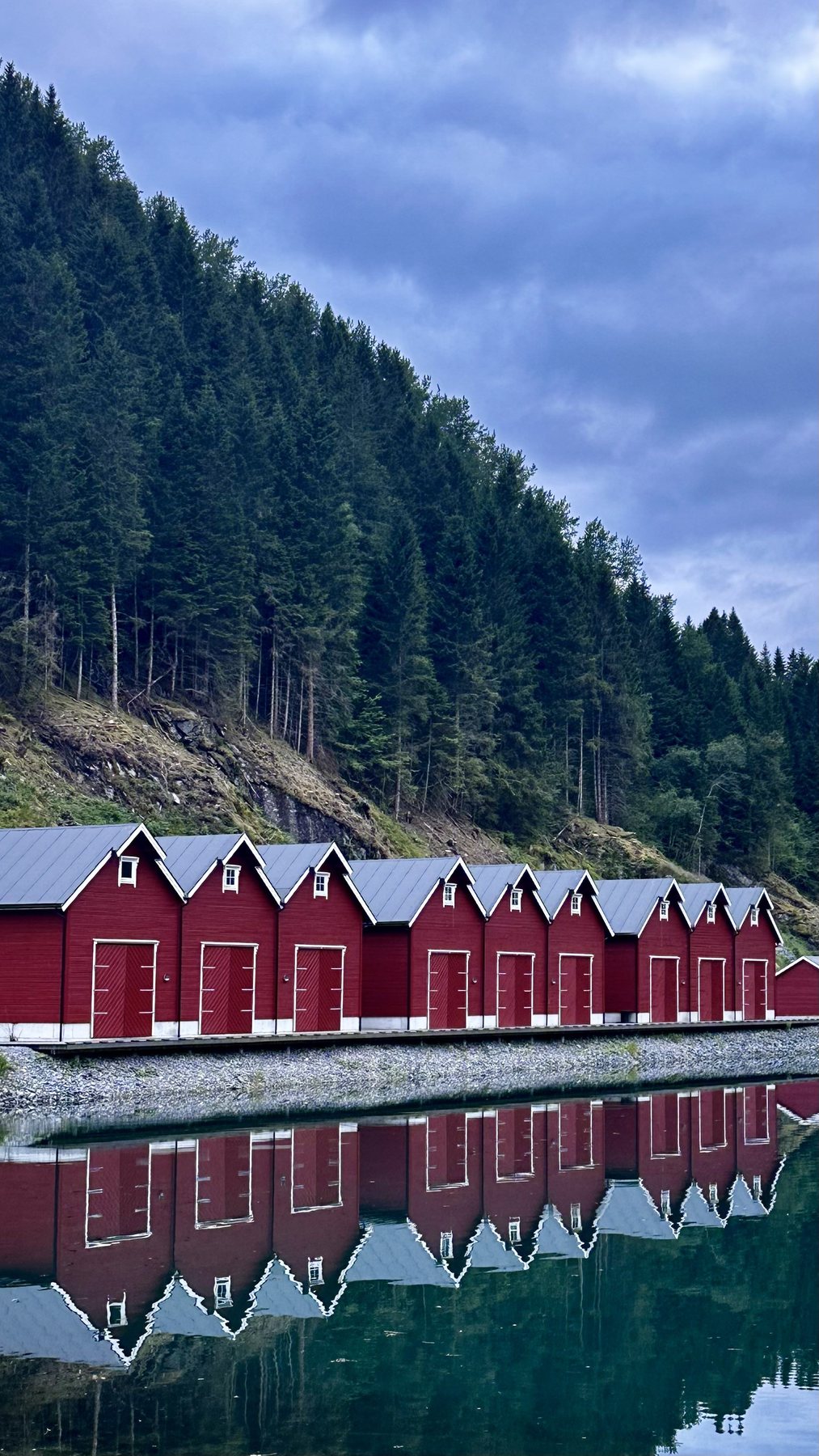
The further north we go, the road stops stretching out ahead of us and we find ourselves at the water's edge, waiting for the scheduled ferries to continue. The coastal side of the country is built on countless small islands and skerries, a rare setting that made this route so special.
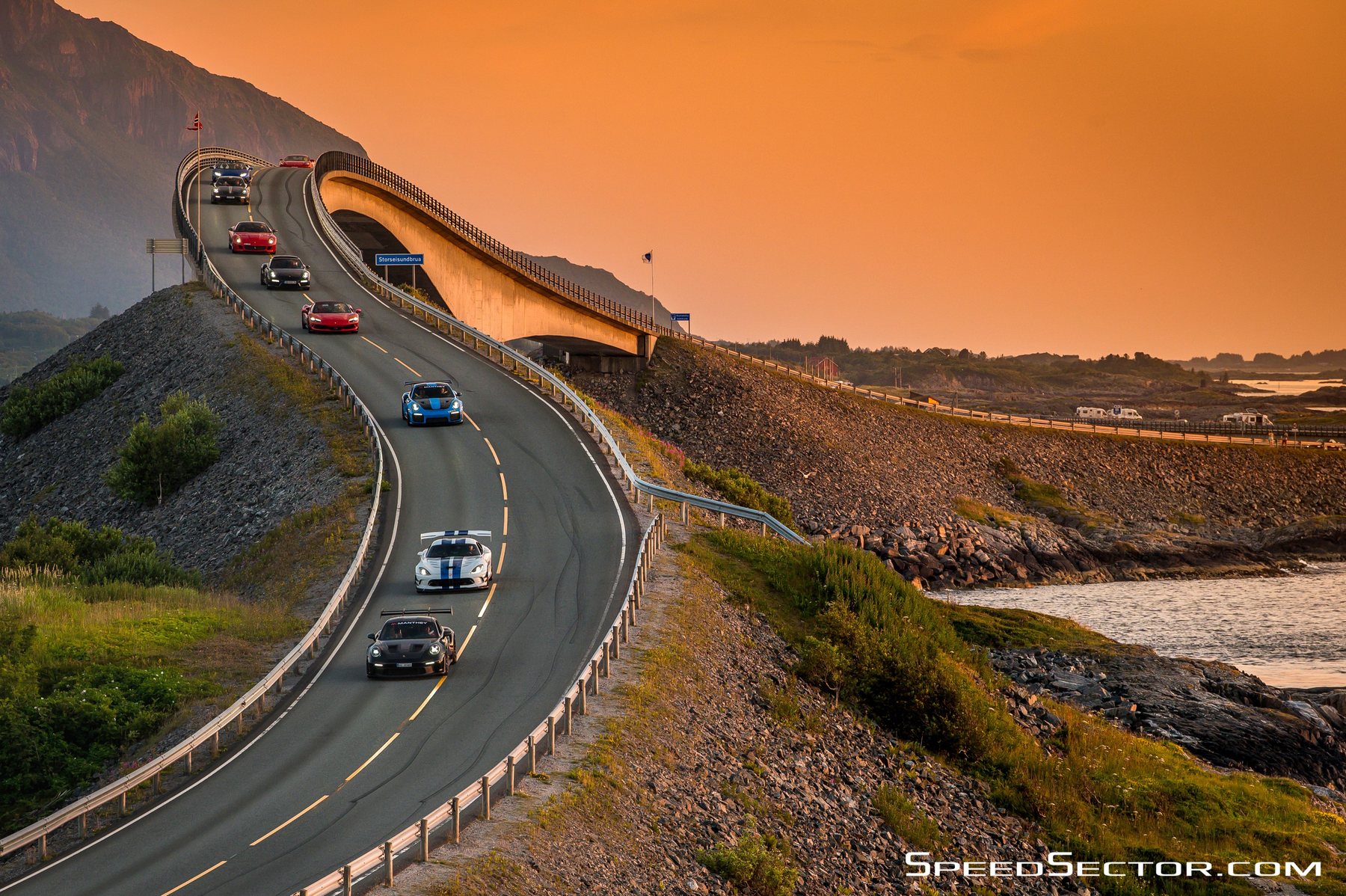
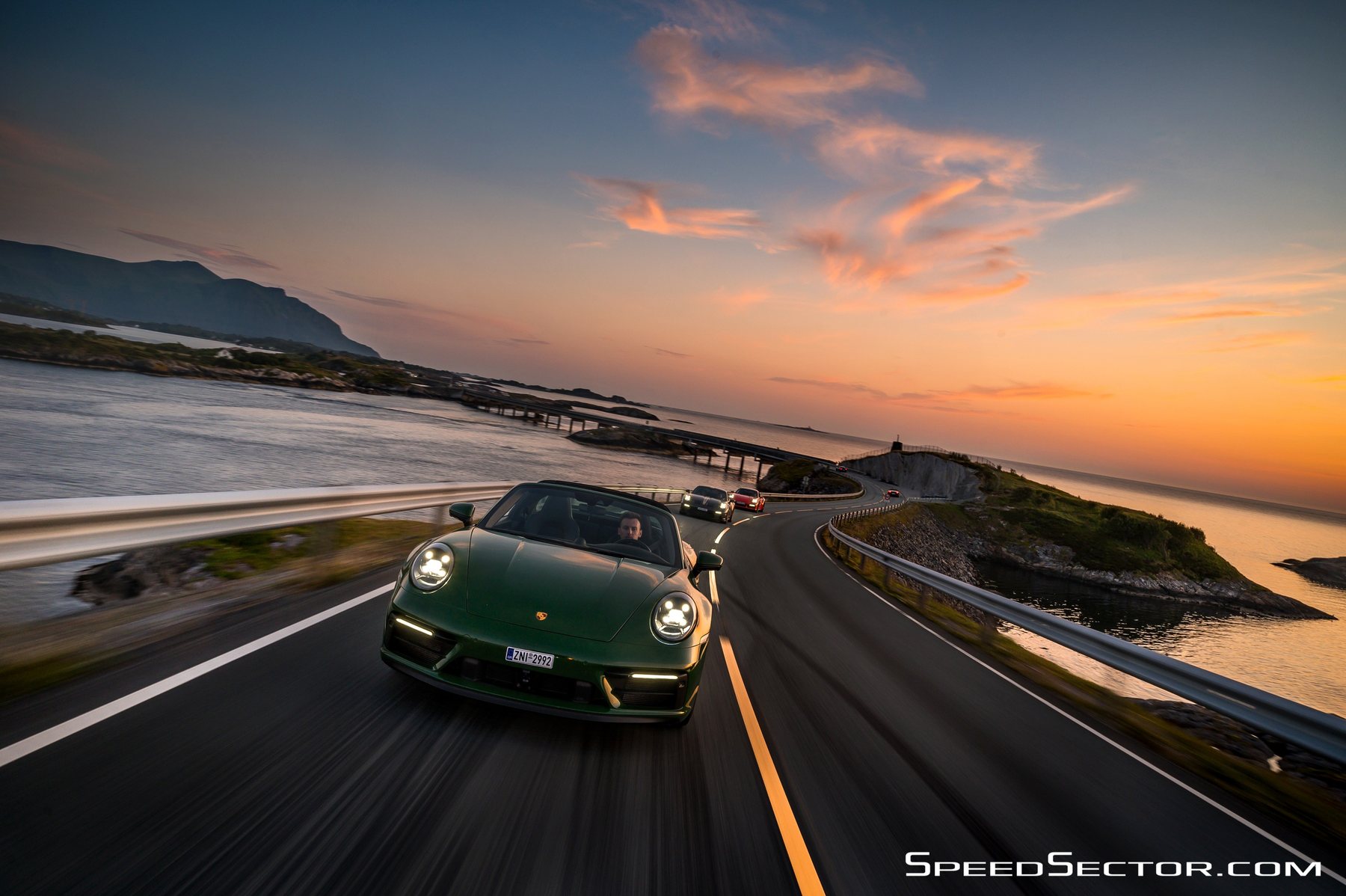
And somewhere there lies the Atlantic Road, a road you've surely seen in a feature or a video, linking the small islands and skerries through a series of bridges, with the road rising and falling over the sea like a roller coaster. Combined with the sunset and the roof down, it was unreal. That day I must have driven it more than ten times, back and forth, simply to enjoy the moment a little longer. Every pass had something different, and somewhere between the bridges and the sea I realised I was driving my own car in a place that for a long time had simply been on my list. It was one of those roads-to-drive I'd always wanted to tick off the list. And in the end it was worth as much as I'd imagined, maybe a little more, precisely because I was there in my own car.
Sander, Øle and two genuine E36 M3s
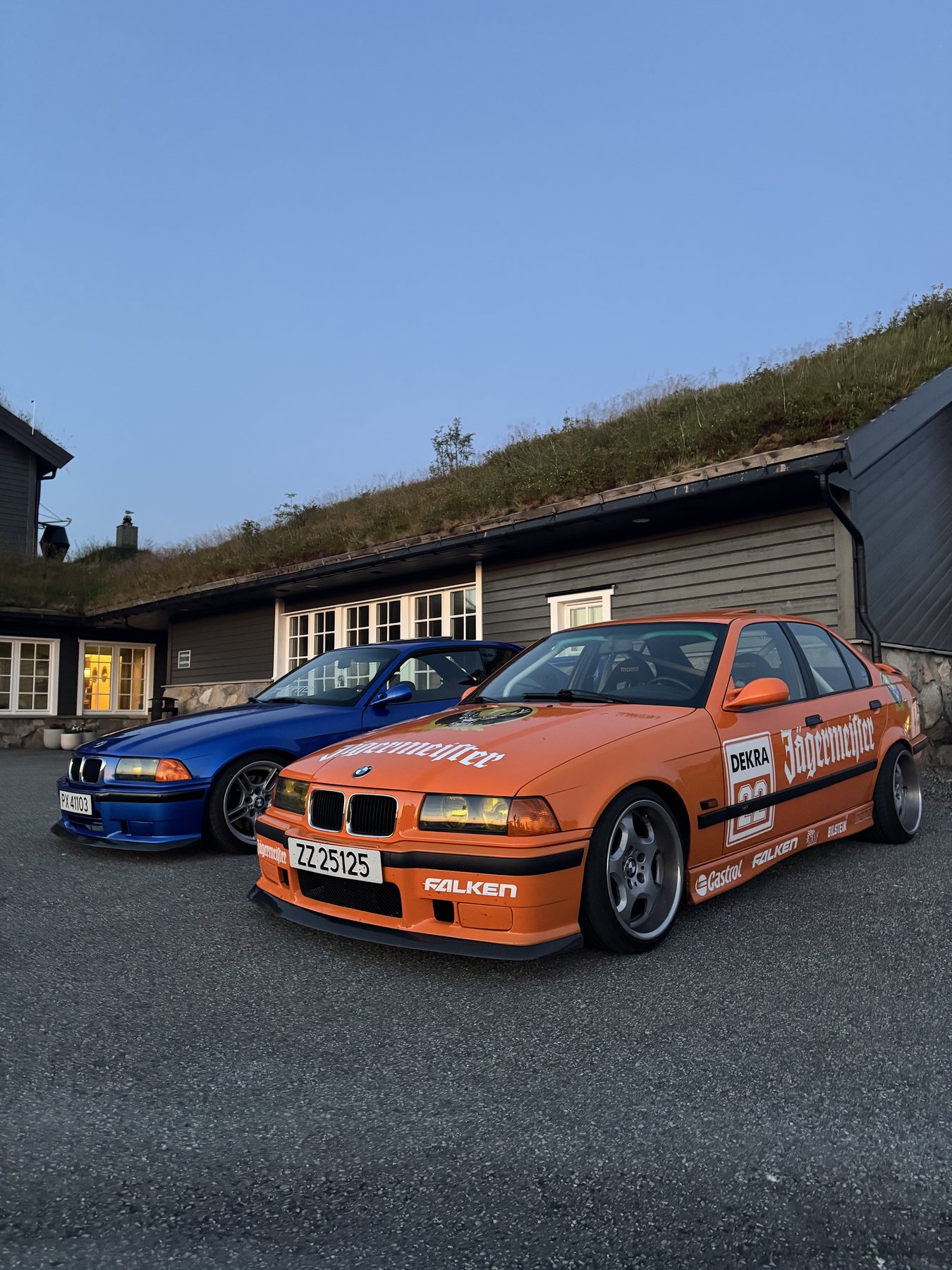
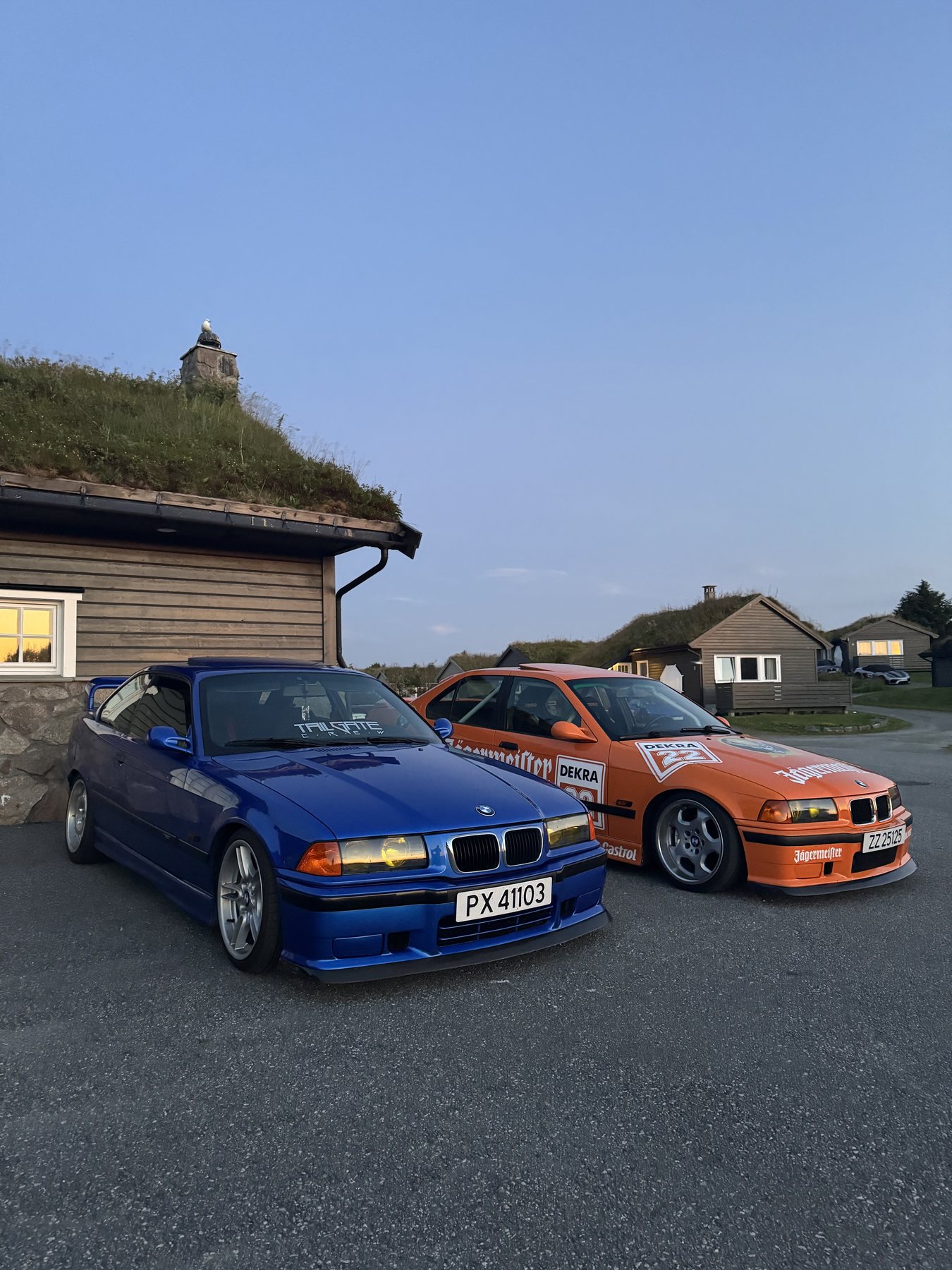
In a car park further down, I met two guys, Sander and Øle, with their genuine E36 M3s. They were out on their regular weekly drive, enjoying the sunset. They wondered how we'd ended up there from so far away, and we soon got talking about what each of us drives. Me, appreciating 90s cars more and more as I get older, let alone two such clean specs (see photo), and them in turn going over the 992. They told me about the local track days they organise, how strict the police are there, and the trip they were planning to the Green Hell. I may never have caught their humour, and probably they never caught mine, but all three of us quickly understood that we share the same passion. We still keep in touch on social media, and I still catch the Atlantic Road sunsets through their stories.
1,026 km of range and a track day to finish
Eight days of disciplined, humble driving behind speed limits that forgive nothing, and on the horizon a proper finish was waiting. We set off in one go on the drive back down to Oslo, for an overnight stop, with Rudskogen circuit as the final destination. At one of the few fuel stops, I realise something's wrong. In a country full of electric cars, the Targa was apparently trying to fit in. 7.6 l/100 km and 1,026 km of range. It never got to the point of asking for a charger, but it was the closest it had ever come to a Norwegian ecological conscience.
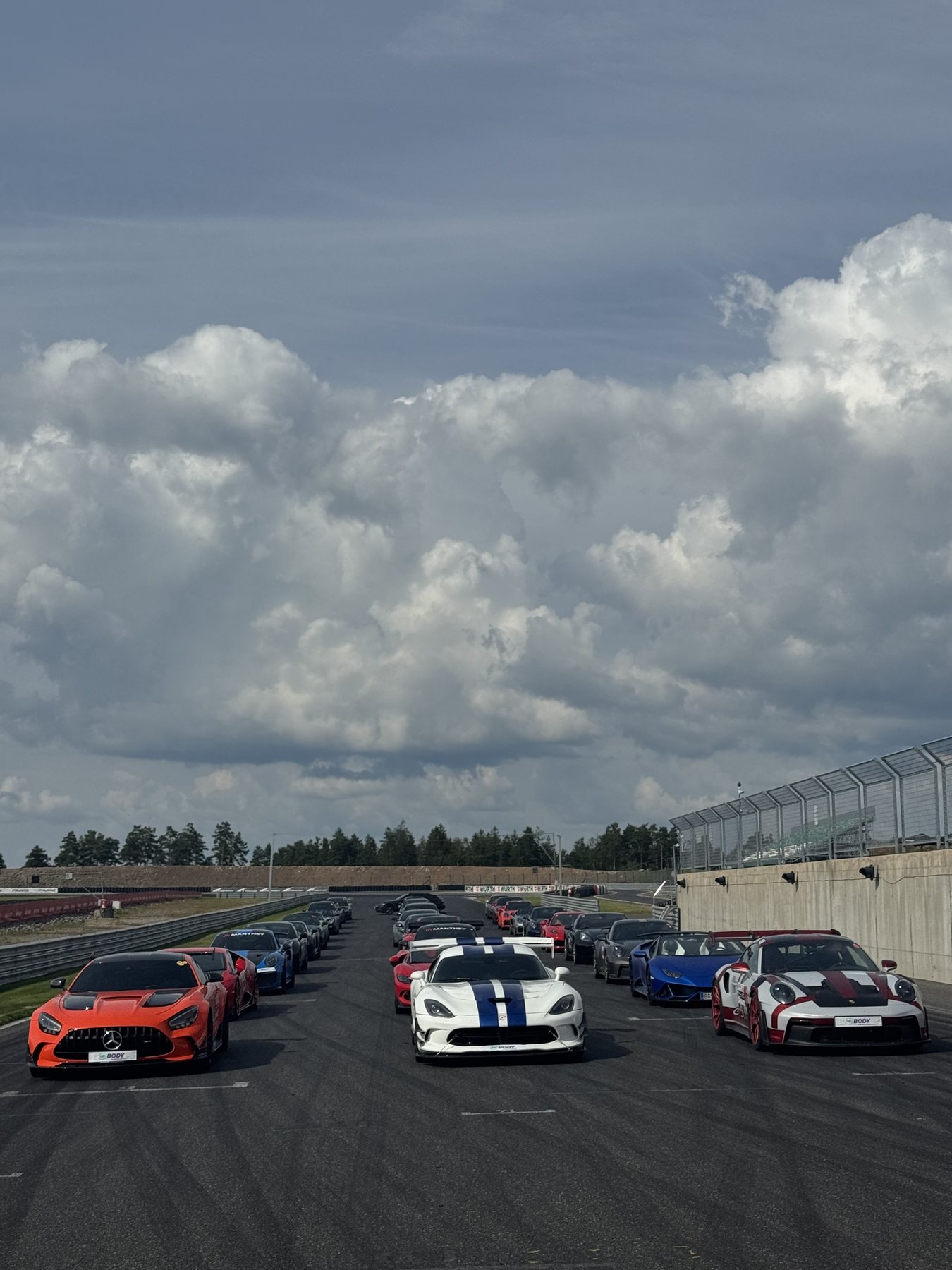
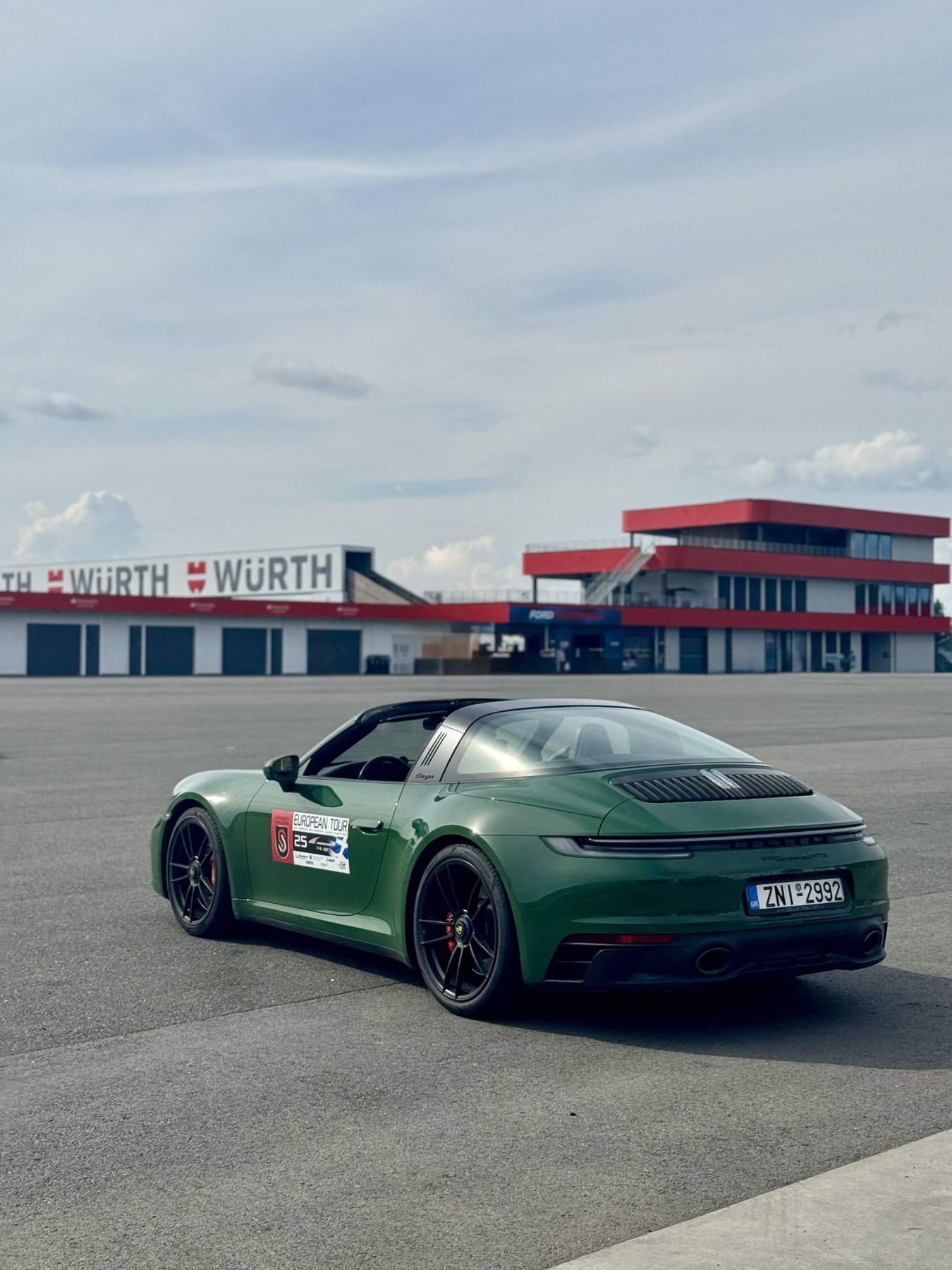
So, the last day, and at last we're somewhere familiar, with fresh asphalt, fantastic facilities and the feeling that, after so many days of disciplined driving, it was time to let the cars breathe a little. This track day felt like a reward for all the restraint of the previous days. The smell of brakes and tyres was familiar, and suddenly the trip changed rhythm completely.
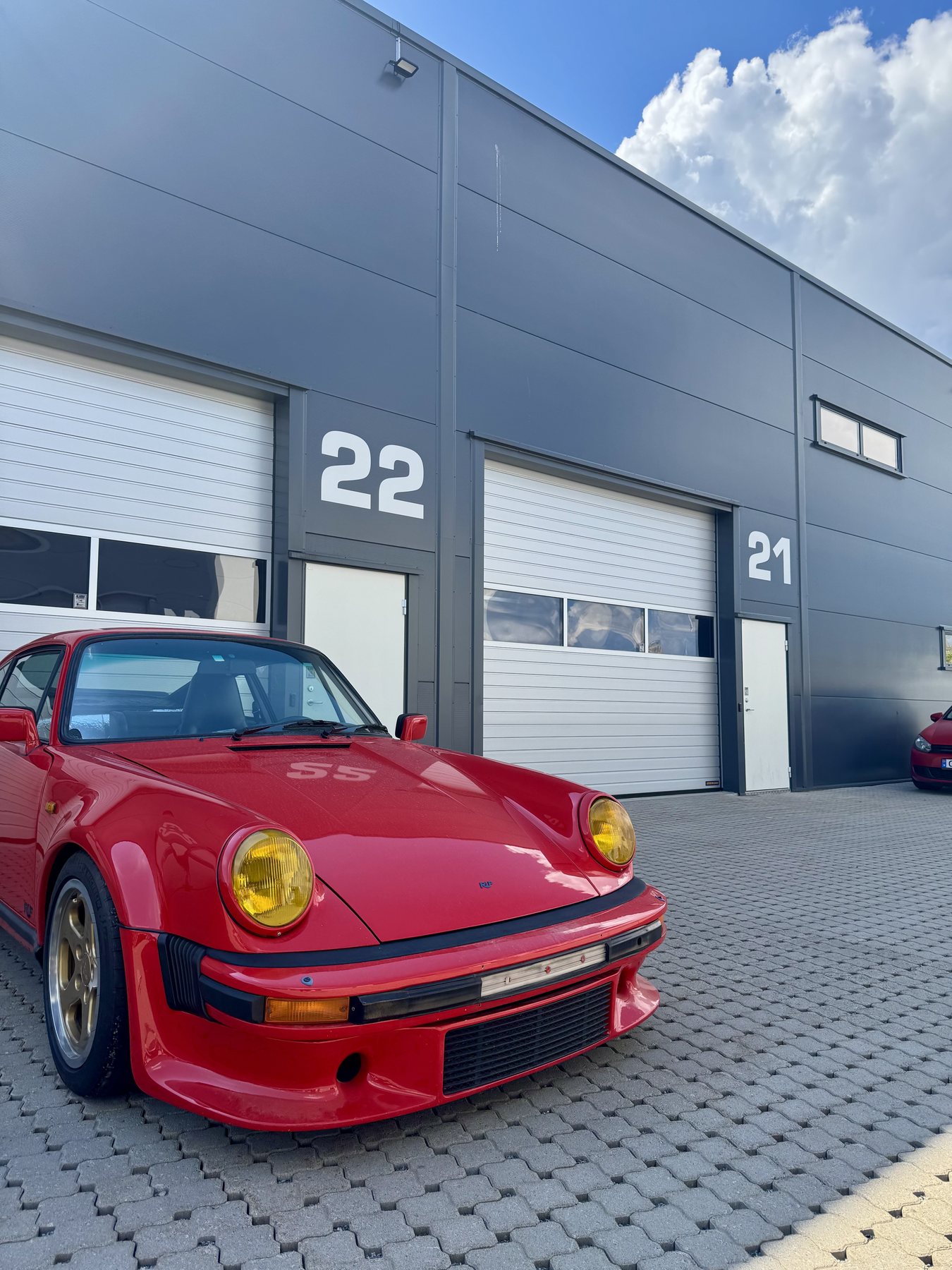
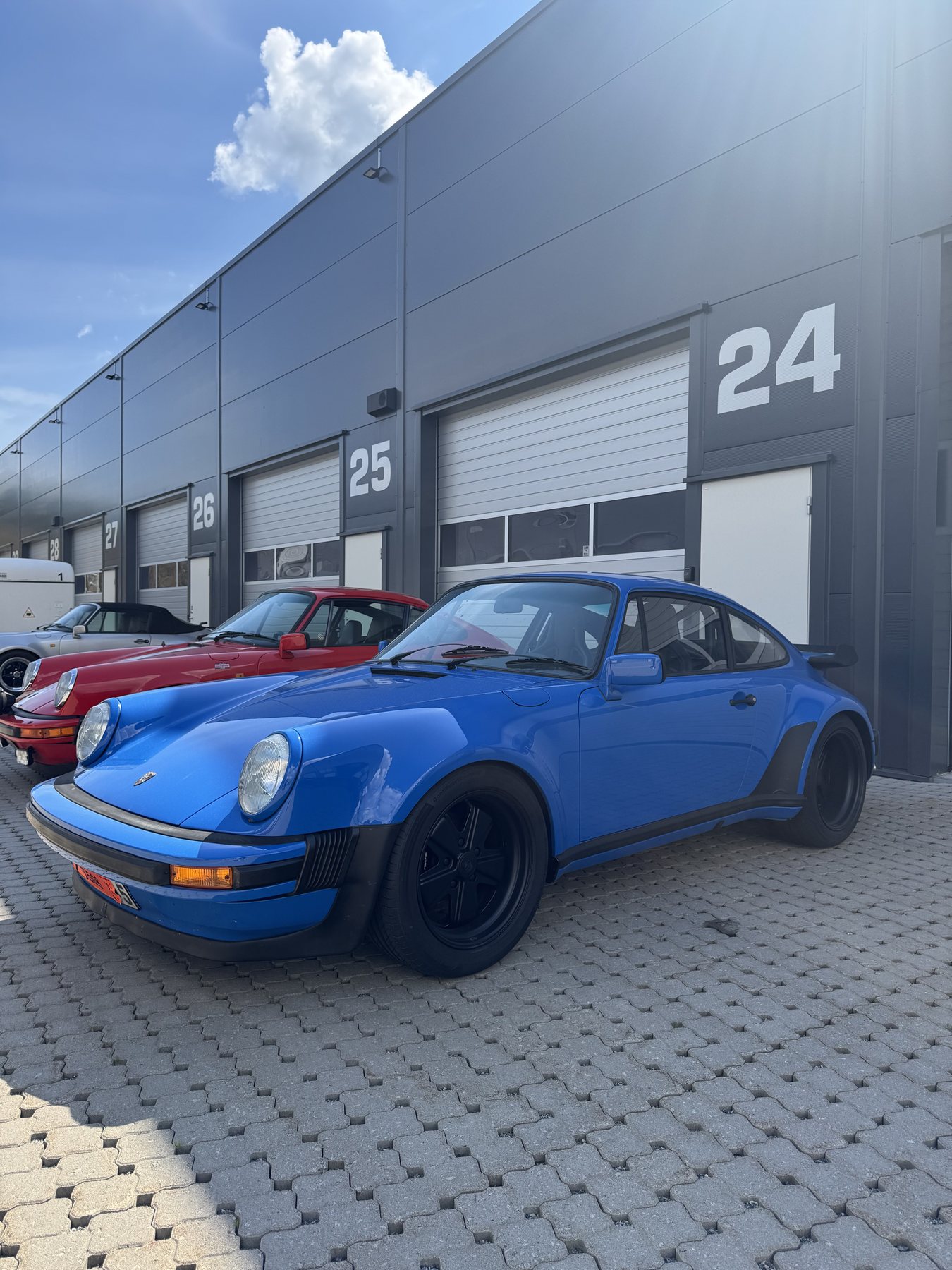
The circuit turned out to be far more technical than it looks on video. Although I'd driven it plenty of times on the sim, the elevation changes and the blind spots feel different in person. After eight days in which the right foot had worked almost under self-censorship, this was perhaps the first moment of the trip when we could really use the cars as they were designed to be used. Every session brought out a bit more of their character, and back came that feeling we'd been denied all those days. The day ended with plenty of smiles and a simple reminder: however impressive a road trip may be, some cars need their space now and then to show what they can really do.
The trip in review
Nine days and a couple of thousand kilometres later, Norway turned out to be a rather different road trip from what we were used to. It won't be the trip I remember for fast roads or endless mountain passes with the car at its limit. In fact, for eight of the nine days it was almost the opposite.
And maybe that's exactly what made it so special. We drove through fjords, crossed mountains, tunnels and ferries, reached the Atlantic Road in our own cars, met people at the other end of Europe with the same passion, and at the end got all the adrenaline we'd been missing.
The Targa proved to be perhaps the ideal car for a trip like this. Comfortable enough to cover endless hours on the road, special enough to make every drive feel like an occasion, and when the time for the circuit finally came, enough of a Porsche to remind me why I'd chosen it in the first place.
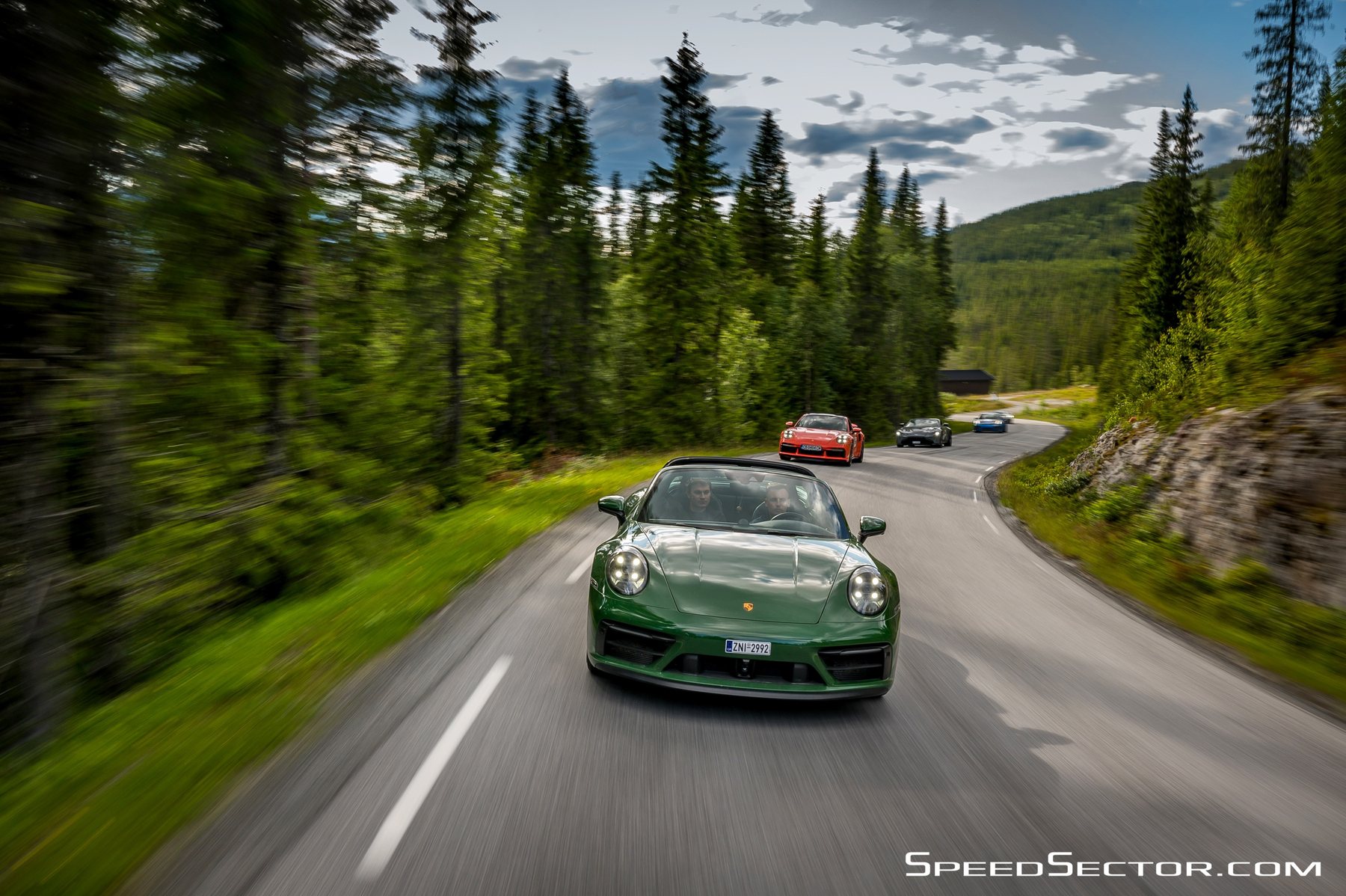
Looking back, though, it wasn't the 1,026 km of range or the laps at Rudskogen that stayed with me most. It was the sight of 34 cars crossing together a country that seems almost made for road trips, even if its roads do everything they can to stop you enjoying it the way you'd like. And somewhere along the way I understood that sometimes you don't need to drive fast to have a wonderful trip.
Deep down, the 1,026-kilometre reading was the most honest thing the car told me on the whole trip: that it was waiting for something. Rudskogen was the answer it was looking for.
Related stories
LONDON TO TUSCANY IN A PORSCHE 911: THE ROAD TRIP YOU HAVE TO DO ONCE IN YOUR LIFE
Fifteen days, 2,500 kilometres, a silver 911 Carrera GTS, and Alessandra in the passenger seat. From London, through the Eurotunnel, Paris and Burgundy, to the hairpins before Tuscany - with a stop at a French petrol station that nearly ended it all. Part one of two.Read the story
I WENT TO GERMANY MYSELF TO COLLECT THE PORSCHE. I WOULD NEVER PAY SOMEONE TO BRING IT TO ME.
How hard is it really to import a car from Germany yourself? The story of my third personal import - Autobahn, Swiss passes and a ferry across the Adriatic - and everything you need to know before you bring your own.Read the story
WHAT DO YOU NEED FOR A TRACK DAY?
Mugello, a 718 on fresh Trofeo Rs, and a friend who said "let's go" after two seconds of silence. What does a track day in Italy actually take? A helmet? 300 horsepower? A roll cage? Semi-slick tyres? A fire-suppression system? None of that. Good company and an espresso.Read the story
If you'd like to write your own story - submit it here