
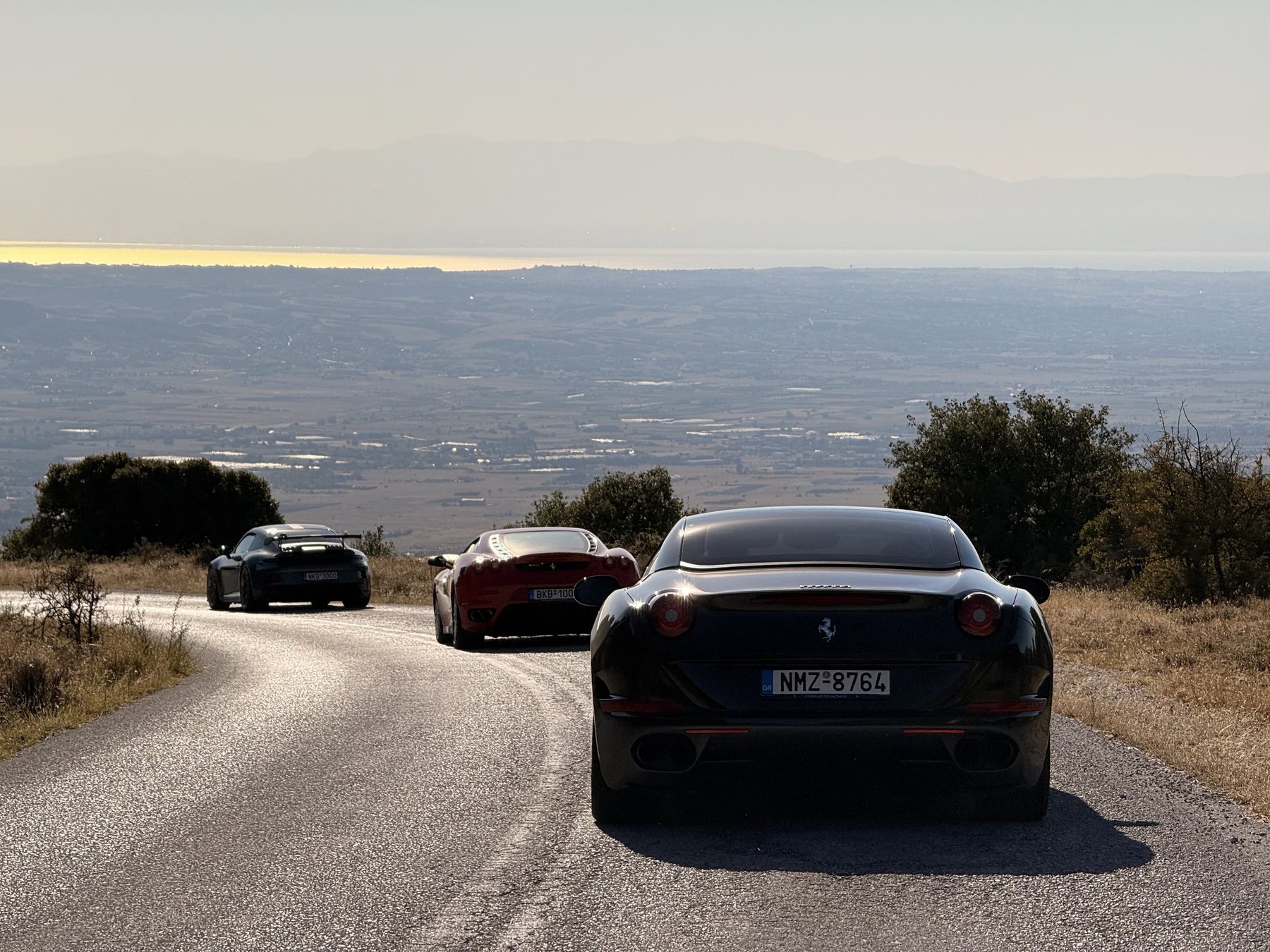
Petrokerasa: 24 km of forest from Vasilika to the square under the plane trees
The road to Petrokerasa is Thessaloniki's nearest mountain drive: 24 km from Vasilika, a climb to 840 metres through oak and beech, and lunch in the village square. The route, the stops and the way back via Zagliveri.
Fifty kilometres from the centre of Thessaloniki there is a village of 250 people, a cobbled square under plane trees and tavernas that cook over charcoal. Petrokerasa is no secret: on a fine weekend it fills up. For us, though, the food is only half the reason to go. The other half is the road that takes you there.
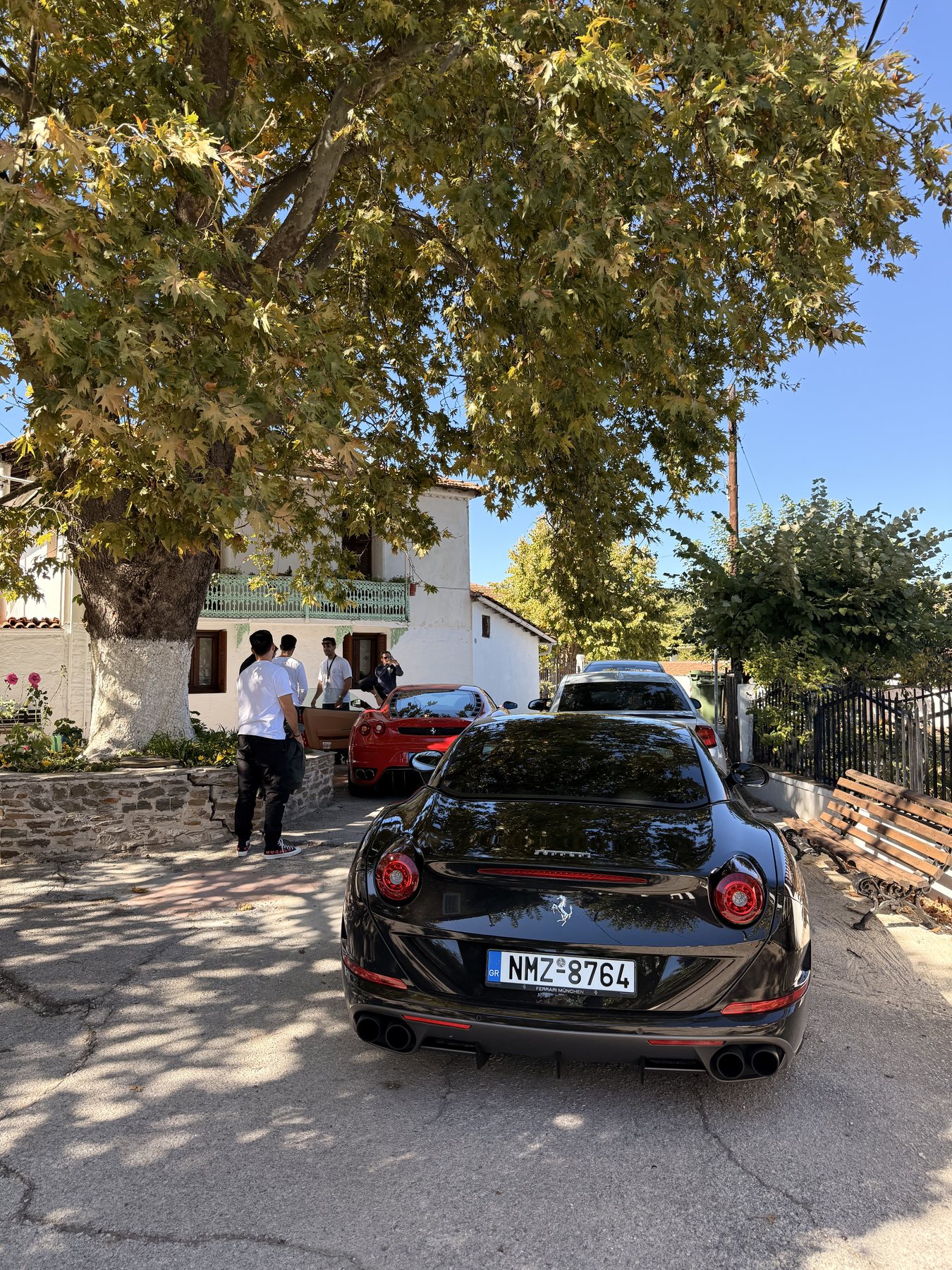
From Vasilika to the square it is 24 km. You start on the Anthemountas plain, almost at sea level, climb to 840 metres through oak, beech and chestnut, and drop into the village at 520. We drove it one Sunday morning with four cars. This is the guide so you can do the same.
The road
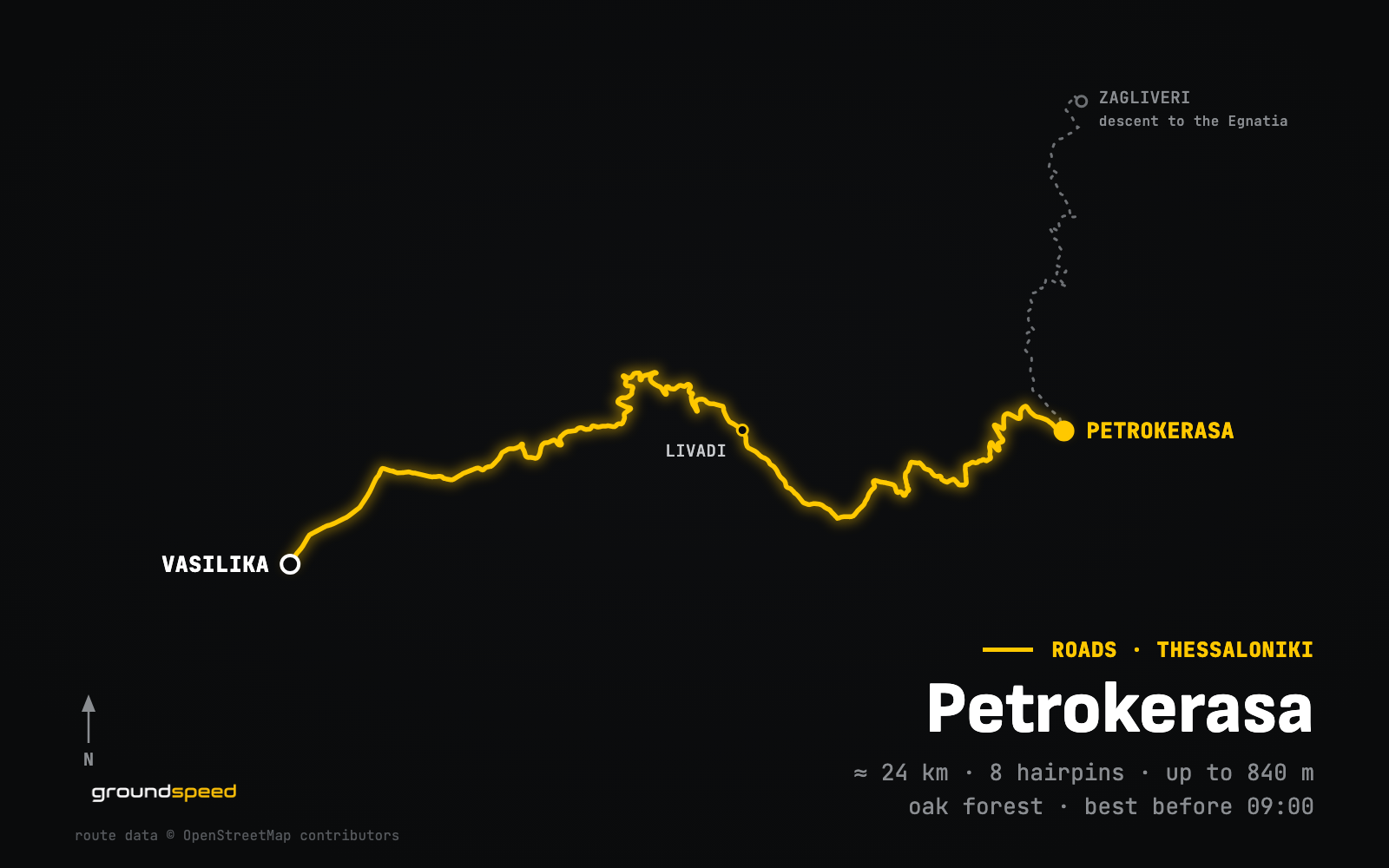
The route comes in three parts. The first is the climb from Vasilika. You leave the EO16 Thessaloniki - Polygyros road at the junction for Peristera and Livadi, and the road starts up the hillside with the plain and the Thermaic Gulf opening behind you. Almost three kilometres up, the road forks: one branch goes to Peristera, the other straight to Livadi. Follow the signs for Livadi.
The second part is the twistiest. From km 9 to km 12 the road climbs one hairpin after another, from 500 to 700 metres. A little further up, at km 13, is the Livadi junction. The village is half a kilometre further on, at 740 metres. You turn right, for Petrokerasa.
The third part is why you came. The last 11 km, from Livadi to Petrokerasa, are a forest road in the best sense: pines at first, then beech, chestnut and oak closing over the asphalt, with small clearings in between. The road climbs to 840 metres, passes below the summit of Mount Omvrianos and runs downhill to the village.
Corner by corner
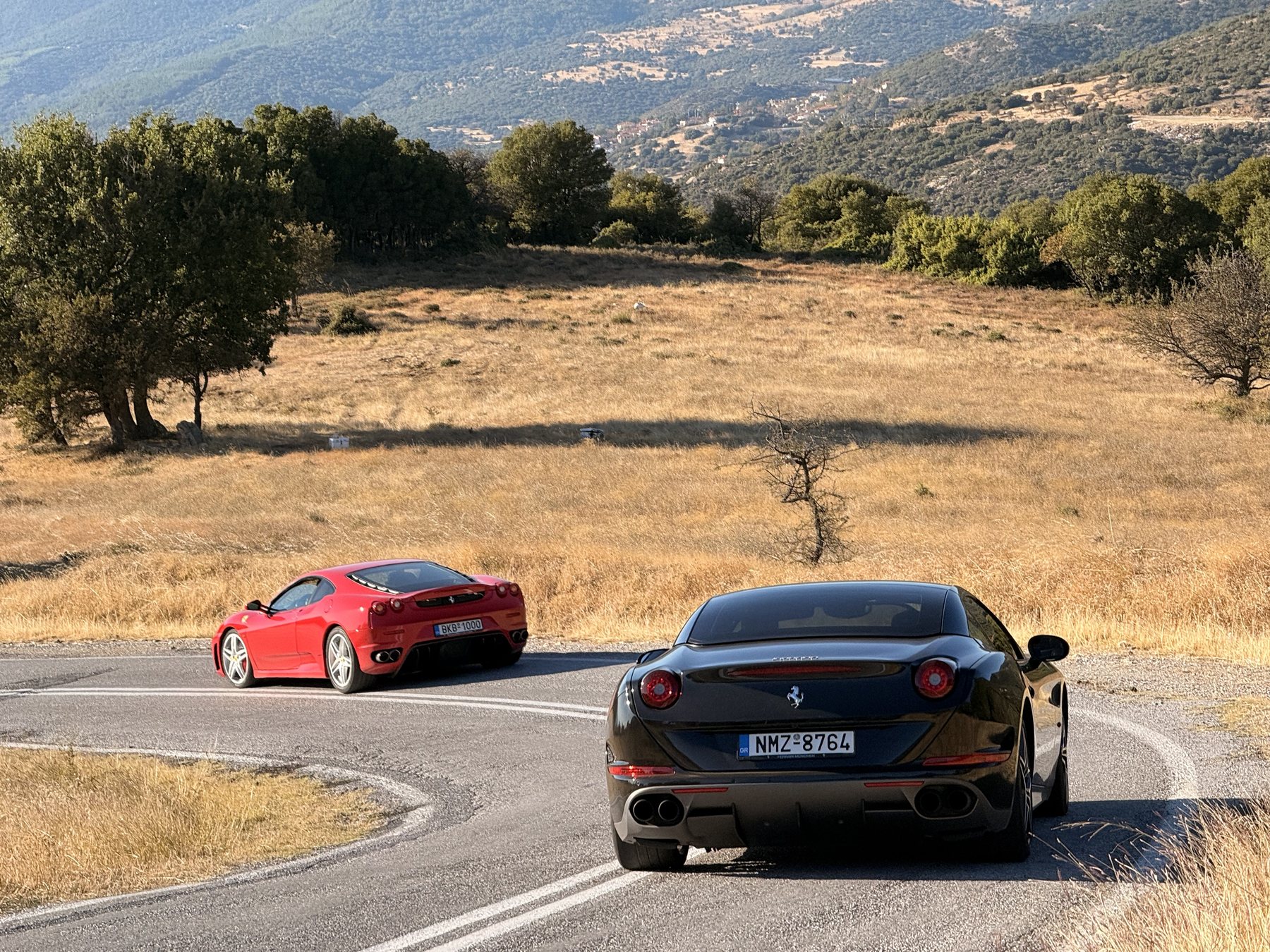
We measured it on the map: 24 km from the EO16 to the square, around 890 metres of total climbing and eight true hairpins. Seven come before Livadi, six of them packed into three kilometres. The eighth is waiting on the descent to the village.
Do not expect a road for speed. This is a country road with one lane each way and a double centre line, and inside the forest you cannot see far ahead. The reward is rhythm: medium corners, one after another, light broken up by the leaves and almost nobody in front of you if you start early.
The asphalt is not the same everywhere. The Livadi - Petrokerasa road has been repaired over the years, at one point by the villagers themselves, with their own tools and their own labour. Keep your eyes open for patches, especially after winter.
When to go
Autumn, if you can choose. The forest turns yellow and red, the route changes colour at every corner and the village holds its chestnut festival. In June it holds the cherry festival.
In summer the road is the cool option: at 800 metres, under the trees, the temperature drops noticeably compared with the city. In winter snow settles easily up here. If it has snowed, check the weather that morning and take chains.
Whatever the season, go early. On fine weekends the village fills up from midday. Before nine the road is yours.
What to watch for
Three things. First, the forest: under the trees the asphalt dries slowly, and in autumn the leaves make it slippery. Second, the people who share the road with you: cyclists, because the climb is well known to them too, walkers around Makrokopana and motorcycles at weekends. Third, animals. You are on a mountain with flocks and wildlife, and anything can be standing behind a blind corner.
Do not count on a fuel station on the mountain. Fill up before you leave the EO16 or, if you come down the other side, in Zagliveri.
Stay on the two asphalt roads, to Livadi and to Zagliveri. The third, towards Doumpia and Chalkidiki, had a gravel section for years: ask in the village before you try it in a low car. And in Petrokerasa itself, leave the car before the square. The centre is for people on foot, and rightly so.
Where to stop
Livadi: half a kilometre from the junction, at 740 metres. It has a square with centuries-old plane trees, a stone house from 1888 and the church of Agios Athanasios, built in 1818. A good stop for the first coffee.
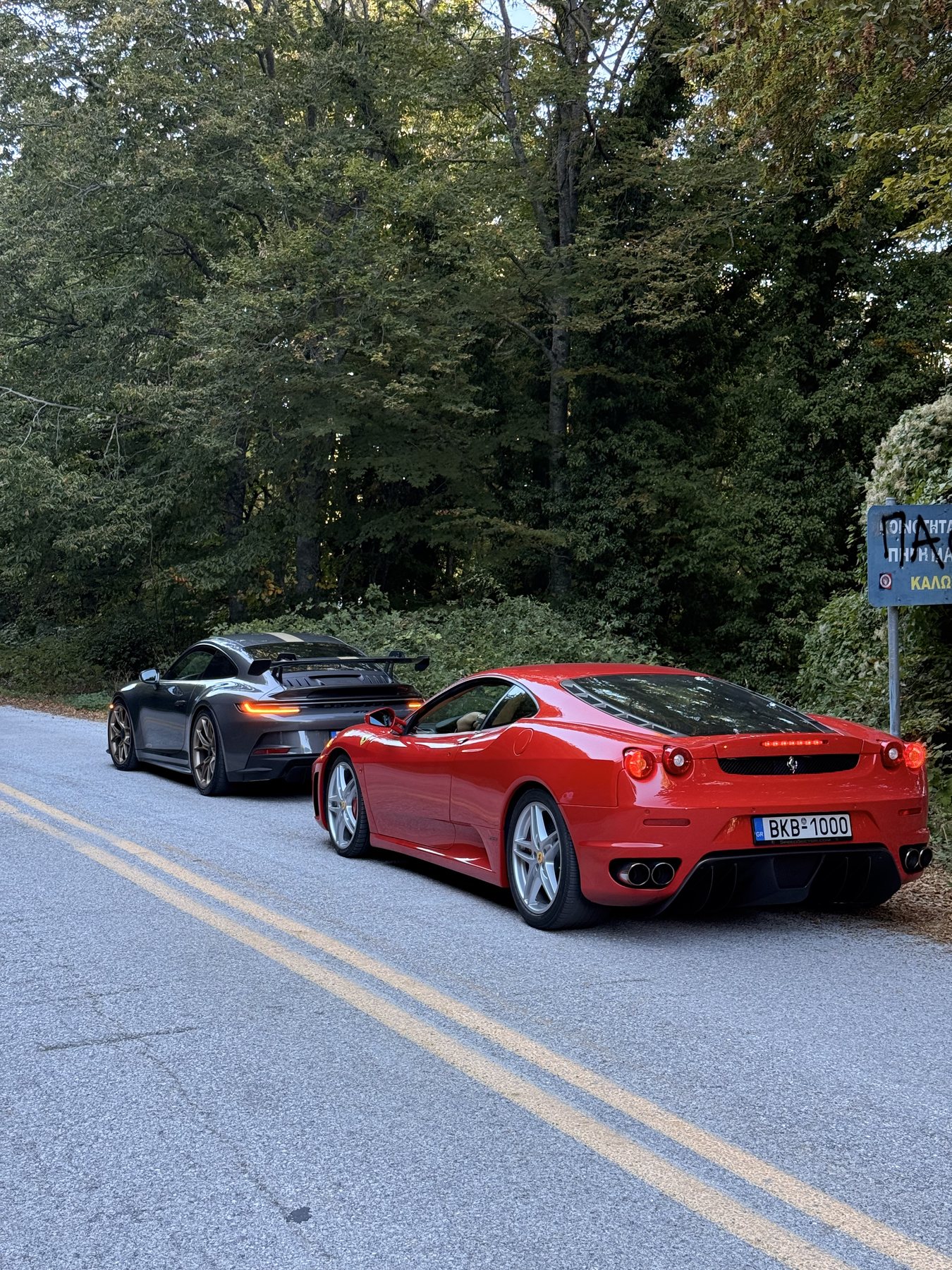
Makrokopana spring: four kilometres before Petrokerasa, on the right of the road. Running water, shade and a picnic area in the forest. You will know it by the community's blue sign welcoming you. This is where we stopped too. From the spring a path leads to the summit of Omvrianos, at 1,009 metres, with the stone chapel of Profitis Ilias and a view in every direction. It is about a kilometre and a half on foot.
Petrokerasa: the village was called Ravna until 1927. Today it is one of the best kept in the Thessaloniki area, and that did not happen by chance. The residents have looked after it for years with their own labour. "Villages do not need money, they need people who care," Thanasis Kalafatis, for years the community president, told voria.gr. The square has plane trees, cobbles, cafes and tavernas with meat on the charcoal. The plan usually says "coffee" and ends up as lunch.
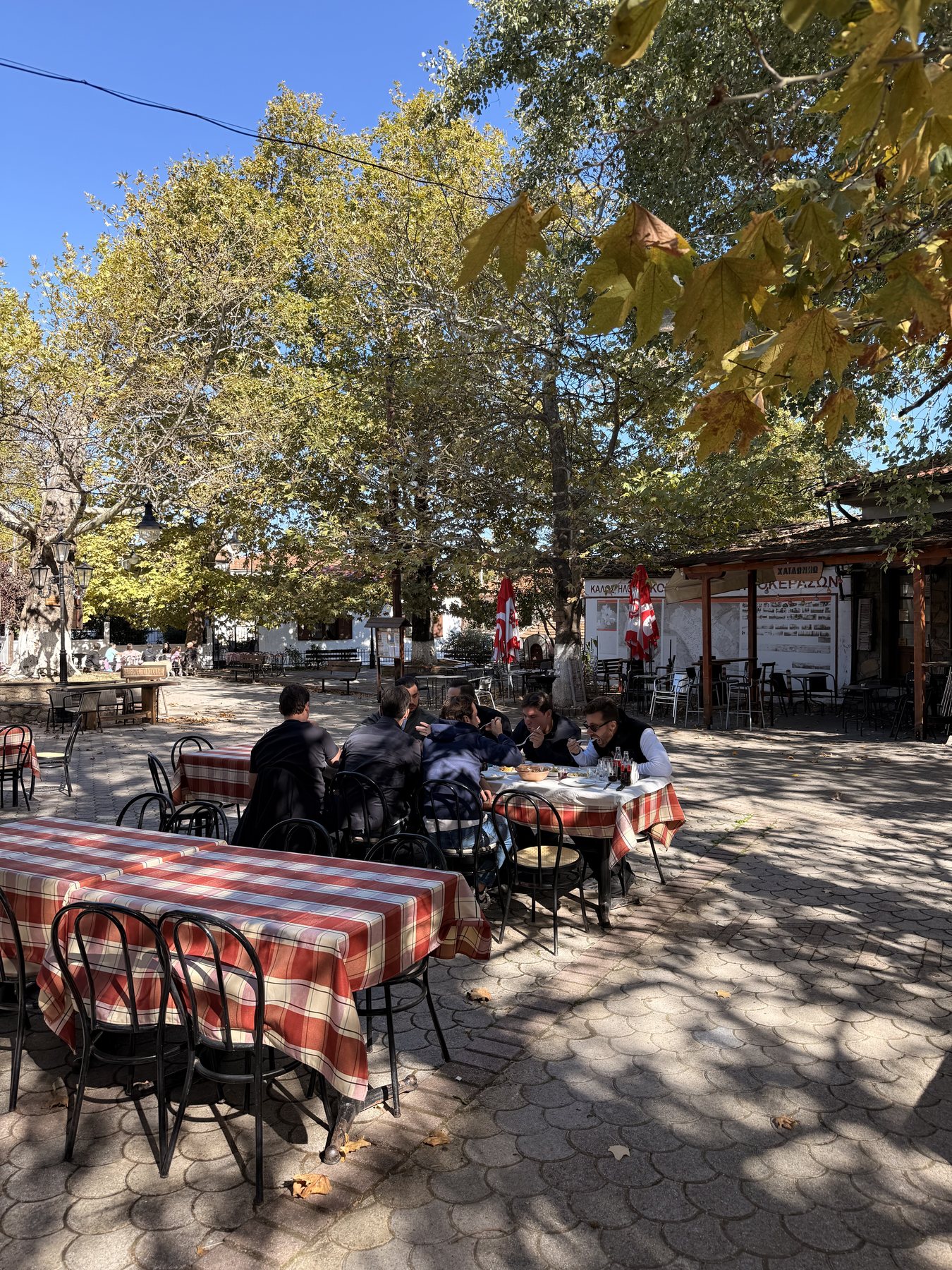
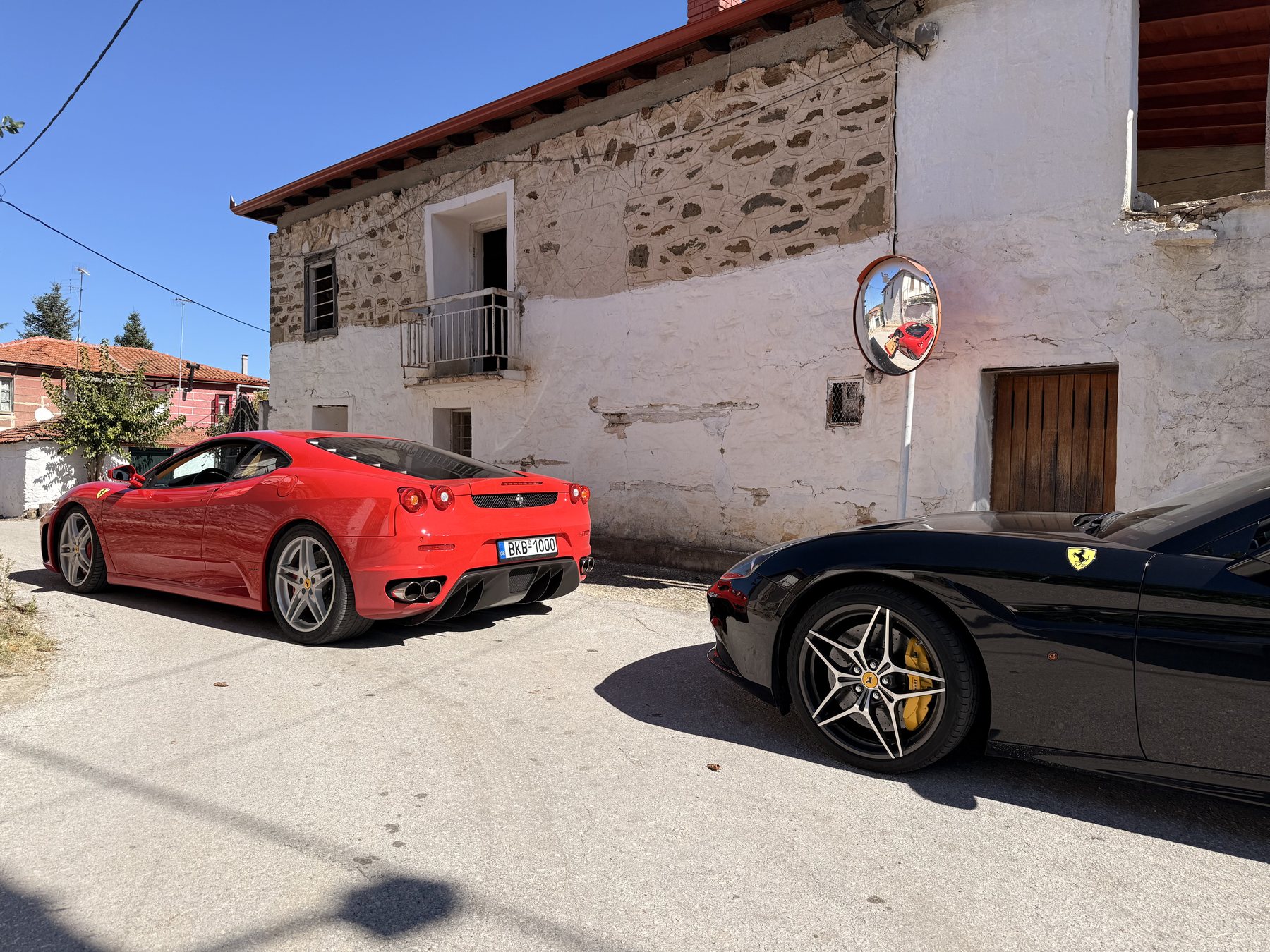
If you want a walk after lunch, see the folklore museum, open since 1976 in the primary school, and the flour mill on the square.
The way back via Zagliveri
Do not go back the way you came. From Petrokerasa the asphalt carries on north and drops to Zagliveri: 9.5 km, from 520 to 200 metres, through oak forest again. There is fuel in Zagliveri. From there you continue to Gerakarou and Agios Vasileios, beside Lake Koroneia, and return to Thessaloniki on the old Thessaloniki - Kavala national road or on the Egnatia.
That closes the loop: up from the south, down to the north. From the east side of Thessaloniki and back it comes to around 90 km, and it fits into a morning with lunch in the middle. If you would rather climb through the forest with the morning light in your face, drive it the other way round.
How to get there
From Thessaloniki: head out towards Chalkidiki and at Thermi take the EO16 for Polygyros. Just before Vasilika, around km 27, turn left at the junction for Peristera and Livadi. From the city centre to Petrokerasa it is around 50 km and a little over an hour.
If you want to see Peristera as well, take that branch at the fork after Vasilika. Have a coffee in the square with the plane tree and carry on for another 7 km, just as twisty, to Livadi.
From Athens: this is a drive for when you are already in Thessaloniki. Pair it with Cholomontas the next day. The two mountains are side by side.
Frequently asked
›How long is the road to Petrokerasa?
24 km from the EO16 junction at Vasilika to the village square, and around 50 km from the centre of Thessaloniki. The last 11, from Livadi, run through the forest.
›How long does it take?
A little over an hour from the centre of Thessaloniki, without stops. The loop with the return via Zagliveri is around 90 km from the east side of the city: allow a morning, with lunch in the village.
›Is it asphalt all the way?
Yes, both from Livadi and from Zagliveri. These are country roads with one lane each way. Expect patches in places and damp asphalt inside the forest.
›What is the best season?
Autumn, for the colours of the forest and the chestnut festival. Summer for cool air. In winter snow settles easily, so check the weather and take chains.
›Where should I eat in Petrokerasa?
In the square, at the tavernas under the plane trees, with meat on the charcoal. At weekends arrive before midday, because the village fills up.
Related stories
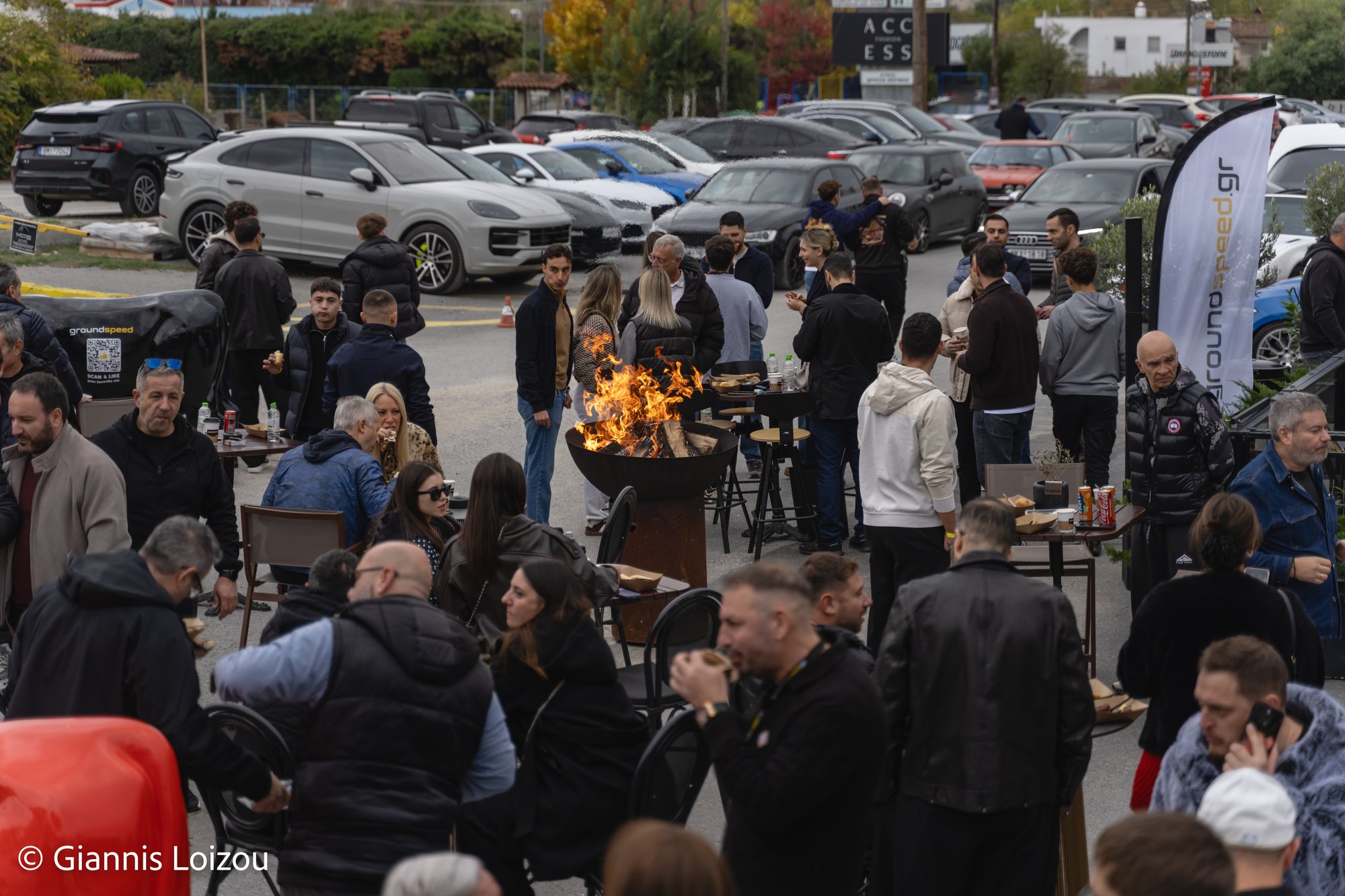
CARS & BBQ #001: CARS, FIRE AND A LOT OF PEOPLE IN THERMI
The second groundspeed meet. A Sunday at Dacristo, from a BMW 2002 to an Aventador, with the fire pit lit.Read the story
KATARA PASS: THE PINDUS ROAD EVERYONE FEARED AND DRIVERS NOW SEEK OUT
The old Kalampaka to Metsovo national road over the Katara Pass, at 1,700 metres: where the corners start, when snow closes it, where to stop and what to watch for.Read the story
CHOLOMONTAS: THESSALONIKI'S SUNDAY ROAD, FROM TAXIARCHIS TO ARNAIA IN CHALKIDIKI
Cholomontas is the road every Thessaloniki driver knows: forest, good asphalt, little traffic and coffee in Taxiarchis. When to go, where to stop and how to get there.Read the story
If you'd like to write your own story - submit it here