
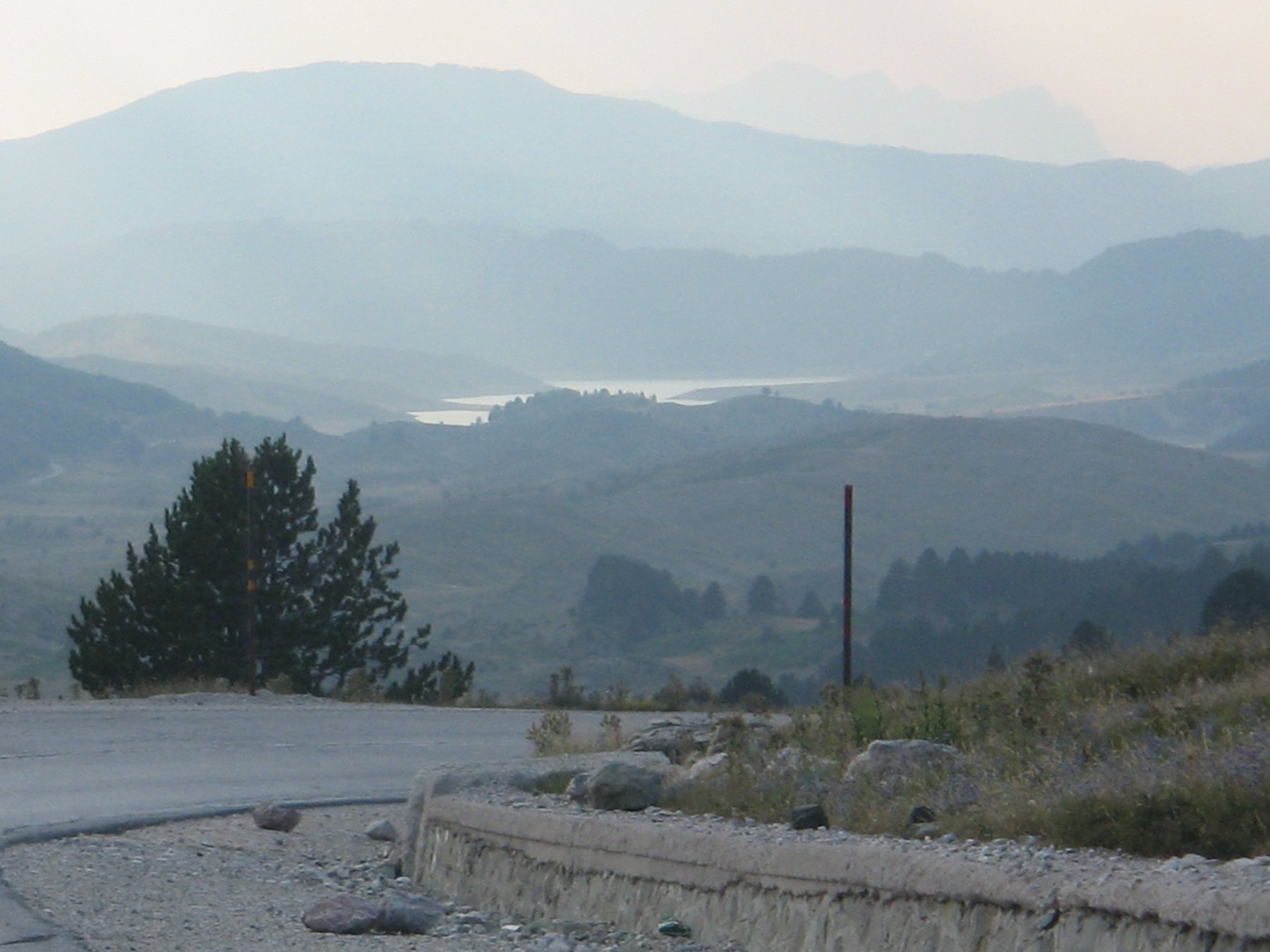
The old Kalampaka to Metsovo national road over the Katara Pass, at 1,700 metres: where the corners start, when snow closes it, where to stop and what to watch for.
For more than forty years, the word "Katara" made drivers check the weather before setting off. It was the hardest stretch of the old National Road 6, the road that linked Thessaly to Epirus over the Pindus: narrow, a constant climb through corners, with snow and very strong winds in winter. Lorries, convoys of tourists, all the traffic from Igoumenitsa towards Thessaloniki and Athens came through here, at 1,700 metres.
In 2009 the Egnatia Odos motorway opened with the Metsovo tunnels and Katara emptied almost overnight. What had been a nightmare for the professional driver became a gift for anyone who loves corners: a paved mountain road, one of the highest passes in the country, with almost no traffic and views over two valleys. This is our guide to the Katara Pass (Πέρασμα της Κατάρας), from Metsovo to Kalampaka.
The road
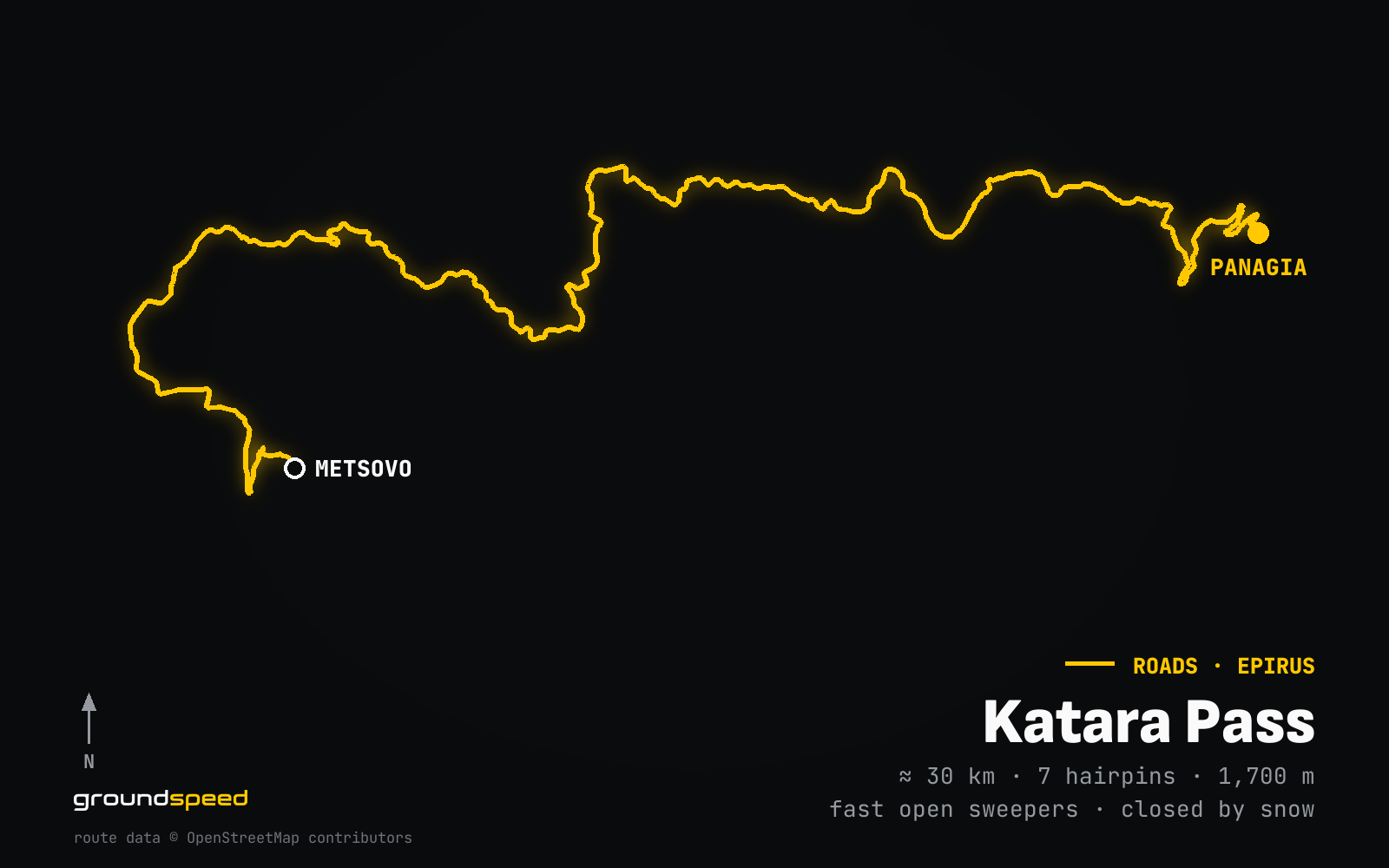
The pass sits about 5 km northeast of Metsovo, right on the boundary between Epirus and Thessaly, between the regional units of Ioannina and Trikala. It is also a natural watershed: on one side the water runs to the Aoos, on the other to the Pineios. The saddle is at around 1,700 metres.
The road is National Road 6 (EO6), which officially starts in Volos and ends in Igoumenitsa, passing through Larissa, Trikala, Kalampaka, Metsovo and Ioannina. The part we care about is the mountain section: from Kalampaka you climb past Mourgani and the villages of Malakasi, pass Panagia, and from there the real Katara begins, up to the saddle and on to Metsovo. The pass proper, from Metsovo over the saddle to Panagia, is about 30 km, with a maximum gradient of 7.5%. We counted the hairpins on the map too: 7 true ones, and as many very tight bends. Katara is not a staircase of hairpins. It is mostly open road with long, fast sweepers, and that is exactly why it is worth the trip.
Where does the name come from? The legend says that around 1800 a bishop of Ioannina set off for Trikala, was caught by the weather on the mountain, could not go on and, just before dying in a clearing, cursed the place. The clearing is still called "kampos tou despoti", the bishop's meadow. Katara means curse.
Corner by corner: from Kalampaka to Metsovo
Take it from Thessaly towards Epirus: you climb through the forest and come out onto the saddle with the view in front of you. From Kalampaka you follow the Pineios for a few kilometres and at Mourgani, where the Malakasiotikos stream joins the river, the climb begins. The police often set up a checkpoint at the Mourgani bridge, so have your papers handy.
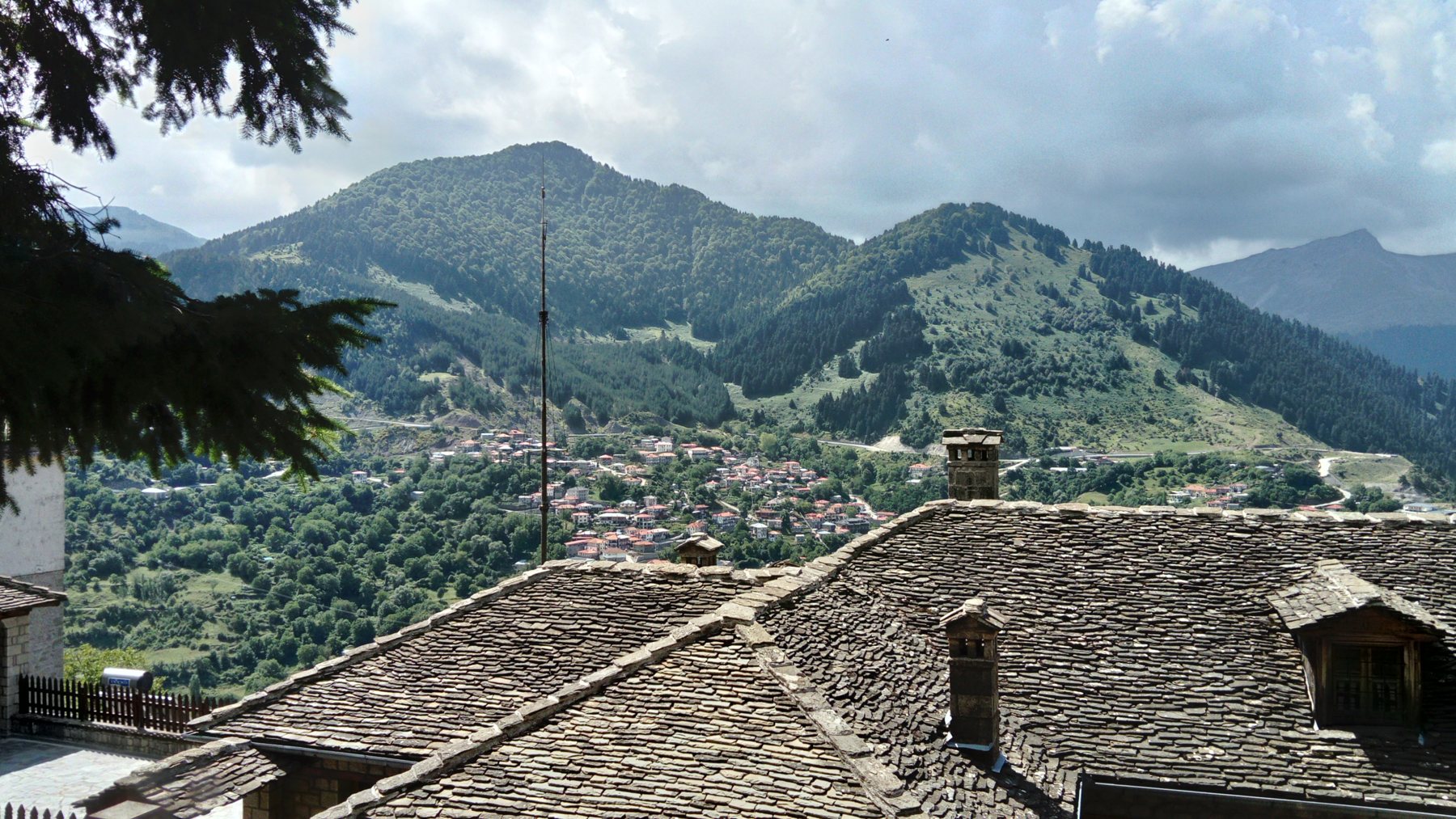
Then come the villages, one above the other: Megali Kerasia at about 500 m, in an oak forest, Orthovouni at 600, Trigona at 750 with views over the Malakasiotis, Koridalos and then Panagia, a big village drowned in pines, beeches and firs. This is where the villages end. From Panagia to Metsovo, about 30 km, you will not meet another settlement, so get water and something to eat before.
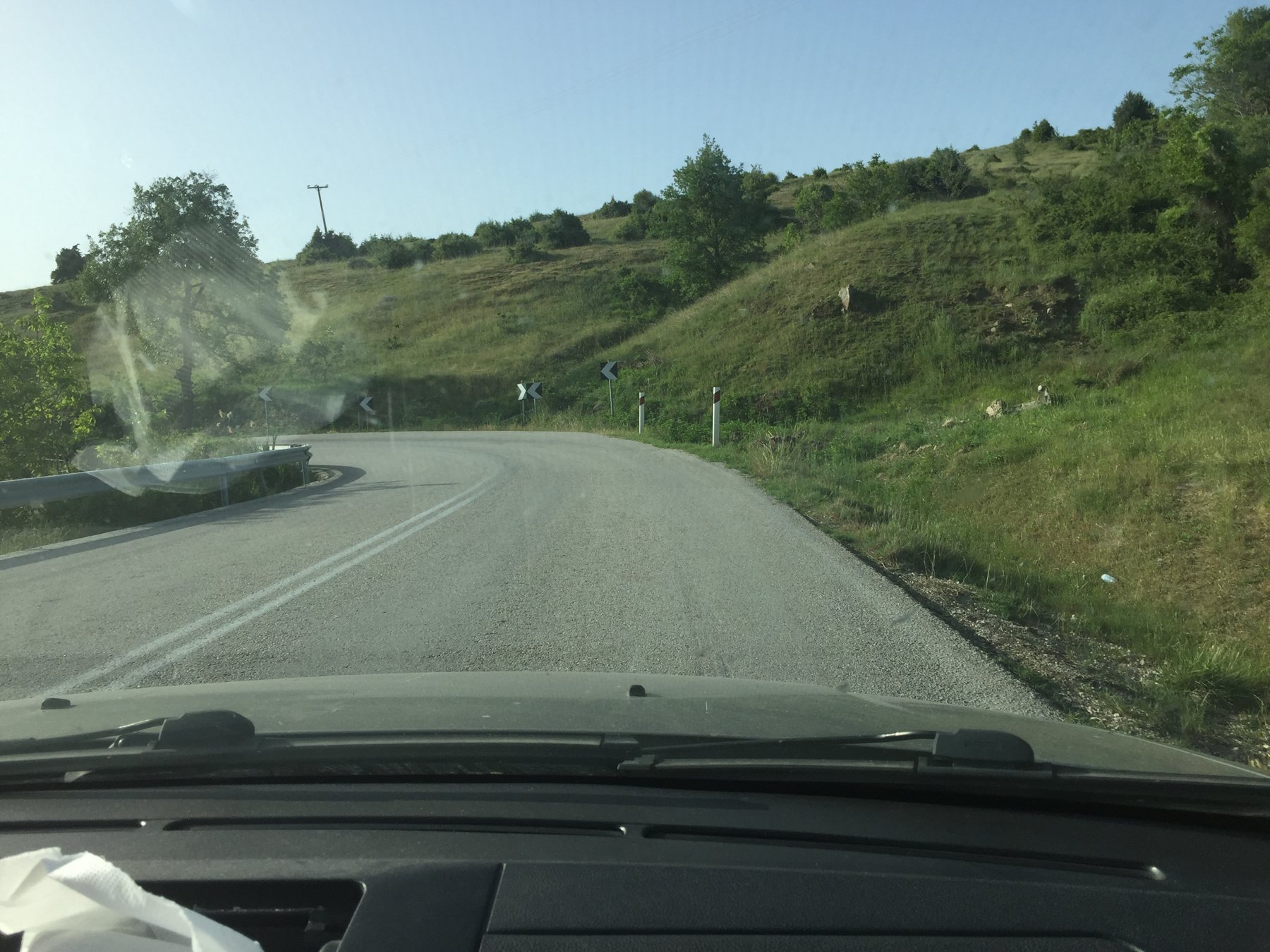
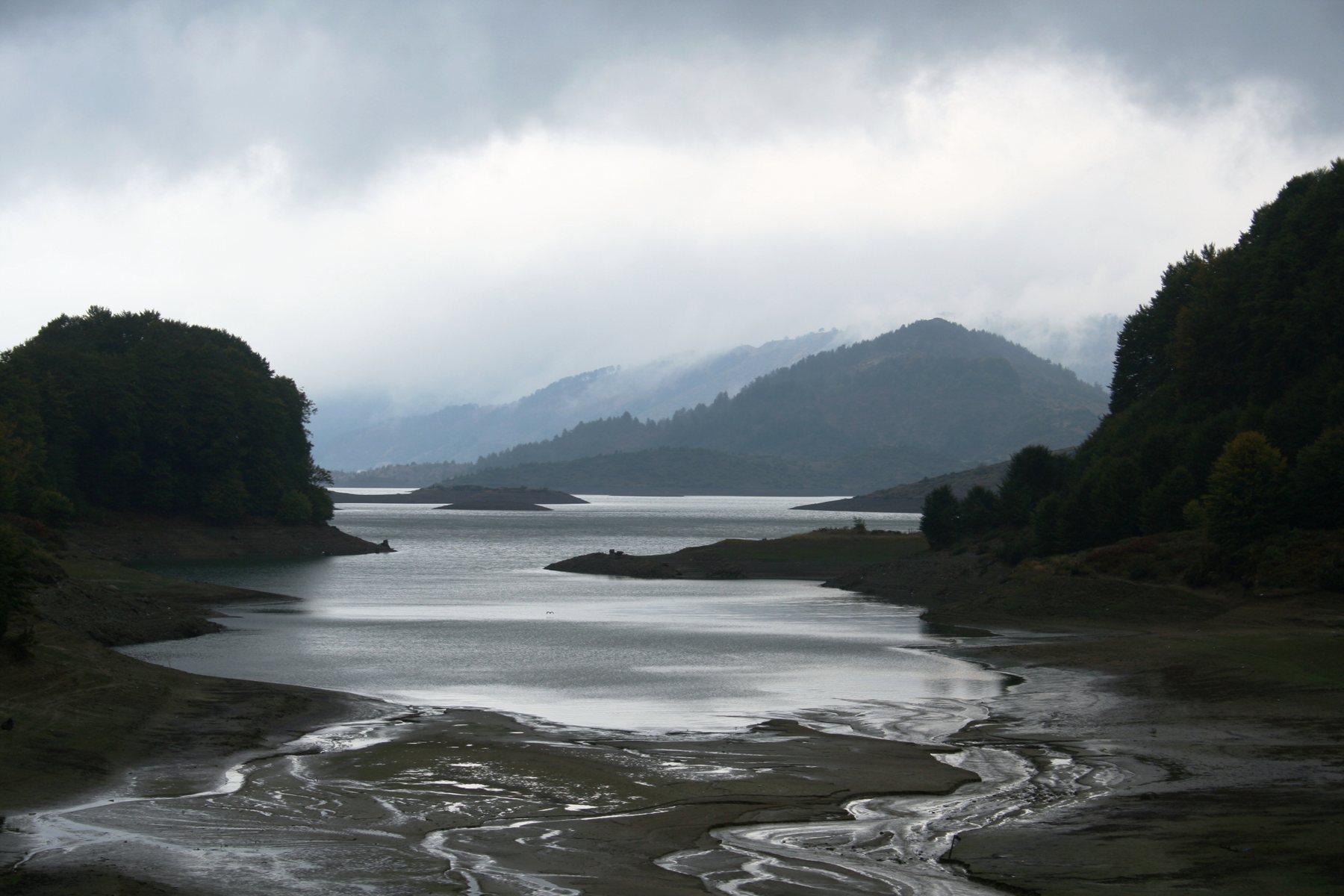
From Panagia upwards the road coils through firs and pines, with few hairpins and plenty of long sweepers that let you keep a rhythm. High up, near the saddle, the forest thins out and only the peaks remain. At the saddle itself, at around 1,700 m, you will find the sign and the view: on one side the hills and, in the distance, the artificial lake of the Aoos springs, on the other the Pineios valley. The road here has lampposts, a rare thing on a mountain pass.
From the saddle down to Metsovo is about 5 km. Take the detour to the artificial lake of the Aoos springs, at 1,350 m, with beeches, black pines and small meadows. Then Metsovo, at 1,160 m. If you carry on to Ioannina it is another 60 km or so, through Votonosi, parallel to the Egnatia and the Metsovitikos, a tributary of the Arachthos.
When to go
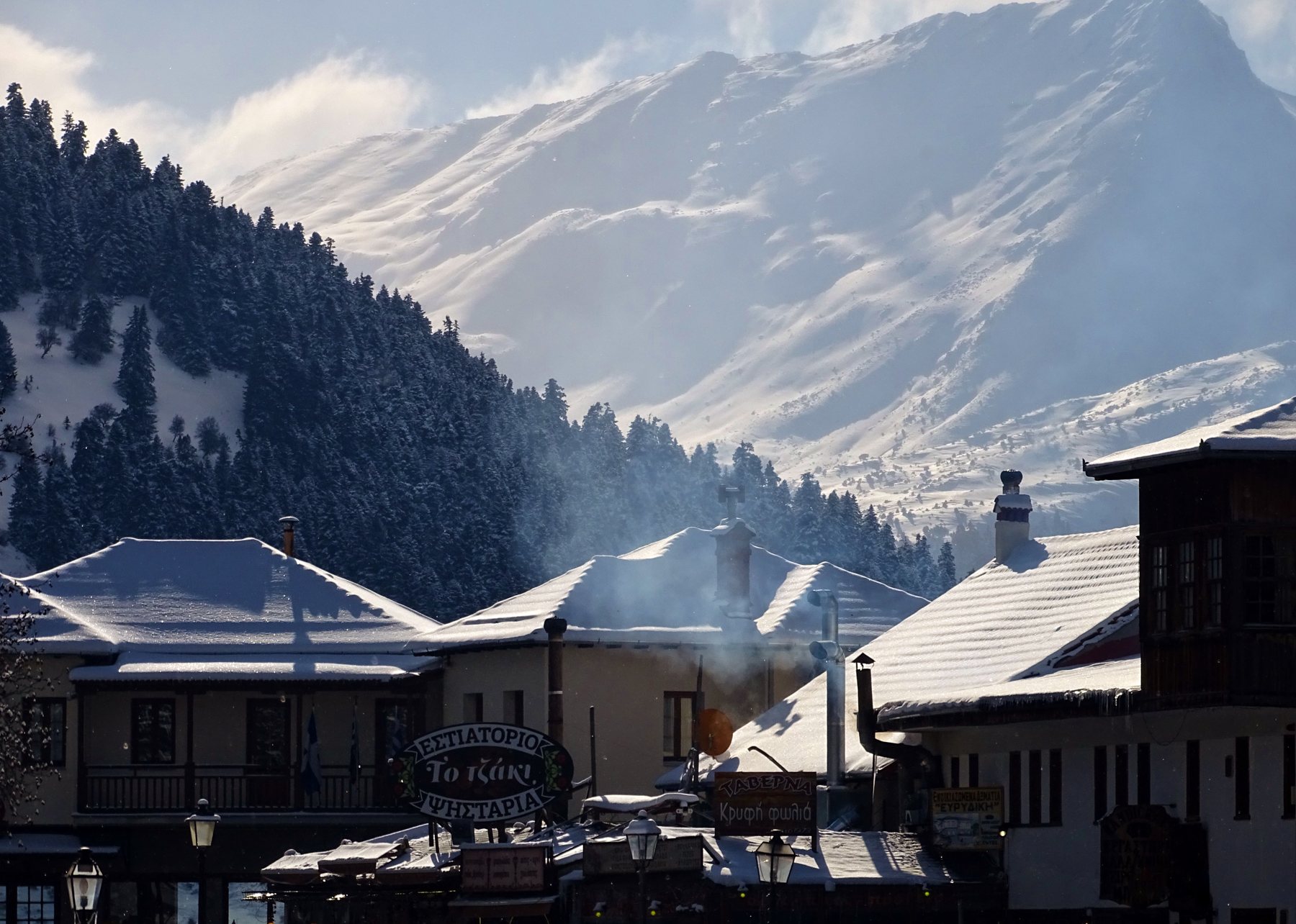
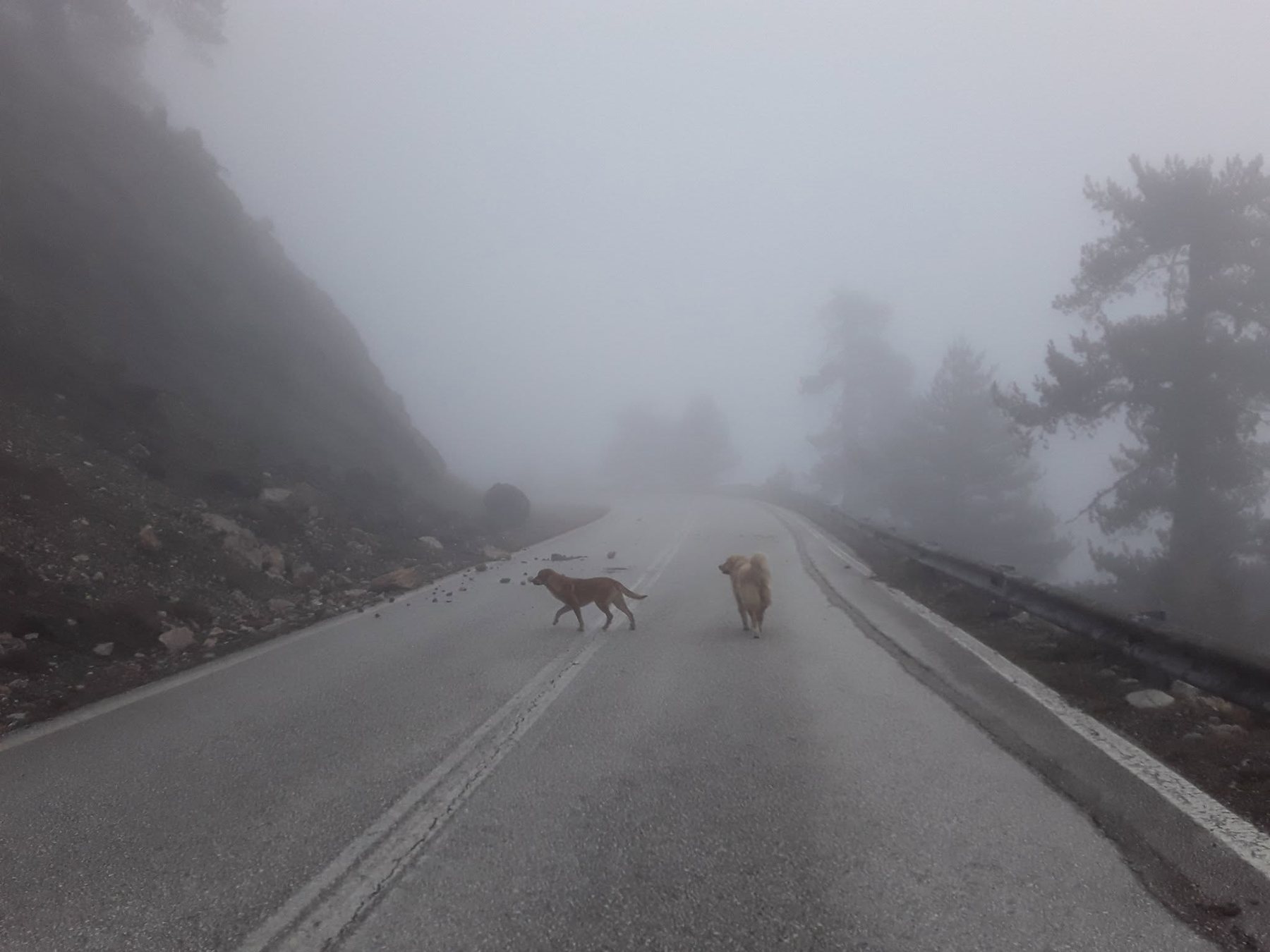
Katara is a summer and autumn road. Snow usually closes it from January to March, with no fixed dates, so in winter ask locally before you set off. Go between mid-May and mid-September: the road is open, the snow has gone and the Egnatia keeps the traffic away. Autumn, until the first snow, is just as good. In winter, even if it is open, this is the road everyone feared for decades: snow, ice and wind at 1,700 m.
The big issue here is how fast the weather changes. travel.gr puts it well: you can set off in sunshine from the plain and at the saddle find, at best, a little fog and, at worst, a blizzard. Check the weather in Metsovo before you leave, not just in Trikala. And if you want to enjoy the road, go on a weekday morning, when the little traffic there is becomes even less.
What to watch for
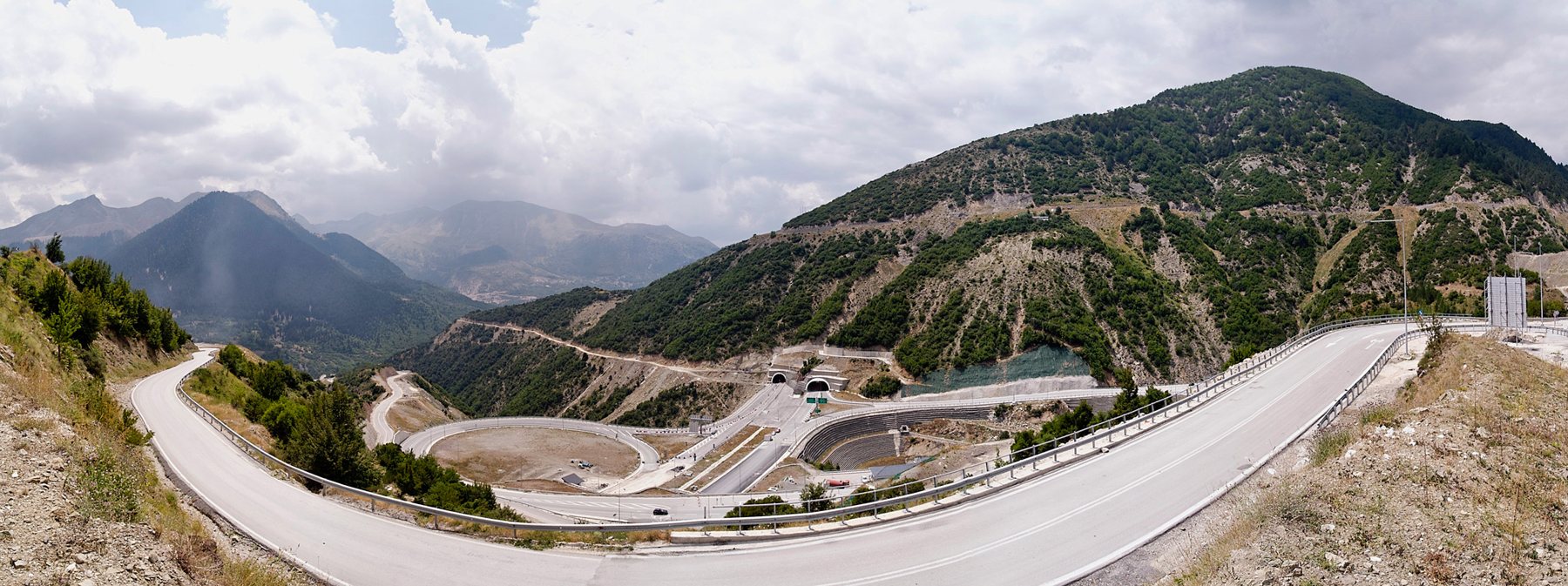
First, the asphalt. The road is paved along its whole length, but it has a history. In November 2011 the section up to the saddle was closed because in places the asphalt had sunk more than 30 cm across its full width: on the eastern side a concrete block was put in with a sign reading "crossing at your own risk, local residents only". In November 2022, for the International Tour of Hellas cycling race, the road was repaired and reopened to everyone. Do not expect a racetrack: drive with your eyes open for subsidence and patches, especially after winter.
Second, the width. In quite a few places the road is narrow and overtaking is difficult. There are spots where you first have to negotiate with whoever is coming the other way, and off-camber corners, where the surface tilts outwards rather than into the bend. There the car has less grip than it seems, so brake before, not in them.
Third, trucks. This road once carried international lorries and convoys of tourists from Igoumenitsa, with overtaking that took your breath away. The Egnatia has taken all of that and traffic fell sharply. Even so, it is still a national road and you may meet a truck coming down. In blind corners stay in your lane.
Fourth, the weather, covered above. And fifth, fuel: from Panagia to Metsovo there is nothing, so fill up in Kalampaka or Metsovo. South of the saddle a demanding gravel road starts towards the Anilio ski centre. It is not for a low sports car.
Where to stop
Katara is a road that wants stops. On the Thessaly side, stop at Trigona for a coffee or tsipouro with the locals and, just outside the village at Analipsi, for the stone fountain on the road and the Analipsi taverna for meze. In Koridalos, roughly at km 55 of the 144 km Trikala to Ioannina route, there are tavernas such as Petrino and Antonis' grill house. Panagia is the last chance for a coffee before the mountain.
At the saddle the compulsory stop is the sign and the view towards the Aoos lake. On the Epirus side, Profitis Ilias, 3 km after Metsovo, is good for coffee: in winter there are ski lessons there, in summer horse riding. And of course Metsovo itself: the Averoff winery, the Folk Art Museum and the Averoff Gallery, pies and meat at Galaxia or at Koutouki tou Nikola. If you want to sleep on the mountain and drive the road again in the morning, Metsovo has plenty of options.
How to get there
From Thessaloniki the easy way is the Egnatia Odos (A2) to the Metsovo junction. From there you climb Katara in reverse, towards Kalampaka, or drop down to Kalampaka first and take it from the start. From Athens you come up the A1 and the E65, which now reaches Trikala, and from there to Kalampaka. As a yardstick: Trikala to Ioannina via the Egnatia is about 2 hours, while the old national road via Katara is 144 km and, if you stop everywhere, can take you five hours. The pass itself, without stops, takes 40 minutes to an hour.
The most sensible day: Meteora in the morning, Katara at midday, Metsovo for lunch and back on the Egnatia. Or, with two days, continue from Metsovo to Ioannina and Zagori, and you have in your hands the classic Pindus triangle that foreign motorcycle tour operators sell as "Best of Greece".
Frequently asked
›Is Katara Pass open in winter?
Not always. Snow usually closes it from January to March. Ask locally or check the weather in Metsovo before setting off. The Egnatia with its tunnels is the year-round alternative.
›What is the best season?
Mid-May to mid-September, and autumn until the first snow. A weekday morning for the least traffic.
›How long does it take?
The pass proper, about 30 km from Metsovo to Panagia, takes 40 minutes to an hour without stops. The whole old national road from Trikala to Ioannina is 144 km.
›How many hairpins are there?
Few: 7 true hairpins over the whole pass, and as many very tight bends. The rest is open, fast sweepers, and that is its strong point.
›Where should I stop or stay?
Trigona and Koridalos for coffee and a taverna on the climb, Panagia for the last coffee, the saddle for the view over the Aoos lake, Profitis Ilias after Metsovo for coffee. For the night, Metsovo.
›Is it suitable for a low sports car?
Yes, with care. The asphalt is continuous over the whole pass, but the road was closed in 2011 for subsidence and repaired in 2022, so expect patches. The gravel road from the saddle to the Anilio ski centre is not for a low car.
Related stories
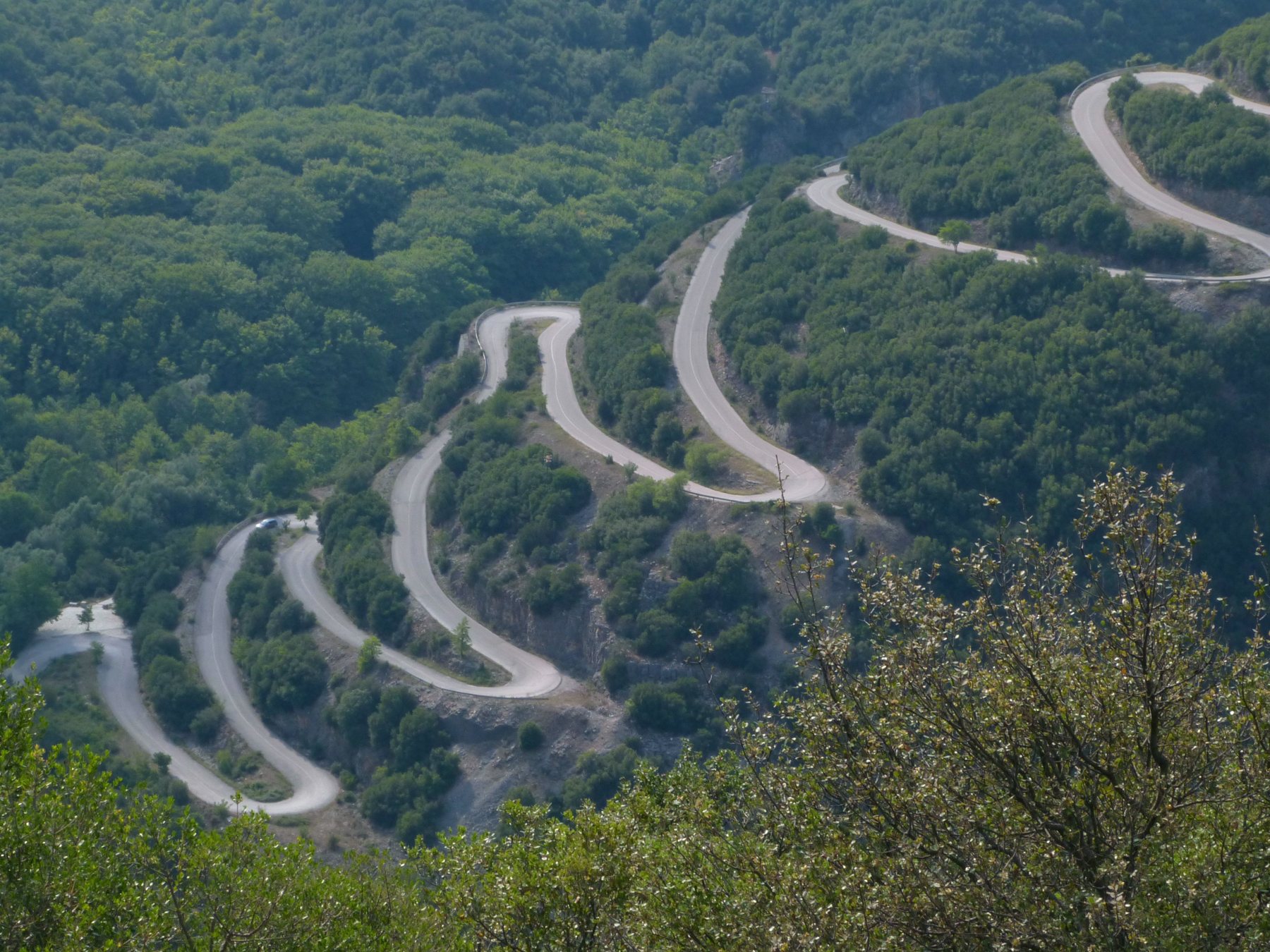
ARISTI TO PAPINGO: 22 HAIRPINS ABOVE THE VOIDOMATIS
Aristi to Papingo is 11.3 km: a drop to the Voidomatis bridge, then 22 hairpins, most of them stacked in the first two kilometres above the river. A guide to the most photographed road in Epirus: corners, views, seasons, stops.Read the story
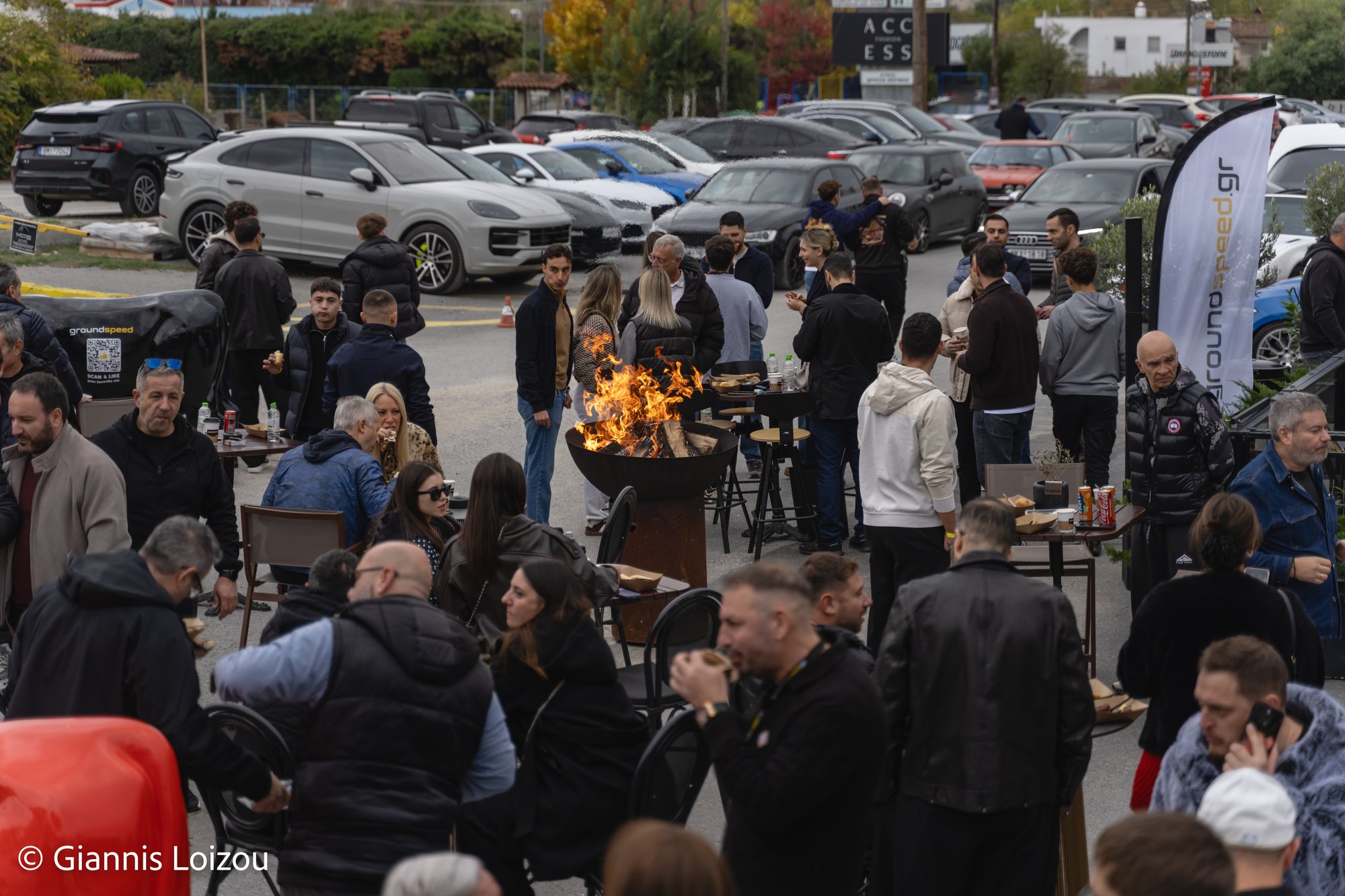
CARS & BBQ #001: CARS, FIRE AND A LOT OF PEOPLE IN THERMI
The second groundspeed meet. A Sunday at Dacristo, from a BMW 2002 to an Aventador, with the fire pit lit.Read the story
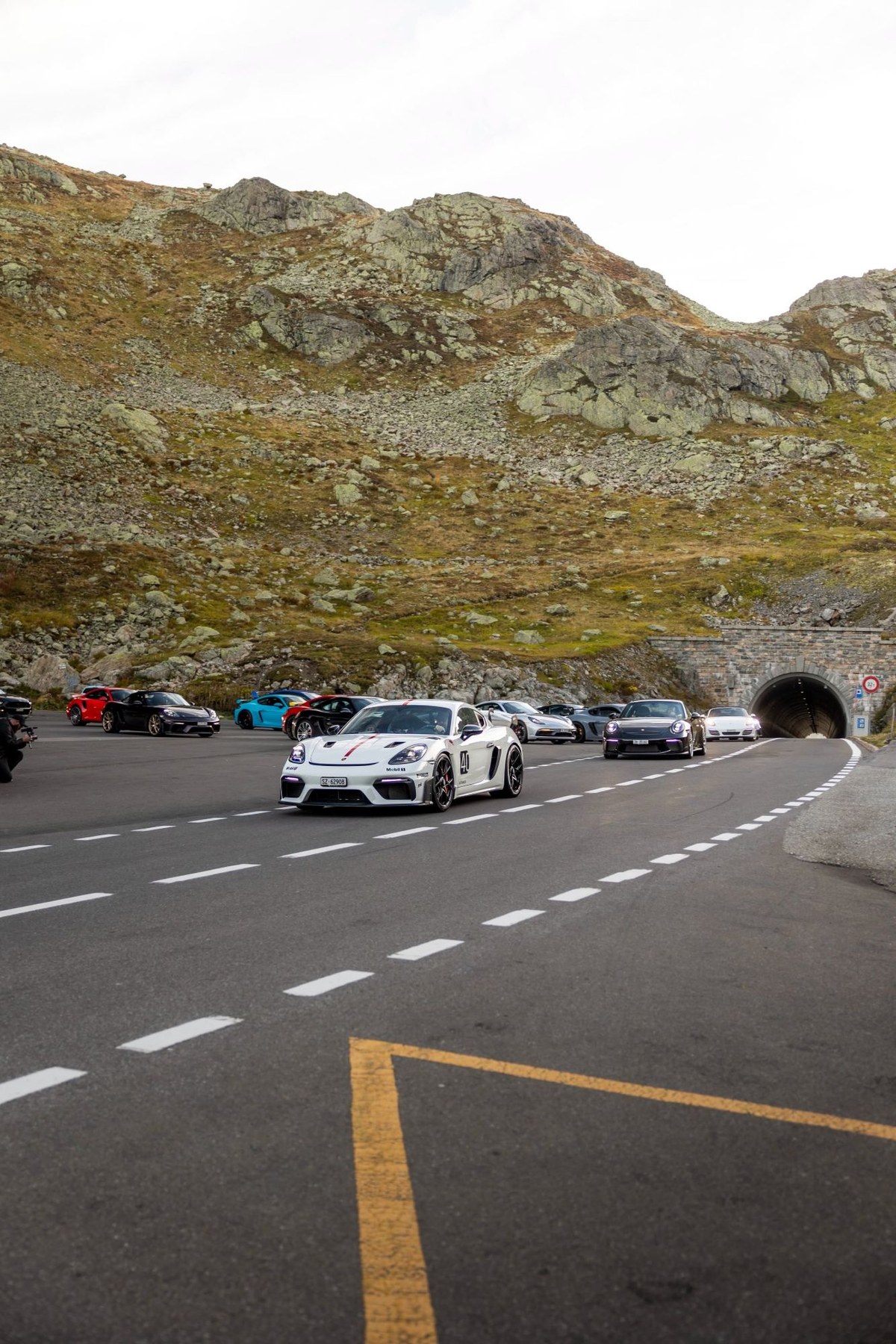
48,000 KM IN 18 MONTHS IN A PORSCHE GT4 RS. AS A DAILY.
From Lucerne to Rhodes and on to the Algarve, winter and summer, on chains in the snow. A racing car for every day? @thegreekdriver says yes.Read the story
If you'd like to write your own story - submit it here