
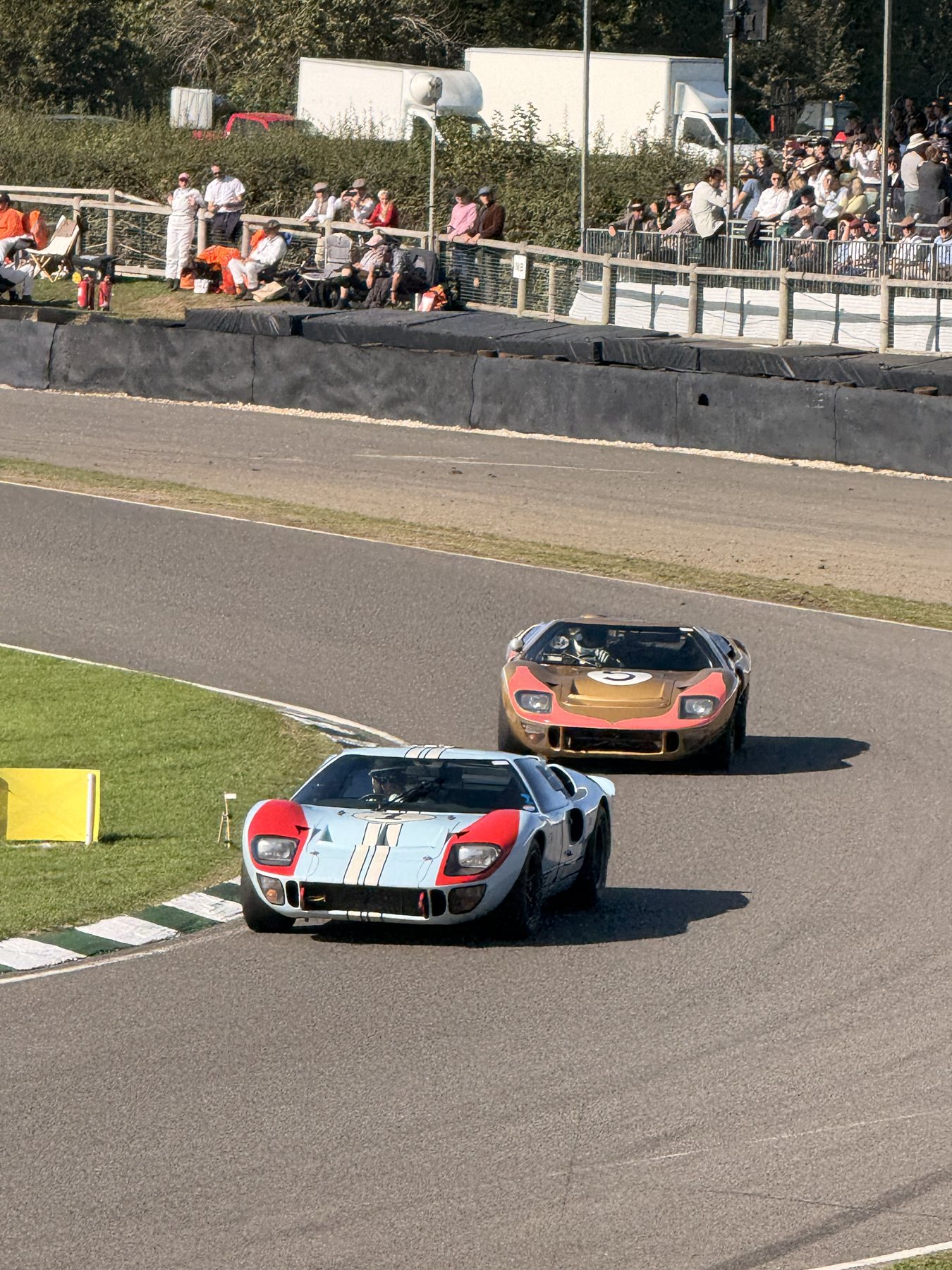
At Goodwood I watched a Mini pass a seven-litre Galaxie. On the inside.
A Sunday at the Goodwood Revival with a friend who never cared about cars. How a Mini passes a seven-litre Galaxie, why no two cars want the same thing from their driver, and what stays with you after the fish and chips.
At Goodwood you hear it before you see the first car. You're in the grandstand at Lavant, the double right-hander before the long straight, and suddenly the air changes. A deep rumble comes closer from St Mary's, turns into a rhythm, and a Ford Galaxie with a seven-litre engine goes past in front of you and opens up for the straight. Whatever you meant to write down, you've already forgotten.
The Goodwood Revival takes place every September at the Goodwood Motor Circuit, on the Duke of Richmond's estate in West Sussex, England. The circuit ran from 1948 to 1966 and closed when the cars became faster than it could safely handle. Since 1998 it has reopened for three days a year, exactly as it was, and only cars from the era that raced there are allowed on it: Jaguar, Ferrari, Lotus, Cobra, Mini, in real races rather than parades. There is no modern signage, no advertising, no screen apart from the big screens showing the racing. The spectators, more than a hundred thousand over the three days, come dressed in the clothes of the fifties and sixties. It is the biggest historic racing event in the world, and probably the only one where the journey back in time is complete, not just on the track.
Sunday is TT day, and the story follows three of its races. The St Mary's Trophy, for saloons from 1960 to 1966, the family cars of the day built for the track, from the Mini Cooper S to the Ford Galaxie. The RAC TT Celebration, the big race of the day, one hour with two drivers per car, for GTs from 1960 to 1964: E-type, Cobra, Ferrari. And the Whitsun Trophy, for prototypes from 1960 to 1966, Lola T70, Ford GT40 and McLaren, the fastest cars you will see all day. In between come the single-seaters of the Glover Trophy, for the sound alone.
Next to me, Guillaume. A friend from university, French, from Paris, raised partly in London, and with no connection to cars whatsoever. He passed his test at 23, and the fastest thing he has ever driven is, probably, a Citroën C3 Aircross. When the Galaxie went past, he turned and looked at me. He didn't say anything. He didn't need to.
I had come with a question. In photographs, historic racing cars all look alike: old, beautiful and a bit slow. Up close it's the opposite. Each one wants something completely different from its driver in order to go fast. By lunchtime, Guillaume had the same question.
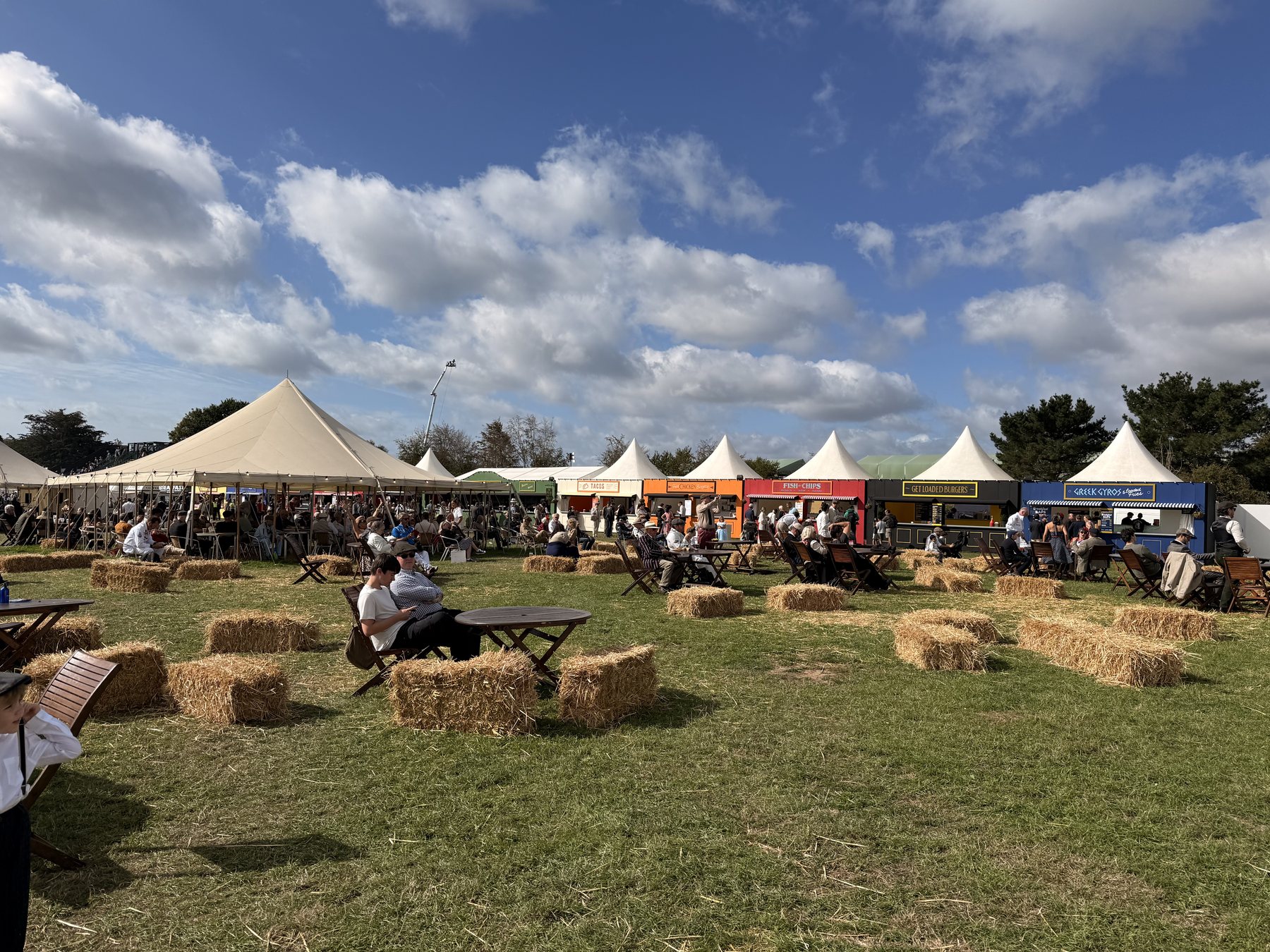
A circuit that doesn't forgive
The Goodwood circuit has almost the same layout as in 1948: fast corners, long straights and very little margin for error. Where a modern track has dozens of metres of tarmac to save you, here there is grass and an earth bank. That's why the drivers here don't 'give it everything'. They go exactly as far as their car can take, and not a centimetre further. And every car can take a different amount.
Mini and Galaxie: two ways through the same corner
The St Mary's Trophy is the race for saloons from 1960 to 1966, the family cars of the day built for the track, and it puts the two extremes on the same grid. On one side, the Ford Galaxie 500: a seven-litre V8 and almost 1,800 kilos. On the other, the Mini Cooper S: 1,275cc, front-wheel drive, around 650 kilos and ten-inch wheels. The Galaxie weighs almost as much as three Minis.
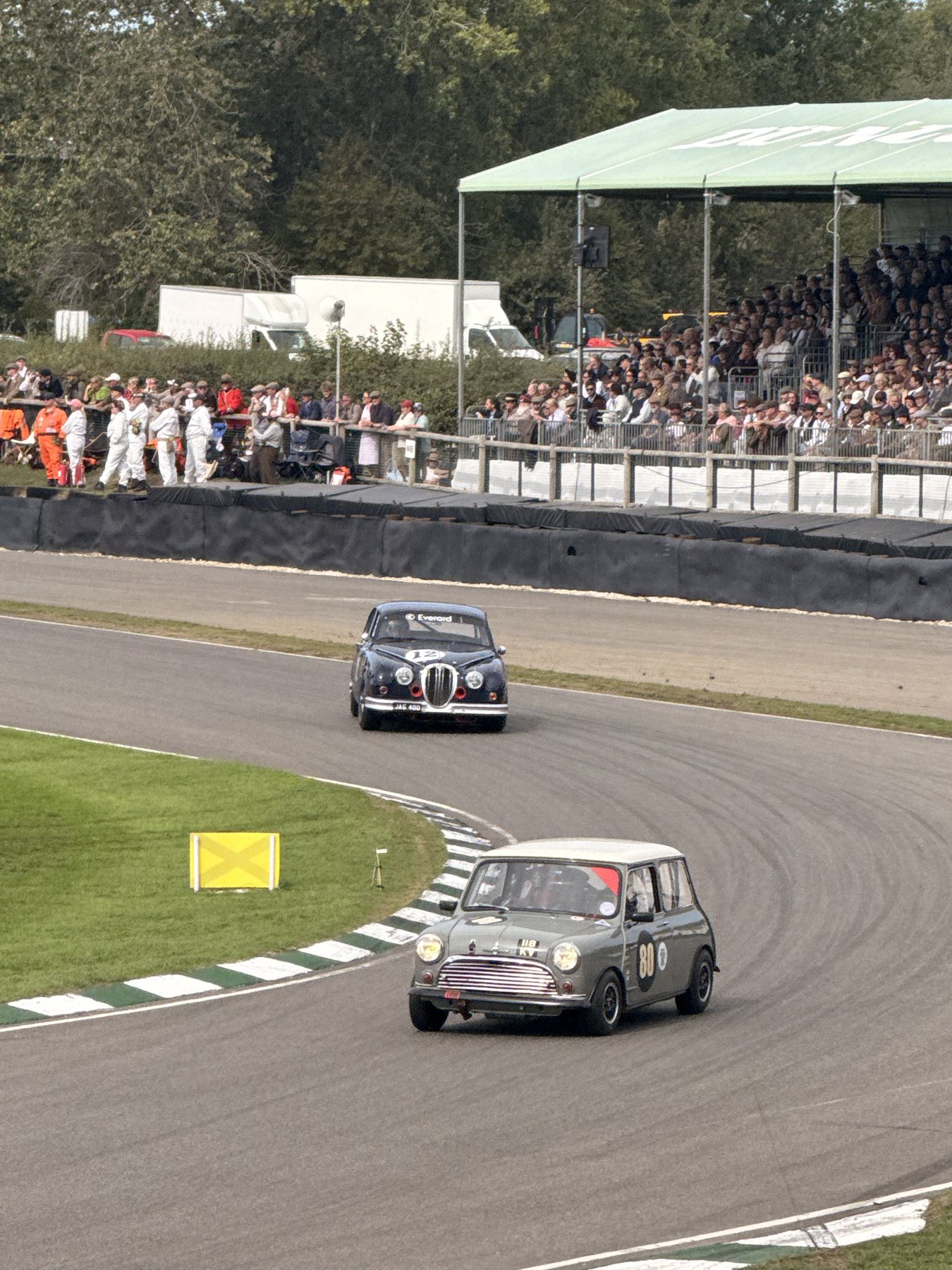
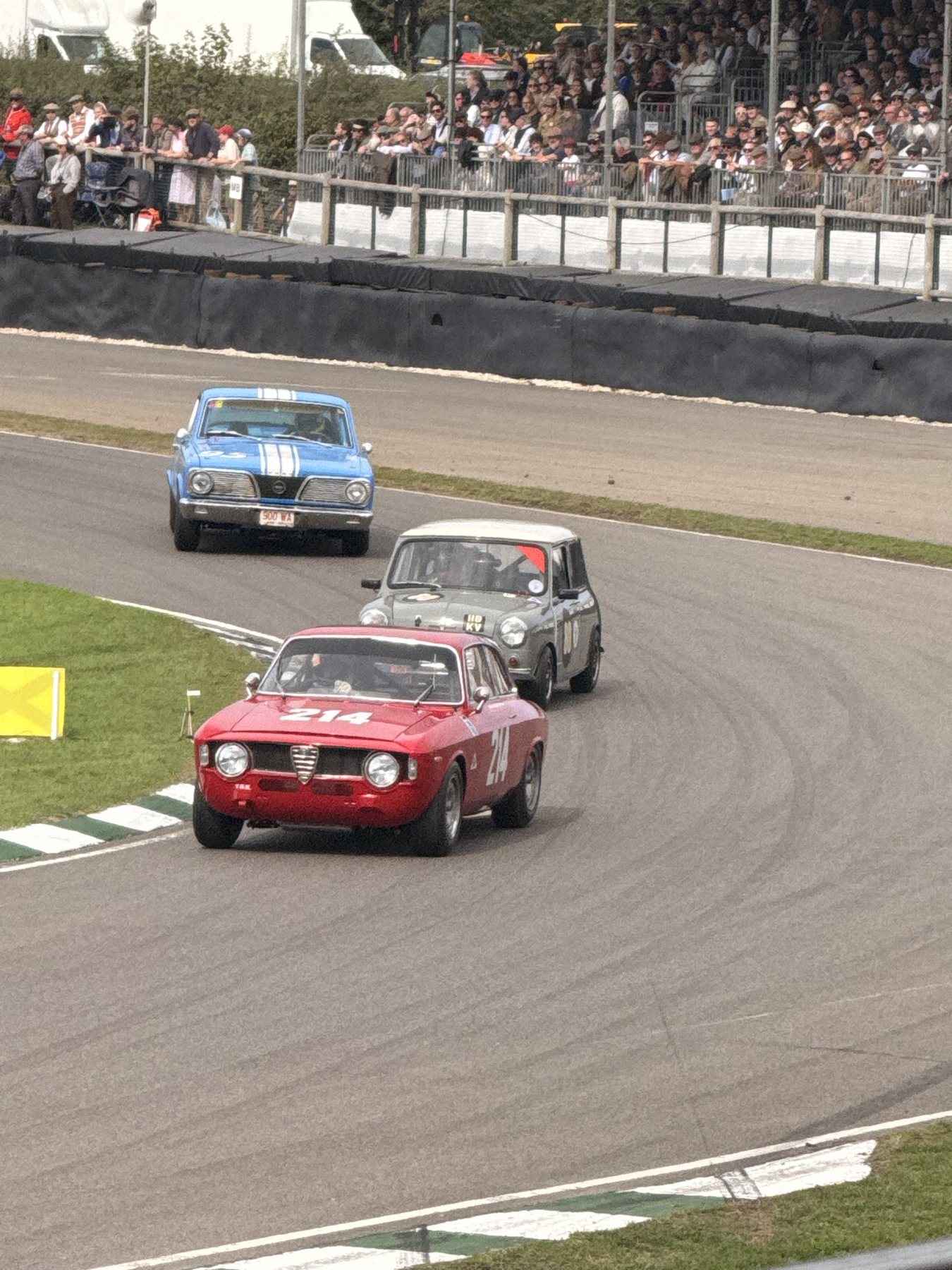
On the straight there's no argument, the Galaxie is gone. But at Lavant, the thing in the title happens. The Galaxie brakes early, wheels straight, and opens a wide arc to the outside. The Mini behind it doesn't brake where the Galaxie brakes. It brakes much later, cuts to the inside, rides the kerb, and for a moment the two are side by side, one three times the size of the other. At the exit, the Mini is ahead. Guillaume asked me the obvious: 'How?'
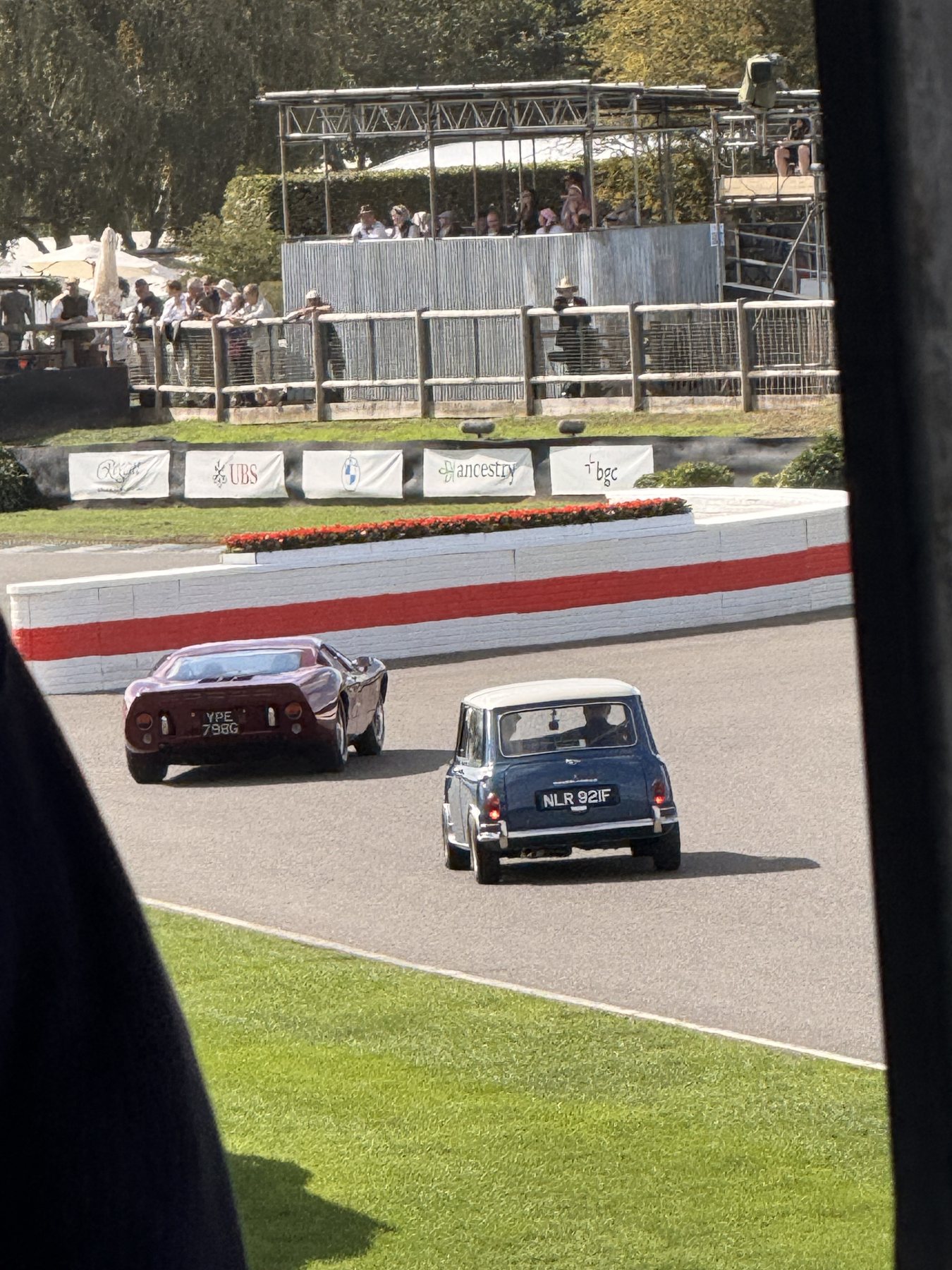
The answer is weight, and where it sits. The Galaxie, with all those kilos and period brakes, can't brake and turn at the same time, because it would lean over and lose grip. First it slows, then it turns, then throttle, with the rear sliding a little all the way to the exit. The Mini has all its weight at the front. The driver brakes late, turns in sharply and lifts off the throttle: the rear goes light and the car rotates into the corner by itself. When the nose points at the exit, the throttle goes flat, long before the Galaxie's.
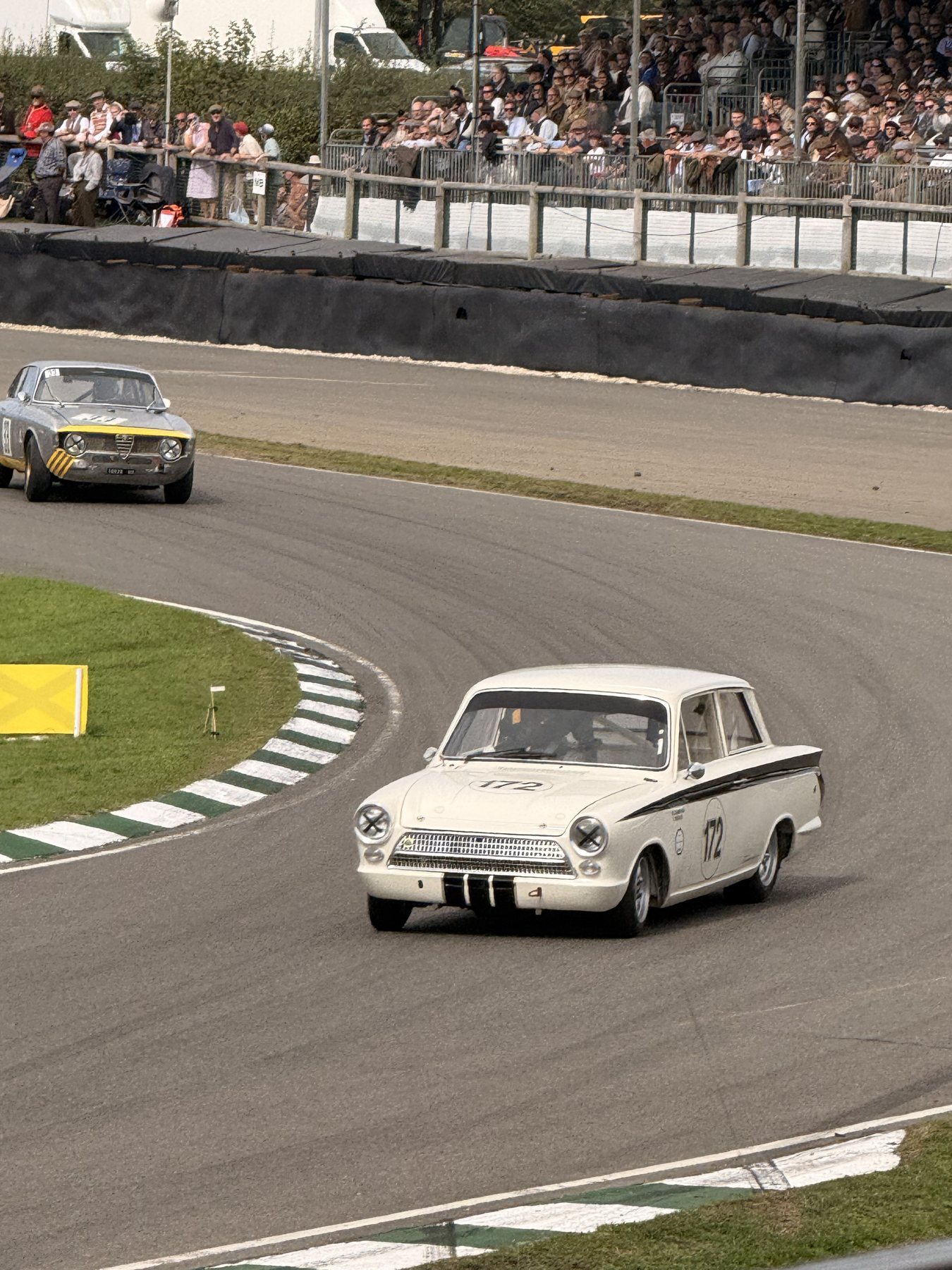
By half distance Guillaume was explaining it himself. The Mini passes in the corner, the Galaxie passes back on the straight, and again from the start, lap after lap. This time power won. Fred Shepherd took Sunday's race in the Galaxie. Second, 7.3 seconds back, was former Formula 1 driver Max Chilton in a Lotus Cortina, the middle ground: light, rear-wheel drive, with the Lotus 1.6-litre twin-cam. It has neither the Galaxie's straight nor the Mini's corners, but it has enough of both.
Cobra, E-type, Lola: three answers to the same question
The RAC TT Celebration is the big race of the day: one hour, two drivers per car, GTs from 1960 to 1964. Jaguar E-type, AC Cobra, Ferrari, Corvette Stingray, Bizzarrini 5300 GT. And two cars that go equally fast in completely different ways.
The Cobra is a small British roadster under a tonne, into which Carroll Shelby put an American V8 that the narrow tyres of the day cannot contain. That's why it almost never goes in a straight line. From Lavant you can see it clearly: the driver's hands cross at the second apex and again on the exit, as he opens the throttle for the straight, metering it with his right foot as if counting drops. The exhausts exit right under the door, and every gearchange sounds like a gunshot.
The E-type is the opposite. Longer, with better-balanced weight and independent rear suspension, advanced for its day, and a straight-six that delivers its power smoothly and climbs without a gap until it turns into a howl. Its driver brakes deep into the corner without fearing the rear will go, turns in with one movement and comes out with the wheel almost straight. From the grandstand it looks like the most boring car in the race. And that's exactly why it wins.
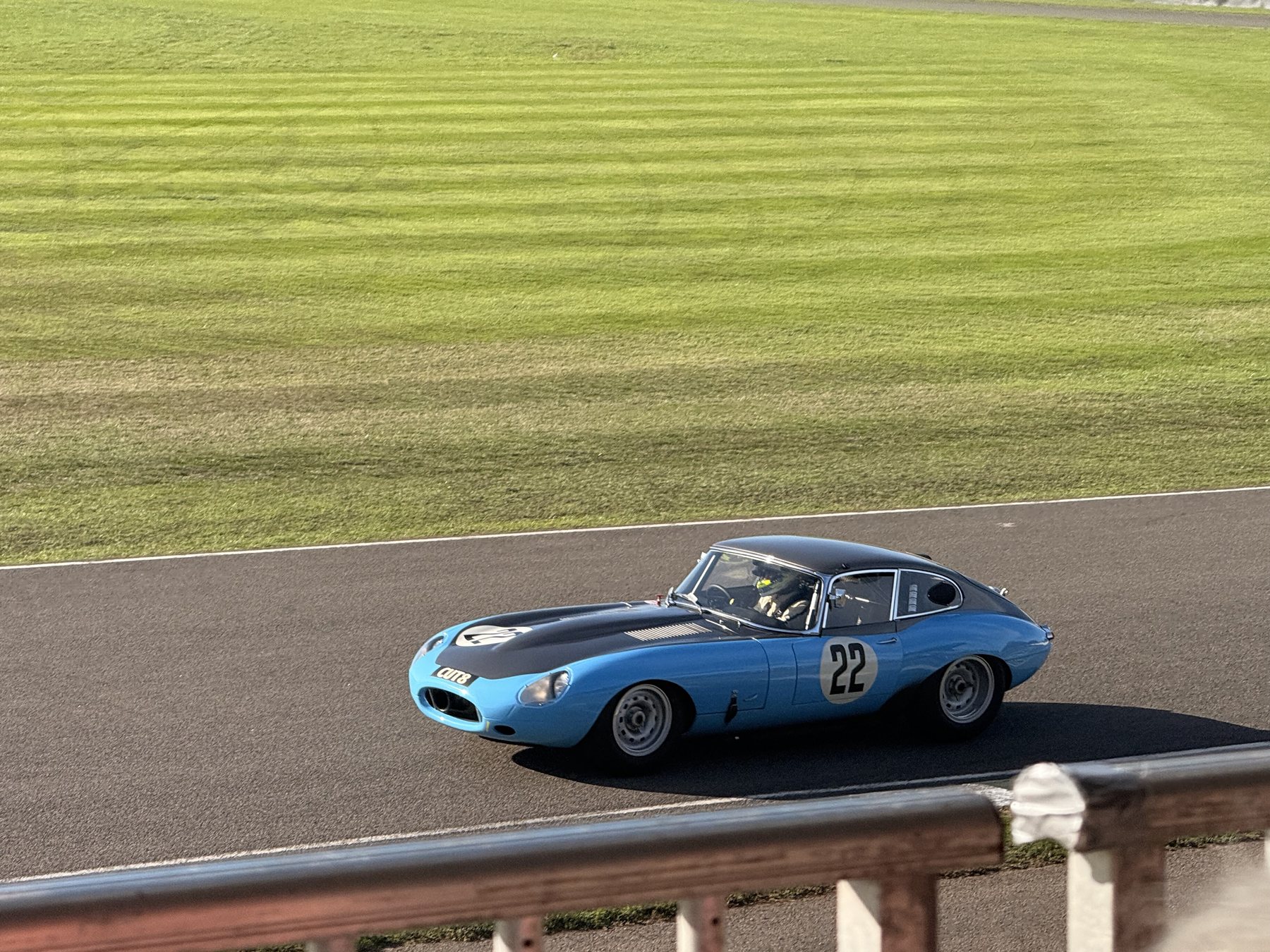
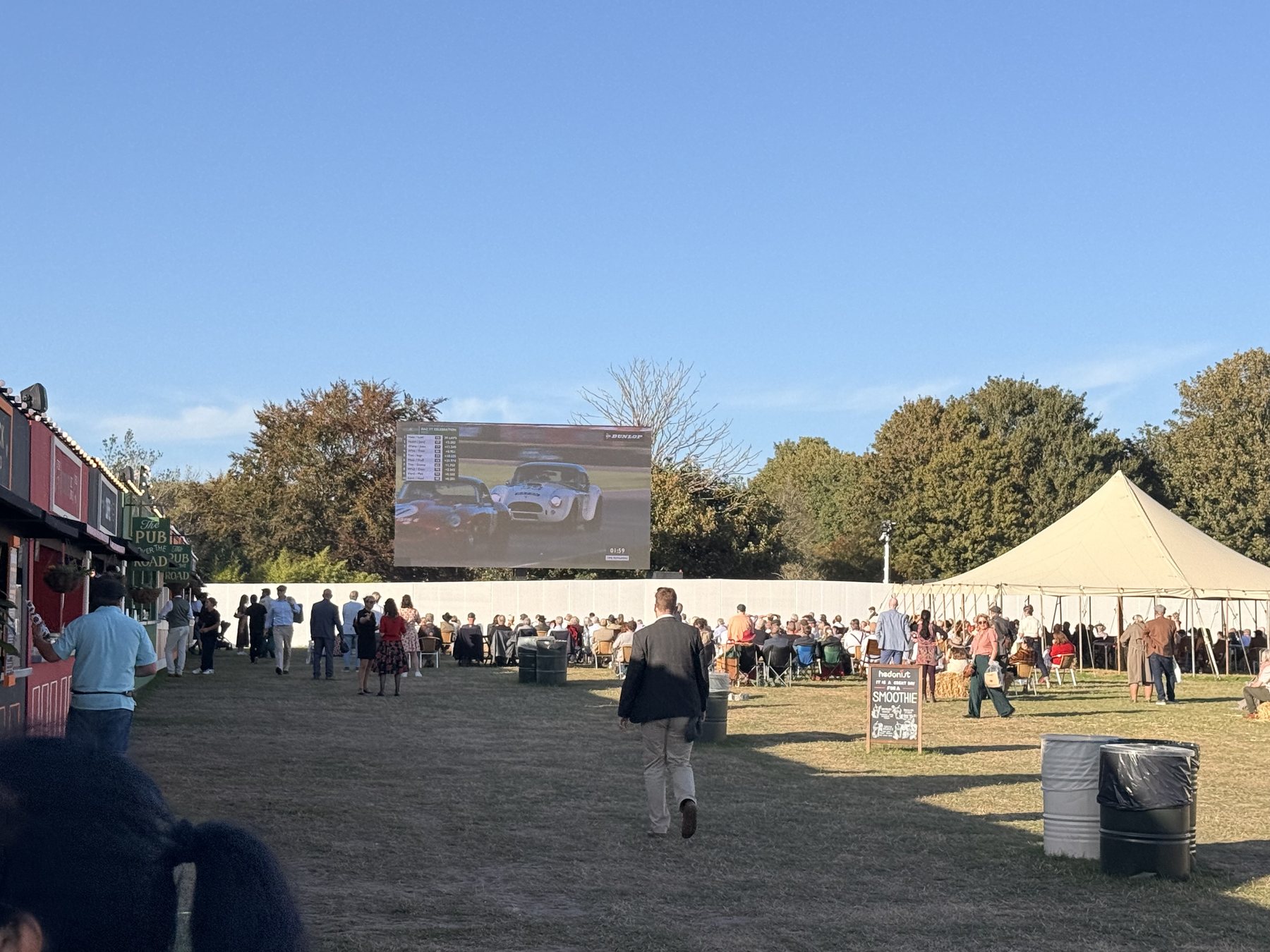
And on Sunday it did win. Lukas Halusa and André Lotterer, three-time Le Mans winner, took the TT in a low-drag E-type Lightweight, one of the light racing versions Jaguar built to chase the Ferraris of the day. After an hour and 41 laps, the gap to the Cobra was one second. The light-blue #22 in the photograph is Jenson Button's E-type, shared with Chris Buncombe, which finished eleventh.
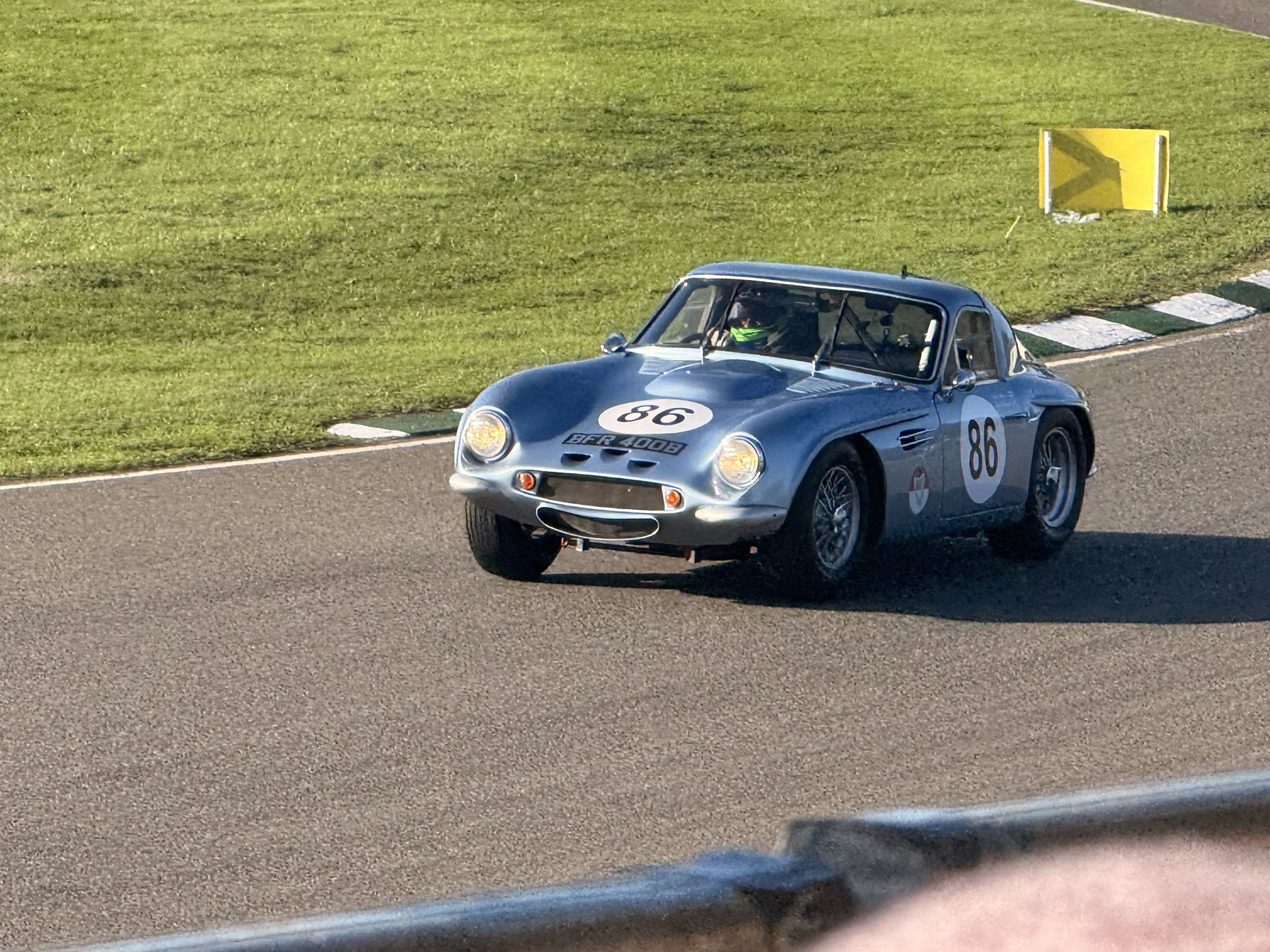
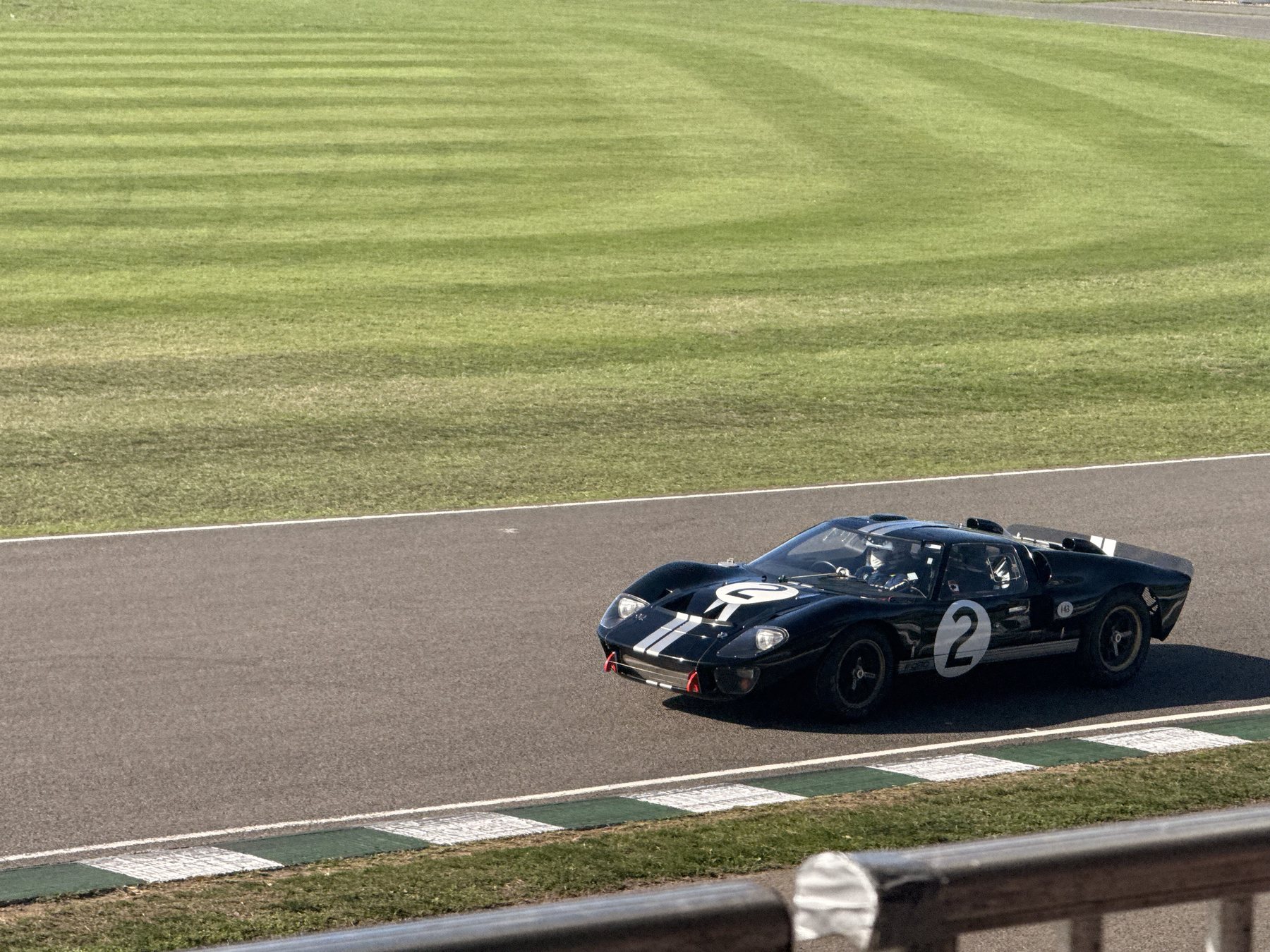
The Whitsun Trophy, for prototypes from 1960 to 1966, has the fastest cars of the day, and the most frightening is the open Lola T70: a Chevrolet V8 behind the driver's back, around 500 horsepower, about 800 kilos. The ratio of a modern hypercar, on 1966 tyres and with no aerodynamics to hold it down. At Lavant the driver has one job: don't rush the throttle. He feeds it in gradually, and only once the wheel is straight does he go all the way down. That's when the grandstand timbers shake and you can't hear the person next to you. Guillaume was saying something. I didn't catch a word.
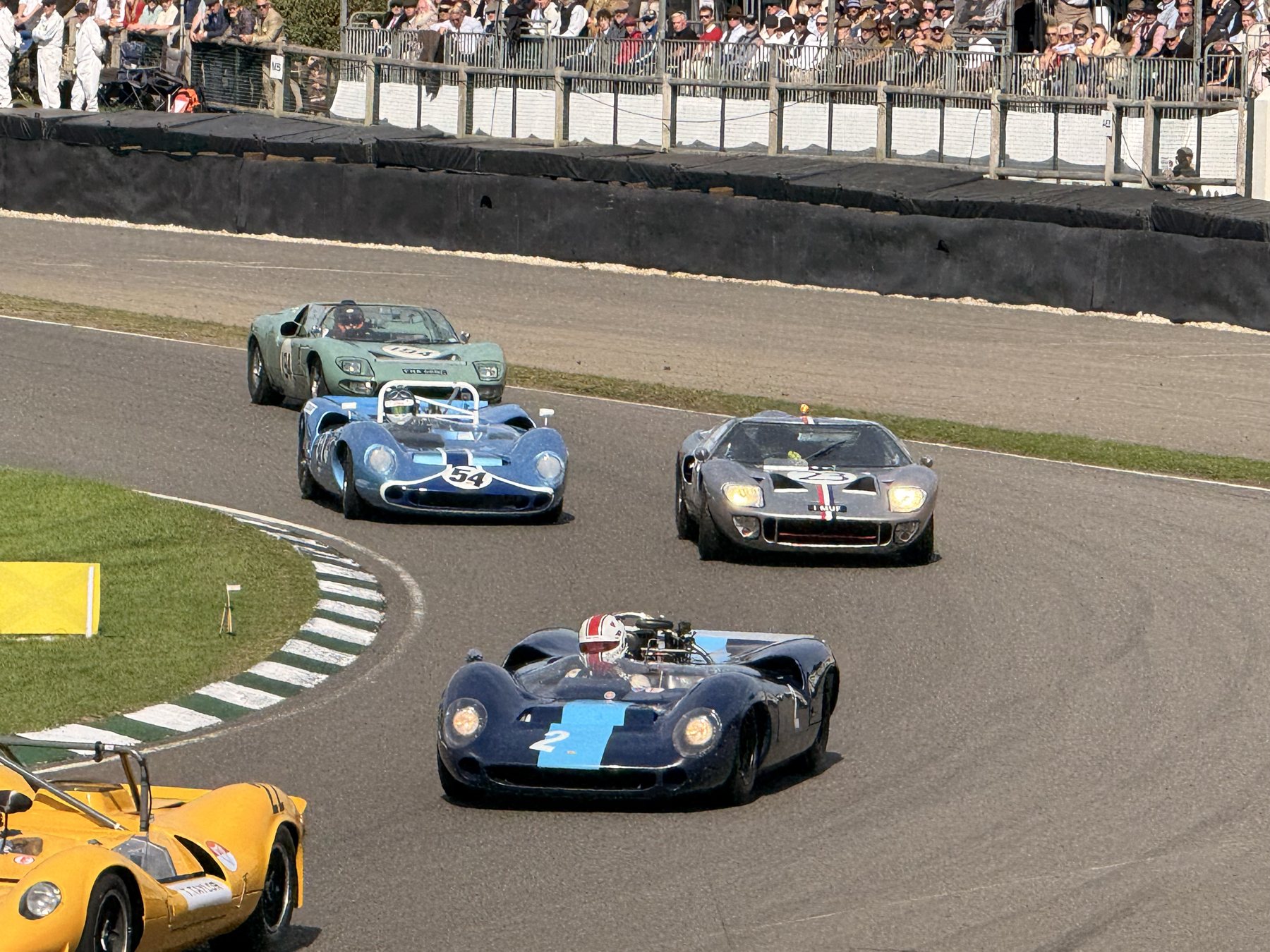
The GT40 next to it is a different animal: heavier, closed, more stable, it brakes far more calmly for Lavant. What it loses on the straight, it wins back under braking. On Sunday, though, neither of them won. The winner was James Davison in a McLaren-Chevrolet M1B, lighter even than the Lola, with Alex Brundle and Harvey Stanley behind him, both in Lolas.
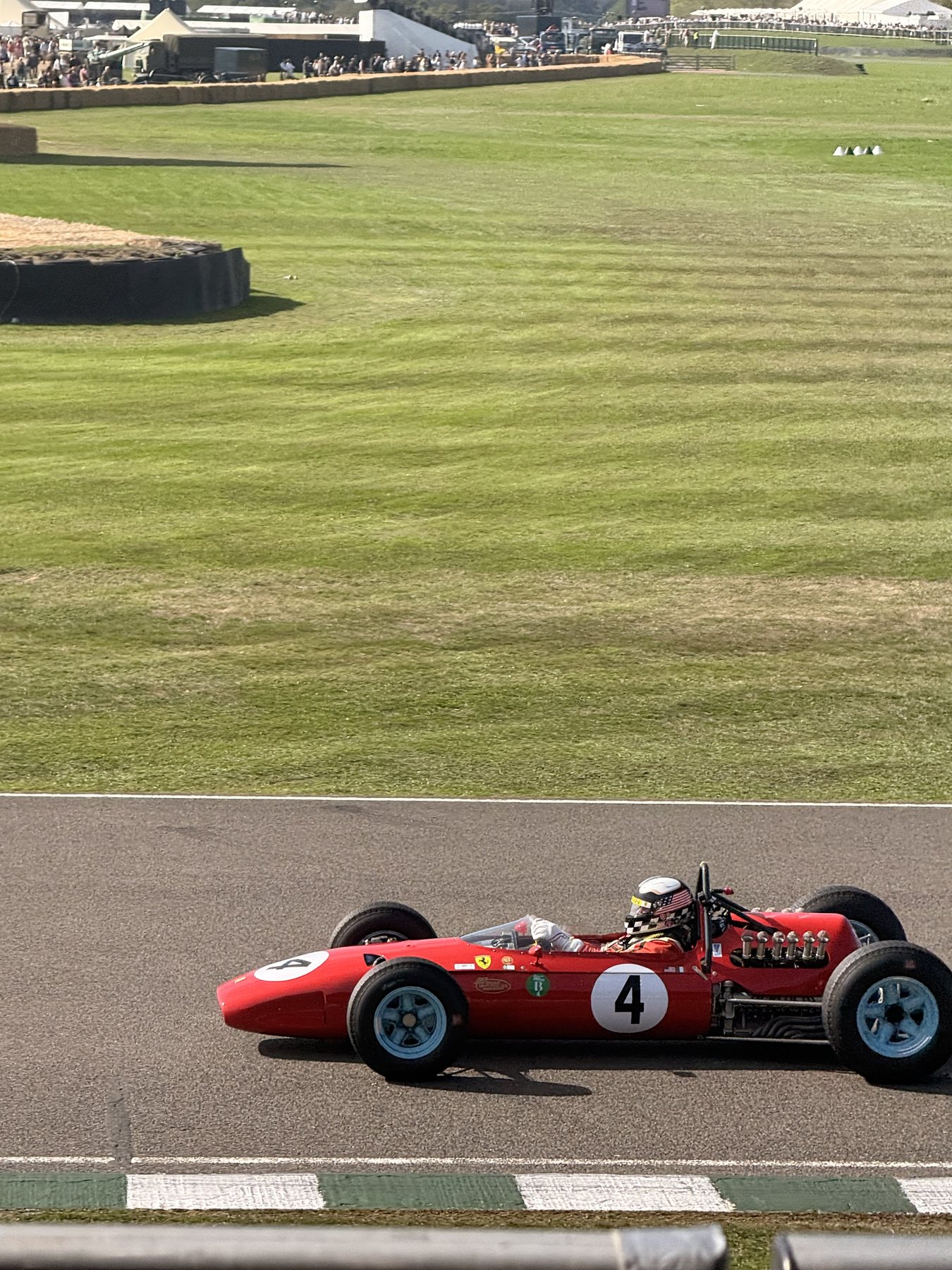
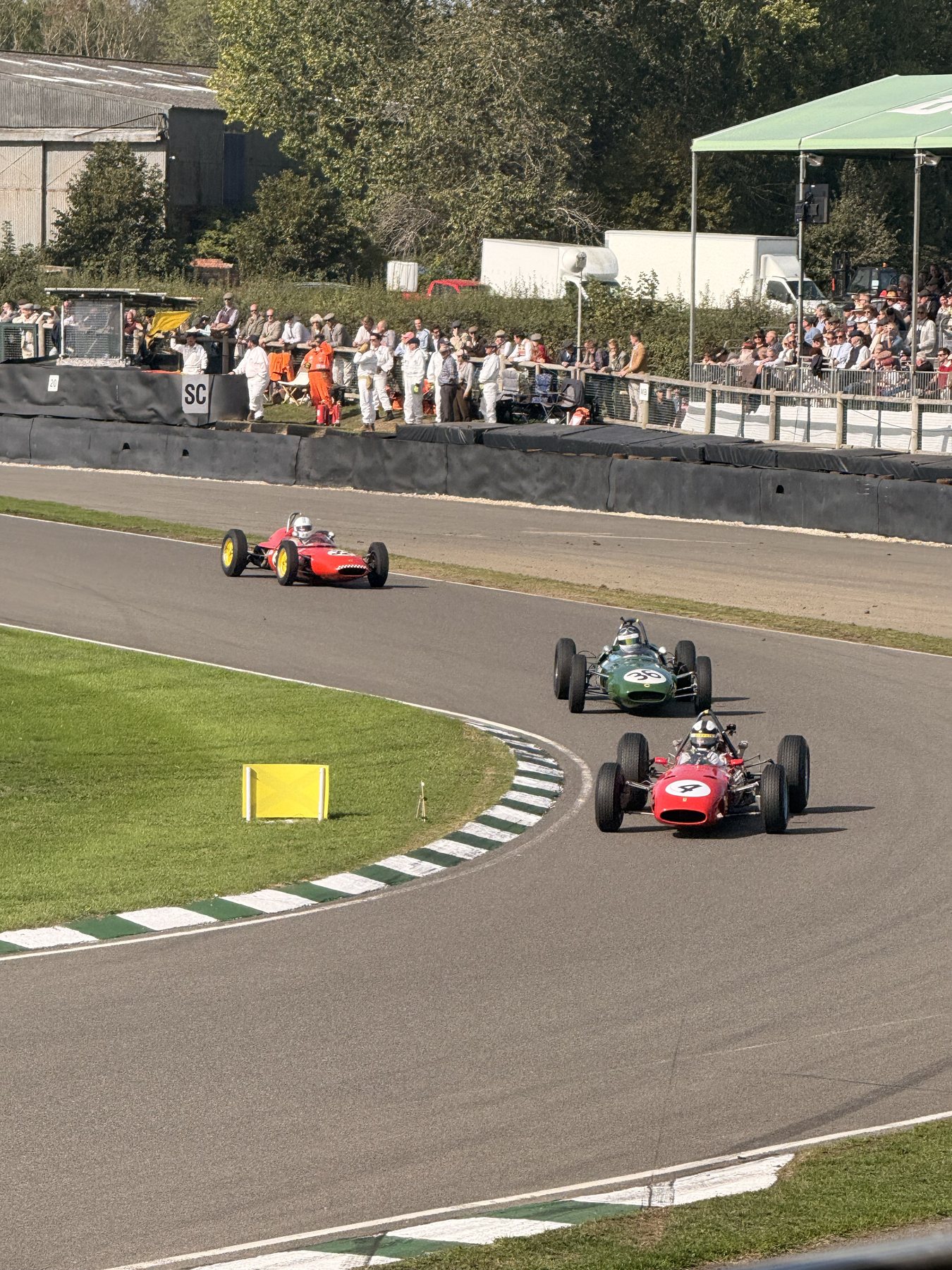
The highest note of the day came from the Glover Trophy, the Formula 1 single-seaters from 1961 to 1965. Joe Colasacco's Ferrari 1512, which won, has twelve cylinders in just one and a half litres and revs past ten thousand. It doesn't sound like a scream, it sounds like a siren. You hear it long before you see it, and when it passes, it's like silk tearing.
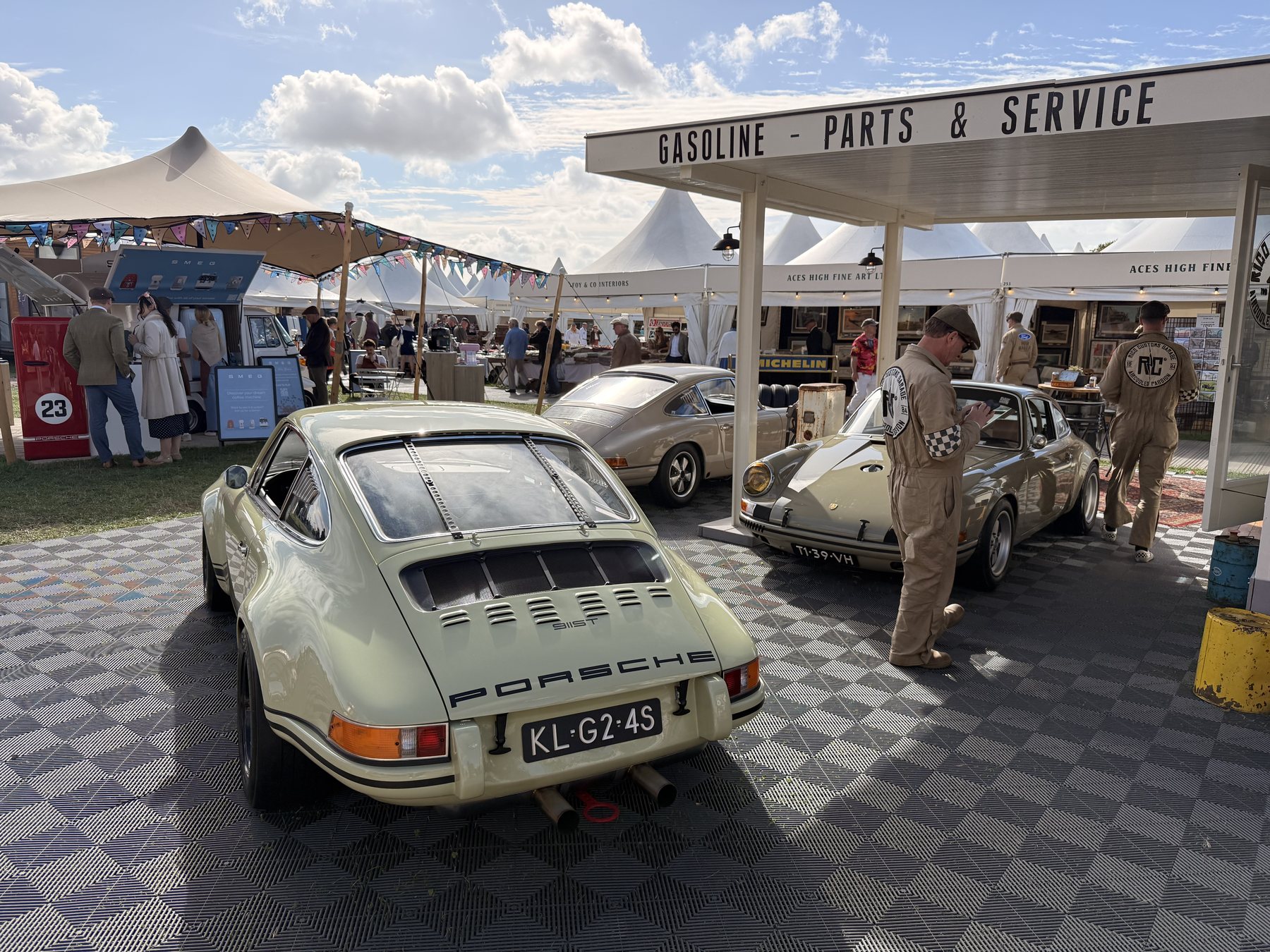
Fish and chips
At some point, after hours in the grandstand, we got tired. Not of the cars. Of the deafening noise, the smell of rubber and the raw exhaust that settles into your clothes. We went down for a portion of fish and chips and a beer. Maybe two.
That's where the best part happened. We compared cars we have never driven with total confidence. We judged drivers far better than us for the braking points they had chosen. And Guillaume, the C3 Aircross man, kept asking. About the engines, about the weights, about why each car takes the same corner a different way. He wouldn't stop.
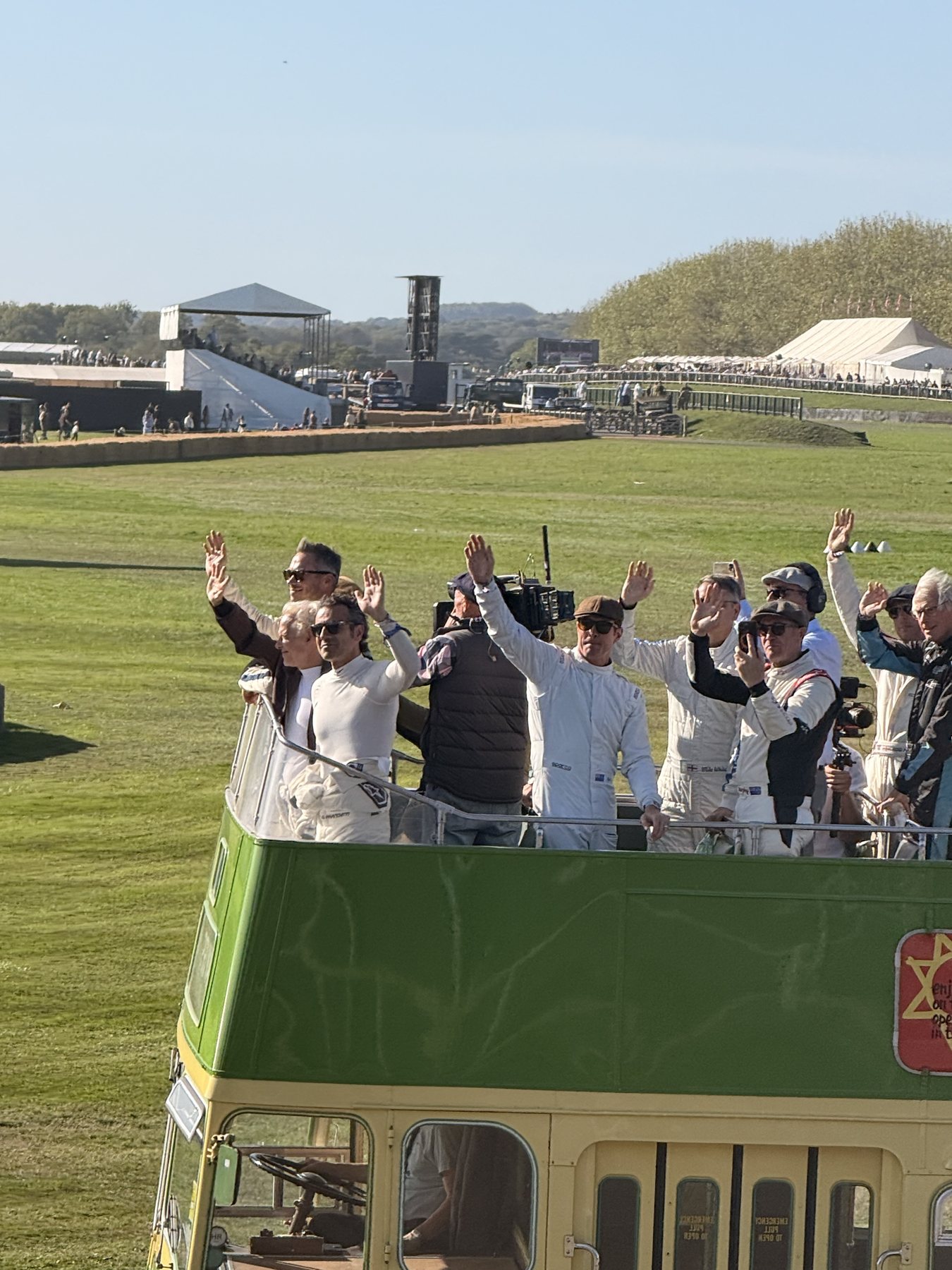
Just before the TT, the drivers lap the circuit on a green double-decker bus, waving to the crowd. In a few minutes they'll be fighting their cars through Fordwater. For now they wave like it's a parade.
What I kept
I came down from the grandstand with my ears ringing and the notebook almost empty. Every time I went to write something, something else went past that I didn't want to miss. But I kept two things.
There is no one right way to take a corner. There is the way the car asks for. The Mini wants to be thrown in and allowed to rotate. The Galaxie wants patience. The Cobra wants to be held by the tail. The E-type wants to be trusted. And the Lola wants not to be betrayed. The drivers who win at Goodwood don't necessarily have the best car. They have understood what theirs is asking for, and they give it, lap after lap.
The second has nothing to do with corners. It's that I watched a friend who never cared about cars ask about engines, weights and braking points, and not want to stop. That initiation, someone getting in, is Goodwood to me more than any result.
The TT ends a little after five, with a one-second gap after an hour of racing. The crowd slowly drifts down the High Street. We had already agreed it, over the second beer: next year, same day, we'll be here. To live it all again from the start.
Related stories

TEENAGE LOVE DOESN'T AGE: TWO MINI COOPERS, EIGHT YEARS APART
A first car isn't transport - it's a coming-of-age ritual. A Mini Cooper S at eighteen, the friendships it built, a tearful goodbye in a garage - and, eight years later, the return: an R56 John Cooper Works as a gift to myself.Read the story
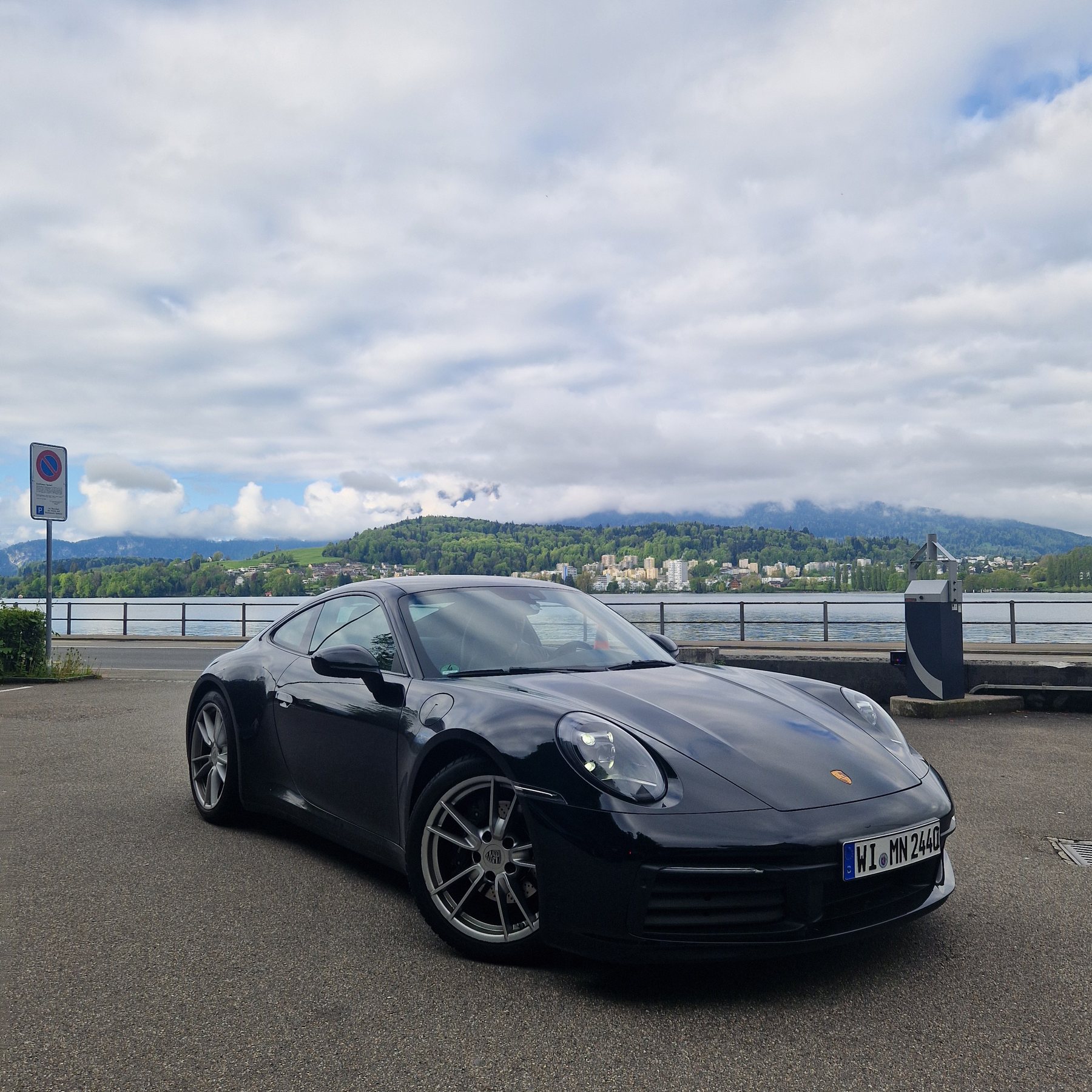
2 BEST FRIENDS, A 911 AND 2,000 KILOMETRES OF MAGIC
Six European countries in three days, in a black 911 Carrera, from Munich to Monaco and back. A trip that took years to make happen and three days for two best friends to live.Read the story
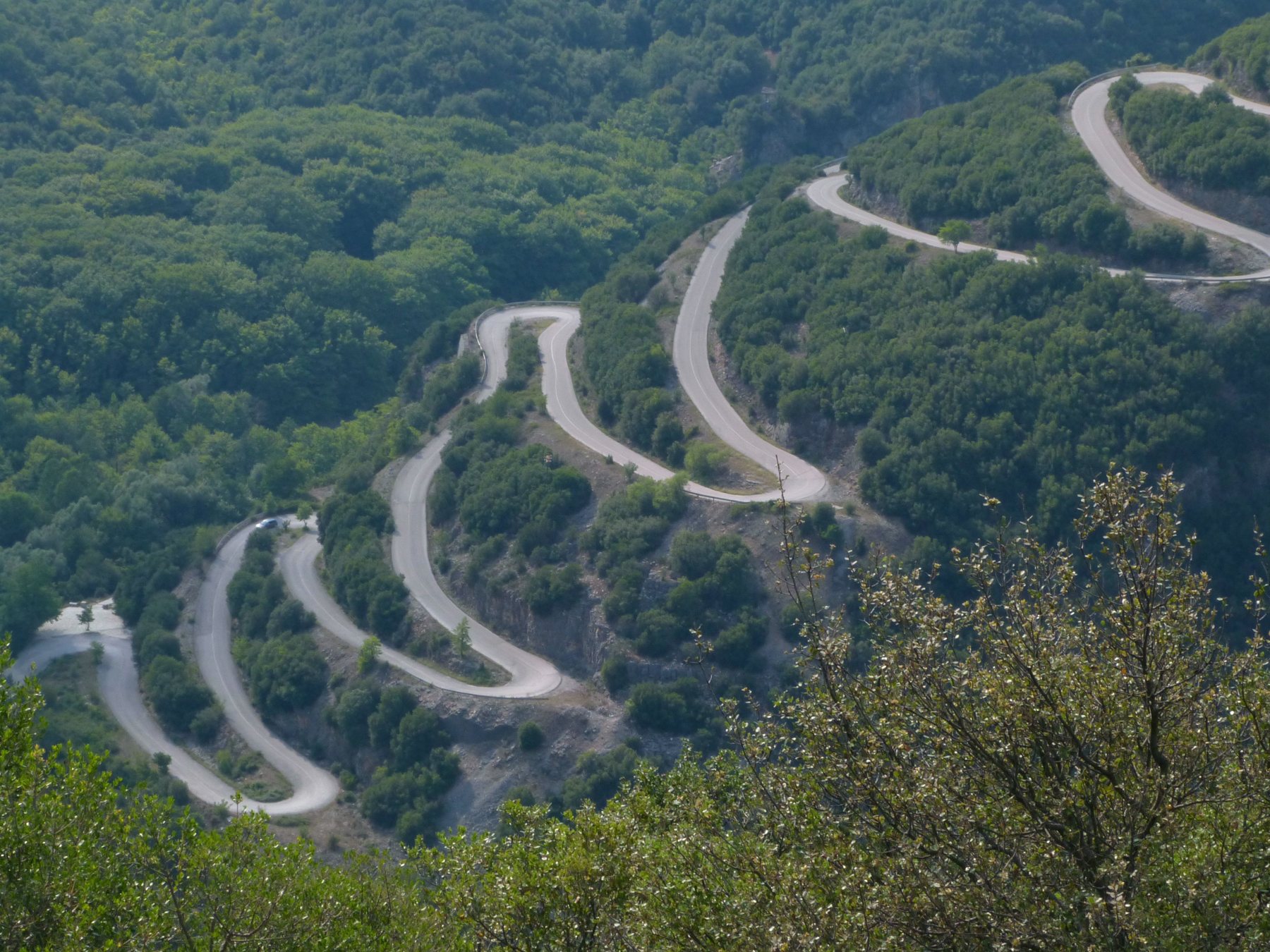
ARISTI TO PAPINGO: 22 HAIRPINS ABOVE THE VOIDOMATIS
Aristi to Papingo is 11.3 km: a drop to the Voidomatis bridge, then 22 hairpins, most of them stacked in the first two kilometres above the river. A guide to the most photographed road in Epirus: corners, views, seasons, stops.Read the story
If you'd like to write your own story - submit it here